0001133869FYfalsehttp://xbrl.sec.gov/country/2025#UShttp://xbrl.sec.gov/stpr/2025#CAhttp://xbrl.sec.gov/stpr/2025#CAP5YP60Dhttp://capricor.com/20251231#LiborMember3636282P1YP60Dhttp://xbrl.sec.gov/country/2025#US10001133869us-gaap:SubsequentEventMembercapr:September2025AtmProgramMember2026-01-012026-03-140001133869us-gaap:RetainedEarningsMember2025-12-310001133869us-gaap:ComprehensiveIncomeMember2025-12-310001133869us-gaap:AdditionalPaidInCapitalMember2025-12-310001133869us-gaap:AccumulatedOtherComprehensiveIncomeMember2025-12-310001133869us-gaap:AccumulatedNetUnrealizedInvestmentGainLossMember2025-12-310001133869us-gaap:RetainedEarningsMember2024-12-310001133869us-gaap:ComprehensiveIncomeMember2024-12-310001133869us-gaap:AdditionalPaidInCapitalMember2024-12-310001133869us-gaap:AccumulatedOtherComprehensiveIncomeMember2024-12-310001133869us-gaap:AccumulatedNetUnrealizedInvestmentGainLossMember2024-12-310001133869us-gaap:RetainedEarningsMember2023-12-310001133869us-gaap:ComprehensiveIncomeMember2023-12-310001133869us-gaap:AdditionalPaidInCapitalMember2023-12-310001133869us-gaap:AccumulatedOtherComprehensiveIncomeMember2023-12-310001133869us-gaap:AccumulatedNetUnrealizedInvestmentGainLossMember2023-12-310001133869us-gaap:CommonStockMember2025-12-310001133869us-gaap:CommonStockMember2024-12-310001133869us-gaap:CommonStockMember2023-12-310001133869capr:September2025AtmProgramMember2025-12-310001133869capr:December2025UnderwrittenPublicOfferingMember2025-12-050001133869capr:October2024UnderwrittenPublicOfferingMember2024-10-160001133869capr:June2021AtMarketProgramMember2024-10-010001133869us-gaap:EmployeeStockOptionMember2024-12-310001133869us-gaap:EmployeeStockOptionMember2023-12-310001133869capr:EmployeesNonEmployeeConsultantsAndDirectorsMemberus-gaap:SubsequentEventMember2026-01-012026-01-310001133869capr:ConsultingAgreementMembercapr:MichaelKelliherMember2024-01-012024-01-310001133869us-gaap:EmployeeStockOptionMember2024-01-012024-12-310001133869us-gaap:EmployeeStockOptionMember2025-12-310001133869us-gaap:EmployeeStockOptionMembercapr:StockOptionPlan2021Member2025-12-310001133869us-gaap:EmployeeStockOptionMembercapr:EquityIncentivePlan2025Member2025-12-310001133869us-gaap:EmployeeStockOptionMembercapr:EquityIncentivePlan2025Member2025-05-310001133869us-gaap:EmployeeStockOptionMembercapr:StockOptionPlan2021Member2021-06-300001133869us-gaap:EmployeeStockOptionMembercapr:StockOptionPlan2021Member2025-05-222025-05-220001133869us-gaap:EmployeeStockOptionMembercapr:StockOptionPlan2021Member2025-01-012025-01-010001133869us-gaap:EmployeeStockOptionMembercapr:StockOptionPlan2021Member2024-01-012024-01-010001133869srt:MinimumMember2025-01-012025-12-310001133869srt:MaximumMember2025-01-012025-12-310001133869srt:MinimumMember2024-01-012024-12-310001133869srt:MaximumMember2024-01-012024-12-310001133869us-gaap:EmployeeStockOptionMemberus-gaap:EmployeeStockOptionMember2025-01-012025-12-310001133869us-gaap:RestrictedStockMember2024-12-310001133869us-gaap:RestrictedStockMember2025-01-012025-12-310001133869srt:MinimumMemberus-gaap:EmployeeStockOptionMember2025-01-012025-12-310001133869srt:MaximumMemberus-gaap:EmployeeStockOptionMember2025-01-012025-12-310001133869capr:CommercializationAndDistributionAgreementWithNipponShinyakuCoLimitedUnitedStatesMember2025-01-012025-12-310001133869capr:CommercializationAndDistributionAgreementWithNipponShinyakuCoLimitedUnitedStatesMember2024-01-012024-12-310001133869srt:MinimumMember2025-12-310001133869srt:MaximumMember2025-12-310001133869us-gaap:ManufacturingFacilityMember2025-12-310001133869us-gaap:LeaseholdImprovementsMember2025-12-310001133869us-gaap:FurnitureAndFixturesMember2025-12-310001133869us-gaap:EquipmentMember2025-12-310001133869us-gaap:ConstructionInProgressMember2025-12-310001133869us-gaap:ComputerEquipmentMember2025-12-310001133869us-gaap:ManufacturingFacilityMember2024-12-310001133869us-gaap:LeaseholdImprovementsMember2024-12-310001133869us-gaap:FurnitureAndFixturesMember2024-12-310001133869us-gaap:EquipmentMember2024-12-310001133869us-gaap:ConstructionInProgressMember2024-12-310001133869us-gaap:ComputerEquipmentMember2024-12-310001133869capr:September2025AtmProgramMember2025-09-102025-12-310001133869capr:October2024UnderwrittenPublicOfferingMember2024-10-162024-10-160001133869capr:June2021AtMarketProgramMember2021-06-212024-10-010001133869capr:ConsultingAgreementMembersrt:BoardOfDirectorsChairmanMember2025-12-310001133869capr:ConsultingAgreementMembersrt:BoardOfDirectorsChairmanMember2024-12-310001133869capr:NipponShinyakuCo.Ltd.Memberus-gaap:InvestorMember2025-12-310001133869us-gaap:ComprehensiveIncomeMember2025-01-012025-12-310001133869us-gaap:ComprehensiveIncomeMember2024-01-012024-12-310001133869us-gaap:AccumulatedOtherComprehensiveIncomeMember2025-01-012025-12-310001133869us-gaap:AccumulatedNetUnrealizedInvestmentGainLossMember2025-01-012025-12-310001133869us-gaap:AccumulatedOtherComprehensiveIncomeMember2024-01-012024-12-310001133869us-gaap:AccumulatedNetUnrealizedInvestmentGainLossMember2024-01-012024-12-310001133869capr:CorporateOfficesLeaseMember2025-01-012025-12-310001133869capr:CorporateOfficesLeaseMember2024-01-012024-12-310001133869capr:FacilitiesInSanDiegoMember2024-12-310001133869capr:VivariumSpaceLeaseMember2021-11-010001133869capr:PropertyLocatedAt10865RoadToCureInDiegoMember2021-10-010001133869capr:FacilitiesLeaseMember2014-12-310001133869capr:CorporateOfficeLeaseBeverlyHillsCaliforniaMember2013-12-310001133869us-gaap:RetainedEarningsMember2025-01-012025-12-310001133869us-gaap:RetainedEarningsMember2024-01-012024-12-310001133869capr:VivariumSpaceLeaseMember2025-12-310001133869capr:PropertyLocatedAt10865RoadToCureInDiegoMember2025-02-260001133869capr:FacilitiesInVistaMember2024-11-2000011338692024-08-0100011338692025-11-012025-11-300001133869srt:MaximumMembercapr:CaliforniaInstituteForRegenerativeMedicineLoanMember2025-02-260001133869capr:CaliforniaInstituteForRegenerativeMedicineMember2016-06-160001133869capr:CaliforniaInstituteForRegenerativeMedicineMember2016-06-200001133869capr:FirstMilestonePaymentMembercapr:CsmcMembercapr:CommercializationAndDistributionAgreementWithNipponShinyakuCoLimitedUnitedStatesMember2024-01-012024-12-310001133869capr:SecondMilestonePaymentMembercapr:CommercializationAndDistributionAgreementWithNipponShinyakuCoLimitedUnitedStatesMember2025-12-310001133869capr:SecondMilestonePaymentMembercapr:CommercializationAndDistributionAgreementWithNipponShinyakuCoLimitedUnitedStatesMember2024-12-310001133869capr:FirstMilestonePaymentMembercapr:CsmcMembercapr:CommercializationAndDistributionAgreementWithNipponShinyakuCoLimitedUnitedStatesMember2025-12-310001133869capr:CommercializationAndDistributionAgreementWithNipponShinyakuCoLimitedJapanMember2025-12-310001133869capr:CommercializationAndDistributionAgreementWithNipponShinyakuCo.LtdMember2025-12-310001133869capr:CommercializationAndDistributionAgreementWithNipponShinyakuCo.LtdMember2024-12-310001133869capr:CommonStockWarrantsWithExpirationOnDecember2030TwoMember2024-12-310001133869us-gaap:RestrictedStockMember2025-12-310001133869capr:CommonStockWarrantsWithExpirationOnDecember2030TwoMember2025-12-310001133869capr:CommonStockWarrantsWithExpirationOnDecember2030TwoMember2025-01-012025-12-310001133869capr:CashAndMoneyMarketFundsMember2025-12-310001133869capr:CashAndMoneyMarketFundsMember2024-12-310001133869us-gaap:USTreasurySecuritiesMember2025-12-310001133869us-gaap:USTreasurySecuritiesMember2024-12-310001133869us-gaap:FairValueInputsLevel1Memberus-gaap:FairValueMeasurementsRecurringMember2025-12-310001133869us-gaap:FairValueMeasurementsRecurringMember2025-12-310001133869us-gaap:FairValueInputsLevel1Memberus-gaap:FairValueMeasurementsRecurringMember2024-12-310001133869us-gaap:FairValueMeasurementsRecurringMember2024-12-310001133869us-gaap:WarrantMember2024-01-012024-12-310001133869us-gaap:ResearchAndDevelopmentExpenseMember2025-01-012025-12-310001133869us-gaap:GeneralAndAdministrativeExpenseMember2025-01-012025-12-310001133869us-gaap:ResearchAndDevelopmentExpenseMember2024-01-012024-12-310001133869us-gaap:GeneralAndAdministrativeExpenseMember2024-01-012024-12-310001133869capr:CommercializationAndDistributionAgreementWithNipponShinyakuCoLimitedUnitedStatesMember2024-12-310001133869capr:CommercializationAndDistributionAgreementWithNipponShinyakuCoLimitedJapanMember2024-12-310001133869capr:LindaMarbanMember2025-12-310001133869capr:KarenKrasneyMember2025-12-310001133869capr:AnthonyJBergmannMember2025-12-310001133869capr:LindaMarbanMember2025-10-012025-12-310001133869capr:KarenKrasneyMember2025-10-012025-12-310001133869capr:AnthonyJBergmannMember2025-10-012025-12-3100011338692025-10-012025-12-3100011338692025-06-3000011338692026-03-160001133869capr:ExosomesLicenseAgreementMember2025-01-012025-12-310001133869capr:CsmcLicenseAgreementMember2025-01-012025-12-310001133869capr:CorporateOfficeLeaseBeverlyHillsCaliforniaMember2021-01-012021-01-010001133869capr:FirstMilestonePaymentMembercapr:CommercializationAndDistributionAgreementWithNipponShinyakuCoLimitedUnitedStatesMember2025-01-012025-12-310001133869capr:BindingTermSheetWithNipponShinyakuCoLimitedEuropeMember2024-09-162024-09-160001133869capr:CommercializationAndDistributionAgreementWithNipponShinyakuCoLimitedJapanMember2023-01-012023-12-310001133869capr:CommercializationAndDistributionAgreementWithNipponShinyakuCoLimitedUnitedStatesMember2022-01-242022-01-240001133869capr:NonPaymentOfRoyaltiesMembercapr:ExosomesLicenseAgreementMember2025-01-012025-12-310001133869capr:MaterialBreachHasNotBeenCuredMembercapr:ExosomesLicenseAgreementMember2025-01-012025-12-310001133869capr:FailsToUndertakeCommerciallyReasonableEffortsToExploitPatentRightsOrFuturePatentRightsMembercapr:ExosomesLicenseAgreementMember2025-01-012025-12-310001133869capr:FailsToCureBreachAfterNoticeFromCsmcMembercapr:ExosomesLicenseAgreementMember2025-01-012025-12-310001133869capr:JhuLicenseAgreementMember2025-01-012025-12-310001133869capr:CaliforniaInstituteForRegenerativeMedicineMember2016-06-202016-06-200001133869capr:PropertyLocatedAt10865RoadToCureInDiegoMember2025-12-310001133869capr:FacilitiesInSanDiegoMember2024-12-012024-12-310001133869capr:NipponShinyakuCo.Ltd.Memberus-gaap:PrivatePlacementMember2024-09-162024-09-160001133869us-gaap:AdditionalPaidInCapitalMember2025-01-012025-12-310001133869us-gaap:AdditionalPaidInCapitalMember2024-01-012024-12-310001133869us-gaap:CommonStockMember2025-01-012025-12-310001133869us-gaap:CommonStockMember2024-01-012024-12-310001133869capr:NipponShinyakuCo.Ltd.Memberus-gaap:PrivatePlacementMember2024-09-160001133869srt:MinimumMembercapr:CommercializationAndDistributionAgreementWithNipponShinyakuCoLimitedUnitedStatesMember2022-01-240001133869us-gaap:EmployeeStockOptionMembercapr:EquityIncentivePlan2025Member2025-05-012025-05-310001133869us-gaap:EmployeeStockOptionMembercapr:StockOptionPlan2021Member2021-06-012021-06-300001133869us-gaap:WarrantMember2025-01-012025-12-310001133869us-gaap:EmployeeStockOptionMember2025-01-012025-12-310001133869capr:ResearchAndDevelopmentOtherExpenseMembercapr:SingleReportableSegmentMember2025-01-012025-12-310001133869capr:ResearchAndDevelopmentExosomesPlatformResearchMembercapr:SingleReportableSegmentMember2025-01-012025-12-310001133869capr:ResearchAndDevelopmentDuchenneMuscularDystrophyProgramMembercapr:SingleReportableSegmentMember2025-01-012025-12-310001133869capr:ResearchAndDevelopmentCompensationAndBenefitsExpenseMembercapr:SingleReportableSegmentMember2025-01-012025-12-310001133869capr:ResearchAndDevelopmentOtherExpenseMembercapr:SingleReportableSegmentMember2024-01-012024-12-310001133869capr:ResearchAndDevelopmentExosomesPlatformResearchMembercapr:SingleReportableSegmentMember2024-01-012024-12-310001133869capr:ResearchAndDevelopmentDuchenneMuscularDystrophyProgramMembercapr:SingleReportableSegmentMember2024-01-012024-12-310001133869capr:ResearchAndDevelopmentCompensationAndBenefitsExpenseMembercapr:SingleReportableSegmentMember2024-01-012024-12-310001133869srt:MaximumMembercapr:JhuLicenseAgreementMember2025-12-310001133869capr:CommercializationAndDistributionAgreementWithNipponShinyakuCoLimitedJapanMember2023-12-310001133869srt:MaximumMembercapr:CommercializationAndDistributionAgreementWithNipponShinyakuCoLimitedUnitedStatesMember2022-01-240001133869capr:BindingTermSheetWithNipponShinyakuCoLimitedEuropeMember2024-09-160001133869capr:UntilDateOfExpirationOfLastToExpirePatentWithinPatentRightsMembercapr:JhuLicenseAgreementMember2025-01-012025-12-310001133869us-gaap:StateAndLocalJurisdictionMember2025-12-310001133869country:US2025-12-310001133869capr:CaliforniaInstituteForRegenerativeMedicineMember2016-06-162016-06-160001133869capr:December2025UnderwrittenPublicOfferingMember2025-12-052025-12-050001133869capr:FacilitiesInSanDiegoMember2025-11-012025-11-300001133869capr:CommercializationAndDistributionAgreementWithNipponShinyakuCoLimitedUnitedStatesMember2025-12-310001133869capr:ConsultingAgreementWithFrankLitvackMembersrt:BoardOfDirectorsChairmanMember2013-01-012013-12-310001133869capr:CaliforniaInstituteForRegenerativeMedicineMember2016-06-012016-06-160001133869capr:FirstMilestonePaymentMembercapr:CommercializationAndDistributionAgreementWithNipponShinyakuCoLimitedUnitedStatesMember2025-12-310001133869capr:FirstMilestonePaymentMember2025-12-310001133869capr:ObtentionOfFdaApprovalMembercapr:JhuLicenseAgreementMember2023-12-310001133869capr:JhuLicenseAgreementMember2025-12-012025-12-310001133869capr:SecondMilestonePaymentMembercapr:CommercializationAndDistributionAgreementWithNipponShinyakuCoLimitedUnitedStatesMember2024-12-012024-12-310001133869capr:FacilitiesLeaseMember2024-08-012024-08-010001133869capr:PropertyLocatedAt10865RoadToCureInDiegoMember2025-02-262025-02-260001133869capr:PropertyLocatedAt10865RoadToCureInDiegoMember2025-07-012025-07-010001133869capr:SingleReportableSegmentMember2025-01-012025-12-310001133869capr:SingleReportableSegmentMember2024-01-012024-12-310001133869capr:NipponShinyakuCo.Ltd.Membersrt:MinimumMemberus-gaap:InvestorMember2025-12-310001133869capr:September2025AtmProgramMember2025-12-052025-12-050001133869capr:September2025AtmProgramMember2025-09-102025-09-100001133869capr:June2021AtMarketProgramMember2021-06-212021-06-2100011338692023-12-3100011338692024-01-012024-12-310001133869capr:CaliforniaInstituteForRegenerativeMedicineLoanMember2025-12-310001133869srt:MinimumMembercapr:RomeLicenseAgreementMember2025-01-012025-12-310001133869capr:ConsultingAgreementMembersrt:BoardOfDirectorsChairmanMember2025-01-012025-12-310001133869capr:ConsultingAgreementMembersrt:BoardOfDirectorsChairmanMember2024-01-012024-12-310001133869capr:NonPaymentOfRoyaltiesMembercapr:CsmcLicenseAgreementMember2025-01-012025-12-310001133869capr:MaterialBreachHasNotBeenCuredMembercapr:CsmcLicenseAgreementMember2025-01-012025-12-310001133869capr:FailsToUndertakeCommerciallyReasonableEffortsToExploitPatentRightsOrFuturePatentRightsMembercapr:CsmcLicenseAgreementMember2025-01-012025-12-310001133869capr:FailsToCureBreachAfterNoticeFromCsmcMembercapr:CsmcLicenseAgreementMember2025-01-012025-12-3100011338692025-01-012025-12-3100011338692025-12-3100011338692024-12-31utr:sqftcapr:segmentiso4217:USDiso4217:EURxbrli:sharesiso4217:USDxbrli:sharesxbrli:purecapr:agreementcapr:Institutioncapr:Optionscapr:item

Table of Contents

UNITED STATES

SECURITIES AND EXCHANGE COMMISSION

WASHINGTON, D.C. 20549

FORM 10-K

þ

Annual Report Pursuant to Section 13 or 15(d) of the Securities Exchange Act of 1934

for the fiscal year ended December 31, 2025

or

Transition Report Pursuant to Section 13 or 15(d) of the Securities Exchange Act of 1934

for the transition period from         to

Commission File Number: 001-34058

CAPRICOR THERAPEUTICS, INC.

(Exact Name Of Registrant As Specified In Its Charter)

Delaware


88-0363465

(State or other jurisdiction of
incorporation or organization)


(I.R.S. Employer Identification No.)

10865 Road to the Cure, Suite 150, San Diego, California 92121

(Address of principal executive offices including zip code)

(858) 727-1755

(Registrant’s telephone number, including area code)

Securities registered pursuant to Section 12(b) of the Act:

Title of Each Class

Trading Symbol(s)


Name of Each Exchange on Which Registered

Common Stock, par value $0.001 per share

CAPR


The Nasdaq Global Select Market

Securities registered pursuant to Section 12(g) of the Act:

None

Indicate by check mark if the registrant is a well-known seasoned issuer, as defined in Rule 405 of the Securities Act. Yes þ No

Indicate by check mark if the registrant is not required to file reports pursuant to Section 13 or Section 15(d) of the Act. Yes þ No

Indicate by check mark whether the registrant (1) has filed all reports required to be filed by Section 13 or 15(d) of the Securities Exchange Act of 1934 during the preceding 12 months (or for such shorter period that the registrant was required to file such reports), and (2) has been subject to such filing requirements for the past 90 days. þ Yes No

Indicate by check mark whether the registrant has submitted electronically every Interactive Data File required to be submitted pursuant to Rule 405 of Regulation S-T (§232.405 of this chapter) during the preceding 12 months (or for such shorter period that the registrant was required to submit such files). Yes þ  No 

Indicate by check mark whether the registrant is a large accelerated filer, an accelerated filer, a non-accelerated filer, a smaller reporting company, or an emerging growth company. See the definitions of “large accelerated filer,” “accelerated filer,” “smaller reporting company,” and “emerging growth company” in Rule 12b-2 of the Exchange Act.

Large accelerated filer


Accelerated filer

Non-accelerated filer

þ


Smaller reporting company

þ


Emerging growth company

If an emerging growth company, indicate by check mark if the registrant has elected not to use the extended transition period for complying with any new or revised financial accounting standards provided pursuant to Section 13(a) of the Exchange Act.

Indicate by check mark whether the registrant has filed a report on and attestation to its management's assessment of the effectiveness of its internal control over financial reporting under Section 404(b) of the Sarbanes-Oxley Act (15 U.S.C. 7262(b)) by the registered public accounting firm that prepared or issued its audit report.

If securities are registered pursuant to Section 12(b) of the Act, indicate by check mark whether the financial statements of the registrant included in the filing reflect the correction of an error to previously issued financial statements.

Indicate by check mark whether any of those error corrections are restatements that required a recovery analysis of incentive-based compensation received by any of the registrant's executive officers during the relevant recovery period pursuant to §240.10D-1(b).

Indicate by check mark whether the registrant is a shell company (as defined in Rule 12b-2 of the Exchange Act). Yes þ No

The aggregate market value of the registrant’s common stock held by non-affiliates of the registrant as of June 30, 2025 was approximately $398,991,720, based on the last reported sale of the registrant’s common stock on the Nasdaq Capital Market on June 30, 2025 of $9.93 per share.

As of March 16, 2026, there were 57,510,635 shares of the registrant’s common stock, par value $0.001 per share, issued and outstanding.

Table of Contents

TABLE OF CONTENTS

Page

Part I

3

Item 1.

Business

3

Item 1A.

Risk Factors

29

Item 1B.

Unresolved Staff Comments

73

Item 1C.

Cybersecurity

74

Item 2.

Properties

75

Item 3.

Legal Proceedings

75

Item 4

Mine Safety Disclosures

75


Part II

76

Item 5.

Market for Registrant’s Common Equity, Related Stockholder Matters and Issuer Purchases of Equity Securities

76

Item 6.

Reserved

76

Item 7.

Management’s Discussion and Analysis of Financial Condition and Results of Operations

77

Item 7A.

Quantitative and Qualitative Disclosures About Market Risk

90

Item 8.

Financial Statements and Supplementary Data

91

Item 9.

Changes in and Disagreements with Accountants on Accounting and Financial Disclosure

122

Item 9A.

Controls and Procedures

122

Item 9B.

Other Information

123

Item 9C.

Disclosure Regarding Foreign Jurisdictions that Prevent Inspections

123


Part III

124

Item 10.

Directors, Executive Officers and Corporate Governance

124

Item 11.

Executive Compensation

124

Item 12.

Security Ownership of Certain Beneficial Owners and Management

124

Item 13.

Certain Relationships and Related Transactions, and Director Independence

124

Item 14.

Principal Accountant Fees and Services

124


Part IV

124

Item 15.

Exhibits and Financial Statement Schedules

124

Item 16.

Form 10-K Summary

129


SIGNATURES

130

INDEX OF EXHIBITS FILED WITH THIS REPORT


Table of Contents

References to “the Company,” “Capricor Therapeutics,” “we,” “us” or “our” in this Annual Report on Form 10-K refer to Capricor Therapeutics, Inc., a Delaware corporation, and its subsidiaries, unless the context indicates otherwise. References to “Capricor” in this Annual Report on Form 10-K refer to our wholly owned subsidiary, Capricor, Inc., unless the context indicates otherwise.

FORWARD-LOOKING STATEMENTS

This Annual Report on Form 10-K contains “forward-looking statements” within the meaning of Section 27A of the Securities Act of 1933, or the Securities Act, and Section 21E of the Securities Exchange Act of 1934, or the Exchange Act. The forward-looking statements are only predictions and provide our current expectations or forecasts of future events and financial performance and may be identified by the use of forward-looking terminology, including the terms “believes,” “estimates,” “anticipates,” “expects,” “plans,” “potential,” “projects,” “intends,” “may,” “will” or “should” or, in each case, their negative, or other variations or comparable terminology, though the absence of these words does not necessarily mean that a statement is not forward-looking. Forward-looking statements include all matters that are not historical facts and include, without limitation, statements about the development of our product candidates, including when we expect to undertake, initiate and complete clinical trials of our product candidates; expectation of or dates for commencement of clinical trials; timing of study or trial results; manufacturing capabilities, investigational new drug filings, similar plans or projections; the regulatory approval of our drug candidates and dates for regulatory meetings; our ability to achieve product milestones and to receive milestone payments from commercial partners; our use of clinical research centers, third-party manufacturers and other contractors; our ability to find collaborative partners for research, development and commercialization of potential products; our ability to enter into definitive agreements with third parties for the distribution of our product candidates; our or a designated third-party’s ability to manufacture products for clinical and commercial use; our ability to protect our patents and other intellectual property; our ability to market any of our products; our projected operating losses and ability to operate as a going concern; the impact of taxes on our business, including our ability to utilize net operating losses; our ability to compete against other companies and research institutions; the potential impact of reductions in force of governmental authorities who regulate our industry and of government agencies who may provide funding for, and may sponsor clinical trials using, our product and vaccine candidates; the effect of potential strategic transactions on our business; acceptance of our products by doctors, patients or payors and the potential level and availability of reimbursement for our product candidates; our ability to attract and retain key personnel; the volatility of our stock price; our ability to continue as a going concern; and other risks and uncertainties detailed in the section of this Annual Report on Form 10-K entitled “Risk Factors”. These statements are subject to risks and uncertainties that could cause actual results and events to differ materially from those expressed or implied by such forward-looking statements. We caution the reader not to place undue reliance on these forward-looking statements, which reflect management’s analysis only as of the date of this Annual Report on Form 10-K.

We intend that all forward-looking statements be subject to the safe-harbor provisions of the Private Securities Litigation Reform Act of 1995. Forward-looking statements are subject to many risks and uncertainties that could cause our actual results to differ materially from any future results expressed or implied by the forward-looking statements. Pharmaceutical and biotechnology companies have suffered significant setbacks in advanced clinical trials, even after obtaining promising earlier trial results and preclinical studies. Data obtained from such clinical trials are susceptible to varying interpretations, which could delay, limit or prevent regulatory approval. Readers are expressly advised to review and consider certain risk factors, which include risks associated with (1) our ability to successfully conduct clinical trials and preclinical studies for our product candidates, (2) our ability to obtain required regulatory approvals to develop, manufacture and market our product candidates, either on an accelerated basis or at all, (3) our ability to market and sell products, including the ability of our products (if approved) to be eligible for government and other reimbursement programs, and the levels of reimbursement, (4) our ability to raise additional capital or to license our products or enter into other collaborations on favorable terms, (5) our ability to execute our product development and commercialization plans on time and on budget, (6) our ability to identify and obtain additional product candidates, (7) our ability to raise enough capital to fund our operations, (8) our ability to protect our intellectual property rights, and (9) our compliance with legal and regulatory requirements as a public company. Although we believe that the assumptions underlying the forward-looking statements contained in this Annual Report on Form 10-K are reasonable, any of the assumptions could be inaccurate, and therefore there can be no assurance that such statements will be accurate. In light of the significant uncertainties inherent in the forward-looking statements included herein, the inclusion of such information should not be regarded as a representation by us or any other person that the results or conditions described in such statements or our objectives and plans will be achieved. Furthermore, past performance in operations and share price is not necessarily indicative of future performance. Except to the extent required by applicable laws or rules, we do not undertake to update

1

Table of Contents

any forward-looking statements or to announce publicly revisions to any of our forward-looking statements, whether resulting from new information, future events or otherwise.

The following discussion should be read together with our consolidated financial statements and related consolidated notes contained in this Annual Report on Form 10-K. Results for the year ended December 31, 2025 are not necessarily indicative of results that may be attained in the future.

2

Table of Contents

PART I

ITEM 1. BUSINESS

Overview

Capricor Therapeutics, Inc. is a biotechnology company focused on the development and potential commercialization of cell and exosome-based therapeutics for the treatment of Duchenne muscular dystrophy (“DMD”), a rare genetic disorder characterized by progressive muscle degeneration and premature death, as well as other diseases with significant unmet medical need. Since our inception, we have devoted substantial resources to the development of our lead product candidate, Deramiocel, a cell therapy designed to address the cardiac and skeletal muscle complications associated with DMD, as well as to advancing our exosome-based platform, developing manufacturing capabilities and supporting our research and development activities. Our Biologics License Application (“BLA”) for Deramiocel for the treatment of DMD is currently under review by the U.S. Food and Drug Administration (“FDA”), with a Prescription Drug User Fee Act (“PDUFA”) target action date of August 22, 2026, for potential approval in the United States. We currently have no products approved for commercial sale. Our ability to generate product revenue and achieve profitability will depend on the successful development, regulatory approval and commercialization of Deramiocel and any other product candidates we may develop. If approved, we intend to commercialize Deramiocel in the United States and may seek commercialization through strategic partners in other select international markets.

Our development efforts for Deramiocel for the treatment of DMD have progressed through multiple clinical studies, and we continue activities to support regulatory review and potential approval in the United States, as well as commercialization preparation, if approved.

Technology and Platforms

Cell Therapy (Deramiocel)

Our core program is focused on the development and commercialization of Deramiocel, a cell therapy product candidate comprised of cardiosphere-derived cells (“CDCs”), a population of cardiac-derived stromal cells isolated from qualified donated human hearts, for the treatment of Duchenne muscular dystrophy. Deramiocel is designed to slow disease progression through the immunomodulatory, anti-inflammatory, pro-angiogenic and anti-fibrotic activities of CDCs. These effects are mediated in part by exosomes secreted by CDCs that contain bioactive molecules, including microRNAs and other signaling factors, which may influence gene expression and cellular pathways involved in  inflammation, fibrosis, and tissue repair.

This mechanism of action is distinct from mutation-targeted approaches such as exon-skipping oligonucleotides and gene therapies, which aim to restore dystrophin expression in muscle cells. DMD is caused by mutations in the dystrophin gene that impair production of functional dystrophin, a structural protein important for maintaining muscle integrity. The absence of functional dystrophin leads to progressive skeletal and cardiac muscle damage, muscle cell death and replacement of muscle tissue with fibrosis. Cardiac involvement is a major component of disease progression in DMD. In patients with DMD, heart muscle cells progressively deteriorate and are replaced with scar tissue, leading to cardiomyopathy and ultimately heart failure, which is a leading cause of mortality in individuals with DMD. While several therapies have been developed to address certain genetic mutations associated with DMD, significant unmet medical need remains, particularly in patients with established skeletal and cardiac muscle disease.

Our clinical development program for Deramiocel has focused primarily on adolescents and young adults with DMD, including many patients who are non-ambulatory and experiencing progressive cardiac and skeletal muscle decline. We believe therapies that address inflammatory and fibrotic processes contributing to muscle degeneration may provide potential benefit across a broad population of individuals with DMD.

Exosomes Platform Technology (StealthXTM)

Extracellular vesicles (“EVs”), including exosomes and microvesicles, are nano-scale membrane-enclosed vesicles secreted by many cell types that contain characteristic lipids, proteins and nucleic acids, including messenger RNA (“mRNA”) and microRNAs. These vesicles facilitate intercellular communication through the binding and activation of membrane receptors or through the delivery of molecular cargo into target cells. Through these mechanisms, EVs may influence a variety of biological processes, including cell survival, proliferation, inflammation and tissue repair.

3

Table of Contents

Exosomes in particular have attracted increasing interest as potential therapeutic and diagnostic platforms. Their small size, generally low immunogenicity, and ability to deliver biologically active molecules to recipient cells may allow them to modulate complex biological pathways. Because exosomes are cell-free vesicles, they may be stored, handled, and administered using approaches similar to those used for certain established biologic therapies.

Our exosome platform is supported by internal research and external collaborations. Our collaborations and research around exosomes include the National Institutes of Health (“NIH”), the National Institute of Allergy and Infectious Diseases (“NIAID”), Johns Hopkins University (“JHU”), the Department of Defense (“DoD”), the U.S. Army Institute of Surgical Research (“USAISR”), and Cedars-Sinai Medical Center (“CSMC”). Our platform leverages advances in RNA biology, protein engineering and targeted delivery technologies to support the development of exosome-based therapeutics and vaccines. We are currently exploring exosome-based approaches for infectious diseases, monogenic diseases and other potential indications.

Our current strategy is focused on advancing these programs through collaborations and partnerships that may provide additional development resources and capital to support potential clinical development.

Objectives and Business Strategy

We believe that our cell therapy and exosome-based platforms have the potential to enable the development of novel therapeutics for a broad range of diseases. We intend to leverage our technology platforms, collaborations and internal capabilities to develop therapeutics for diseases with significant unmet medical need. Our current strategic priorities include the following:

advancing Deramiocel through the regulatory process and preparing for potential commercialization in the United States and other key markets;
continuing the development of our Deramiocel program for the treatment of DMD and preparing for potential commercialization, including expanding manufacturing capabilities to support commercial supply, further developing our commercial infrastructure, and securing additional partners in select international markets, subject to the rights of Nippon Shinyaku as our exclusive distributor for DMD in the United States and Japan;
evaluating potential additional therapeutic indications for Deramiocel beyond DMD;
advancing our exosome platform for therapeutic development through internal research, strategic collaborations and partnerships; and
selectively pursuing strategic collaborations and partnerships to accelerate development and commercialization timelines and potentially expand our pipeline within our core areas of focus.

Our History

Capricor, Inc., a wholly-owned subsidiary of Capricor Therapeutics, Inc., was founded in 2005 as a Delaware corporation to develop therapeutic applications based on the discovery of cardiosphere-derived cells by its founder, Eduardo Marbán, M.D., Ph.D. The CDC technology was first identified in the academic laboratory of Dr. Marbán while he served as Chief of Cardiology at Johns Hopkins University. Since the initial scientific publication describing CDCs in 2007, research related to CDCs has been reported in more than 250 scientific publications, and CDC-based therapies have been administered to more than 250 subjects across multiple clinical studies.

Subsequent research suggested that many of the therapeutic effects of CDCs are mediated through the secretion of extracellular vesicles, including exosomes, which led us to begin exploring the potential therapeutic applications of exosome-based technologies.

To support our research and clinical development activities, we have assembled a scientific advisory board consisting of experts in cardiology, neurology and Duchenne muscular dystrophy. Members of our advisory board include clinicians and researchers with expertise in both the cardiac and skeletal muscle manifestations of DMD, including physicians affiliated with leading DMD clinical centers in the United States.

Capricor became a public company following the completion of a merger between Capricor and a subsidiary of Nile Therapeutics, Inc., a Delaware corporation (“Nile”), in 2013. Upon completion of the merger, Capricor became a wholly-owned subsidiary of Nile and Nile changed its name to Capricor Therapeutics, Inc. Capricor Therapeutics was

4

Table of Contents

subsequently listed on the Nasdaq Capital Market and currently trades under the symbol “CAPR” on the Nasdaq Global Select Market.

Since our inception, we have received approximately $600 million in funding through a combination of equity financings, strategic collaborations, grants and government-supported programs. These sources include our collaboration with Nippon Shinyaku Co., Ltd. (“Nippon Shinyaku”), as well as funding from organizations such as the National Institutes of Health and the California Institute for Regenerative Medicine (“CIRM”).

Core Therapeutic Areas

Duchenne muscular dystrophy: DMD is a rare, monogenic, X-linked muscle disease characterized by progressive degeneration of skeletal and cardiac muscle, with mortality typically occurring in the third decade of life. There is currently no cure for DMD, and available therapies remain limited in their ability to slow overall disease progression. It is estimated that DMD occurs in approximately one in every 3,500 to 5,000 live male births and that the patient population is approximately 15,000 individuals in the United States and approximately 200,000 worldwide.

DMD is caused by mutations in the dystrophin gene that impair the production of functional dystrophin, a structural protein that helps maintain muscle cell integrity. The absence or reduction of dystrophin leads to repeated cycles of muscle damage, inflammation and fibrosis, ultimately resulting in progressive muscle degeneration and replacement of muscle tissue with fibrotic and fatty tissue. Disease severity and progression may vary among patients, but the condition typically follows a predictable clinical course that includes:

early muscle damage and inflammation beginning in early childhood;
progressive muscle weakness and loss of muscle function during childhood;
decline in ambulation and respiratory function typically beginning around school age;
loss of independent ambulation during the pre-teen or early teenage years;
progressive loss of upper extremity function during adolescence; and
progressive respiratory and cardiac complications, including cardiomyopathy that may lead to heart failure.

Glucocorticoids remain a commonly used component of the standard of care and have been shown to temporarily improve muscle strength and prolong the period of ambulation. However, long-term glucocorticoid therapy is associated with well-recognized adverse effects, including weight gain, growth suppression, reduced bone density (osteoporosis) and metabolic complications.

DMD is associated with substantial medical and economic burden. The cost of care typically increases as the disease progresses and may include hospitalizations, medications, frequent physician visits, assistive devices and supportive respiratory or cardiac care. Additional indirect costs may arise from caregiver burden, reduced productivity and other quality-of-life impacts associated with progressive neuromuscular disease. Cardiac disease, particularly cardiomyopathy associated with Duchenne muscular dystrophy, has emerged as a leading cause of mortality in individuals with DMD, highlighting the need for therapeutic approaches that address both skeletal muscle degeneration and cardiac dysfunction associated with the disease.

Becker Muscular Dystrophy: Becker muscular dystrophy (“BMD”) is a related dystrophinopathy caused by mutations in the dystrophin gene, the same gene implicated in Duchenne muscular dystrophy. BMD typically presents later in life and generally follows a slower disease progression than DMD. It is estimated to affect approximately 5,000 individuals in the United States. Despite its comparatively milder course, many individuals with BMD develop progressive cardiac complications, including cardiomyopathy, which can significantly impact morbidity and mortality.

Given the role of cardiac dysfunction in BMD, we are exploring the potential use of Deramiocel in this indication.

SARS-CoV-2: SARS-CoV-2 is the novel coronavirus responsible for coronavirus disease 2019 (“COVID-19”). Coronaviruses are a family of viruses that can cause respiratory illness in humans, ranging from mild infections such as the common cold to more severe diseases including severe acute respiratory syndrome (“SARS”) and Middle East respiratory syndrome (“MERS”). Although the acute phase of the COVID-19 pandemic has subsided in many regions, SARS-CoV-2 continues to circulate globally and remains a public health concern, particularly for vulnerable populations.

5

Table of Contents

We are developing an exosome-based vaccine candidate targeting SARS-CoV-2 using our exosome platform technology. This program is currently being evaluated in a Phase 1 clinical study conducted in collaboration with the National Institutes of Health. Our strategy for this program is to pursue strategic partnerships that may provide additional resources and capital to support further clinical development.

Our Pipeline – Key Programs

Deramiocel: Duchenne Muscular Dystrophy Program: Deramiocel is Capricor’s lead product candidate and is being developed for the treatment of DMD, a rare, progressive genetic disease characterized by degeneration of skeletal and cardiac muscle. Deramiocel is designed to slow disease progression in DMD through the immunomodulatory, anti-inflammatory, pro-angiogenic and anti-fibrotic actions of CDCs. Through these mechanisms, Deramiocel is designed to slow disease progression and preserve both skeletal and cardiac muscle function in patients with DMD.

We have conducted a comprehensive clinical development program evaluating Deramiocel in patients with DMD, including randomized controlled trials and long-term follow-up studies designed to assess safety and efficacy across multiple measures of disease progression. These studies include the Phase 3 HOPE-3 trial, the Phase 2 HOPE-2 trial and its ongoing open-label extension, and the earlier Phase I/II HOPE-Duchenne clinical trial.

Biologics License Application: In late 2024, we completed our submission of a BLA to the FDA seeking approval of Deramiocel for the treatment of Duchenne muscular dystrophy. The FDA accepted the BLA for review, granted Priority Review, and assigned a PDUFA target action date of August 31, 2025. In July 2025, we received a Complete Response Letter (“CRL”) from the FDA stating that the application did not meet the statutory requirement for substantial evidence of effectiveness and requesting additional clinical data.

Following a Type A meeting with the FDA in August 2025, we aligned with the Agency on a regulatory path forward to address the CRL, including the submission of additional clinical data from the Phase 3 HOPE-3 trial. We subsequently submitted our response to the CRL, which the FDA accepted as a complete response and classified as a Class 2 resubmission, assigning a new Prescription Drug User Fee Act target action date of August 22, 2026. If approved, Deramiocel has the potential to become the first therapy designed to address both skeletal and cardiac muscle manifestations of Duchenne muscular dystrophy.

In parallel with our U.S. regulatory activities, we have initiated regulatory engagement in Europe and Japan and are working with the relevant health authorities to determine the most appropriate regulatory pathway for Deramiocel in those regions.

The clinical trials supporting the development of Deramiocel are summarized below.

Phase 3 (HOPE-3) Clinical Trial: HOPE-3 is a Phase 3, multi-center, randomized, double-blind, placebo-controlled clinical trial consisting of two cohorts evaluating the safety and efficacy of Deramiocel in participants with DMD and impaired skeletal muscle function who are on a stable regimen of systemic glucocorticoids. Non-ambulatory and ambulatory boys and young men who meet eligibility criteria were randomly assigned to receive either intravenous Deramiocel at 150 million cells per infusion or placebo every three months for a 12-month period. The study randomized 106 participants across 20 U.S. clinical sites and the average age of participants was approximately 15 years. Baseline demographics were well balanced between treatment arms, approximately 90 percent were receiving cardiac medications at baseline, and approximately 75% had a clinical diagnosis of cardiomyopathy.  

The primary outcome measure of the HOPE-3 study was the Performance of the Upper Limb (“PUL”) v2.0, a validated tool specifically designed for assessing high (shoulder), mid (elbow) and distal (wrist and hand) functions, with a conceptual framework reflecting weakness progression in upper limb function. In HOPE-3 we also measured various secondary endpoints including cardiac function assessments.

In December, 2025, we announced positive topline results from this study showing that the primary endpoint of PUL v2.0 and the key secondary cardiac endpoint of left ventricular ejection fraction (“LVEF”) achieved statistical significance (p=0.03 and p=0.04, respectively). Additionally, the study showed statistical significance in all type 1 error controlled secondary endpoints. Furthermore, Deramiocel maintained a safety and tolerability profile consistent with prior clinical experience.

6

Table of Contents

Topline Efficacy Results

Endpoint

  ​

% Slowing of Progression3
(Deramiocel vs. Placebo)

  ​

p-value

Performance of Upper Limb (PUL v2.0) Total Score¹
(Primary endpoint, n=106)

54%

p=0.029

Left Ventricular Ejection Fraction (LVEF %)²
(Key secondary endpoint, n=83)


91%

p=0.041

¹n reflects the number of patients in the ITT population with evaluable PUL v2.0 assessments.

²n reflects the number of patients in the ITT population with centrally reviewed and evaluable cardiac MRI LVEF assessments at baseline and at 12 months.

3 Percent slowing is calculated as the treatment difference divided by the placebo change from baseline.

Graphic

Graphic

In March 2026, additional analyses and new functional outcomes data from the HOPE-3 trial were presented in a late-breaking oral presentation at the 2026 Muscular Dystrophy Association Clinical & Scientific Conference. Cardiac MRI analyses demonstrated a statistically significant reduction in myocardial fibrosis as measured by late gadolinium enhancement (“LGE”), corresponding to a three-segment treatment difference compared to placebo at 12 months (p=0.022). In patients with baseline cardiomyopathy, treatment resulted in a 3.3 percentage-point improvement in left ventricular ejection fraction compared to placebo (p=0.017). A Global Statistical Test (“GST”), a composite including

7

Table of Contents

PUL v2.0, LVEF and Patient Global Impression of Severity (“PGI-S”), demonstrated a statistically significant overall treatment effect favoring Deramiocel (p=0.017). Additional functional outcomes were also reported including data from the Duchenne Video Assessment (“DVA”) showed the “eat 10 bites” task demonstrated approximately 83% slowing of disease progression compared to placebo (p=0.018).

Phase 2 (HOPE-2) Clinical Trial: HOPE-2 was a randomized, double-blind, placebo-controlled clinical trial conducted at multiple sites in the United States and was completed in 2021. The clinical trial was designed to evaluate the safety and efficacy of repeated, intravenous doses of Deramiocel, in boys and young men with evidence of skeletal muscle impairment regardless of ambulatory status. Approximately 90% of the patients in the study were non-ambulant and all patients were on a stable regimen of steroids. Demographic and baseline characteristics were similar between the two treatment groups. The final one-year results from HOPE-2 were published in The Lancet in March 2022, showing that the trial met its primary efficacy endpoint of the mid-level dimension of the PUL v1.2 (p=0.01) and additional positive endpoints of full PUL v2.0 (p=0.04). Left ventricular ejection fraction, a global measure of cardiac pump function, decreased in the placebo group over time, but stabilized in the Deramiocel group, showing a 107% slowing of the progression of cardiac disease (p=0.002). Additionally, the data suggested statistically significant benefits in cardiac function as measured by indexed volumes (LVESVi, LVEDVi). These are surrogate measures of cardiac function and are considered significant in relevance to long-term outcomes. Furthermore, the data showed a reduction in the biomarker CK-MB, an enzyme that is only released when there is cardiac muscle cell damage. In normal human subjects, there is typically no CK-MB measurable in the blood. It is well accepted that continuous muscle cell damage in DMD leads to pathologically high enzyme levels associated with cardiac muscle cell loss. To our knowledge, this is the first clinical study in DMD that correlates cardiac functional stabilization with a reduction of a biomarker of cell damage. With the exception of steroids, preservation of function in DMD is uncommon. The results of the placebo patients were consistent with natural history, but in the treated group, most patients were stable or improved on these endpoints throughout the one-year treatment period. Deramiocel was generally safe and well tolerated throughout the study. With the exception of hypersensitivity reactions early in the clinical trial, which were mitigated with a common pre-medication regimen, there were no serious safety signals identified by the HOPE-2 Data Safety and Monitoring Board (“DSMB”).

Phase 2 (HOPE-2-Open Label Extension) (“OLE”) Clinical Trial: We are currently conducting an OLE clinical trial available to all patients who participated in the HOPE-2 study which includes those patients who received placebo. Initially, 13 patients elected to continue treatment. Data from the study suggests disease modification with statistically significant differences in the PUL v2.0 scale in the Deramiocel original treatment group when compared to the original placebo group from HOPE-2. The HOPE-2-OLE study previously met its primary efficacy endpoint at the one-year timepoint on the PUL v2.0 scale. The study remains ongoing and the four-year data continue to show sustained functional improvements in multiple measures of skeletal and cardiac function. Deramiocel treatment during the OLE portion of the study continues to yield a consistent safety profile and has been well-tolerated throughout the study.

Phase I/II (HOPE-Duchenne) Clinical Trial: HOPE-Duchenne was a randomized, controlled, multi-center Phase I/II clinical trial which was designed to evaluate the safety and exploratory efficacy of Deramiocel in patients with cardiomyopathy associated with DMD. Twenty-five patients were randomized in a 1:1 ratio to receive either Deramiocel on top of usual care or usual care only. In patients receiving Deramiocel, 25 million cells were infused into each of their three main coronary arteries for a total dose of 75 million cells. It was a one-time treatment, and the last patient was infused in September 2016. Patients were observed over the course of 12 months. Efficacy was evaluated according to several exploratory outcome measures. This study was funded in part through a grant award from CIRM. In 2019, this study was published in Neurology, the medical journal of the American Academy of Neurology. As shoulder function had already been lost in most of the HOPE-Duchenne participants, investigators used the combined mid-distal PUL subscales to assess changes in skeletal muscle function and found significant improvement in those treated with Deramiocel in a defined post-hoc analysis. Additionally, we reported improvements in systolic thickening of the left ventricular wall as well as reduction in scarring of the heart muscle among those treated with Deramiocel relative to the control group. Deramiocel was generally safe and well-tolerated in the HOPE-Duchenne trial. There was no significant difference in the incidences of treatment-emergent adverse events in either group. There were no early study discontinuations due to adverse events.

StealthX™ Exosome Platform: Our StealthX™ exosome platform program consists of engineered exosomes for vaccine and therapeutic development.

Exosome Platform: Engineered Exosome-Based Vaccines: The StealthX™ vaccine is a proprietary vaccine developed internally by Capricor utilizing exosomes that were engineered to express either spike or nucleocapsid proteins on the surface. Preclinical results from murine and rabbit models published in the peer-reviewed journal, Microbiology

8

Table of Contents

Spectrum, showed the StealthX™ vaccine resulted in robust antibody production, potent neutralizing antibodies, a strong T-cell response and a favorable safety profile. These effects were obtained with administration of only nanogram amounts of protein and without adjuvant or synthetic lipid nanoparticles. Exosomes offer a new antigen delivery system that could potentially be utilized to rapidly generate multivalent protein-based vaccines. In 2024, we were selected to be part of Project NextGen, an initiative by the U.S. Department of Health and Human Services to advance a pipeline of new, innovative vaccines providing broader and more durable protection for COVID-19. As part of Project NextGen, the National Institute of Allergy and Infectious Diseases, part of the National Institutes of Health, is conducting a Phase 1 clinical study with our StealthX™ vaccine which is currently ongoing. Preliminary data indicate the StealthX™ vaccine has been generally well tolerated and demonstrated a favorable safety profile across all dose levels tested. Early analyses showed limited neutralizing antibody responses at the evaluated dose levels, which may reflect prior vaccination or infection among trial participants. Final results from the trial, including cellular immune response data, are expected in the second quarter of 2026, subject to completion of the study by NIAID. If NIAID finds that our StealthX™ vaccine meets its criteria for safety and efficacy, they may consider our program for a funded Phase 2 study, for which we are actively preparing should that trial be initiated.

Exosome Platform: Engineered Exosome-Based Therapeutics: We are focused on developing a precision-engineered exosome platform technology that has the potential to deliver defined sets of effector molecules that exert their effects through defined mechanisms of action. At this time, we are exploring the use of our proprietary StealthX™ exosome platform for a broad range of therapeutic applications including targeted RNA, protein and small molecule therapeutics to treat or prevent a variety of diseases.

These programs represent our core technology and products.

The following table summarizes our active product development programs:

Product Candidate

  ​ ​ ​

Indication

  ​ ​ ​

Development Stage

Distributor/Collaborator

Deramiocel

(allogeneic CDCs)


Duchenne muscular dystrophy*


BLA under U.S. FDA review

(PDUFA target action date August 22, 2026)

Nippon Shinyaku Co., Ltd.

(U.S. and Japan rights)

Deramiocel

Becker muscular dystrophy**

Discovery

Exosome-based vaccine


SARS-CoV-2


Phase 1

National Institute of Allergy and Infectious Diseases

Engineered exosomes (RNA, protein and small molecule delivery)


Evaluating


Discovery

* Deramiocel has received FDA Orphan Drug, Rare Pediatric Disease, and RMAT designations for DMD, and Orphan Drug and ATMP designations in Europe for DMD.

** Deramiocel has received FDA Orphan Drug designation for BMD.

Manufacturing, Supply and Distribution

We have developed proprietary Chemistry, Manufacturing and Controls (“CMC”) and manufacturing capabilities that support the production, testing and release of our product candidates for use in both clinical development and potential commercialization. Our CMC platform includes proprietary manufacturing processes, quality systems and analytical methods designed to ensure the identity, purity, potency and consistency of our cell-based therapeutic product candidates. These activities include process development, analytical method development, product characterization and stability testing, as well as implementation of quality control and quality assurance procedures.

Manufacturing of biological products is subject to extensive regulation by governmental authorities, including the FDA and comparable foreign regulatory agencies, which impose procedural, documentation and reporting requirements. These regulations govern record keeping, manufacturing processes and controls, personnel qualifications, facility standards, quality control and quality assurance systems, and product testing. Compliance with these regulations requires ongoing monitoring, documentation and inspection of our manufacturing operations. We continue to enhance, refine and optimize our manufacturing processes and quality systems to support the advancement of our clinical programs

9

Table of Contents

and potential future commercial supply. We are required to obtain and maintain certain licenses and permits in connection with our manufacturing facilities and activities. At this time, we maintain Drug Manufacturing and Tissue Bank Licenses issued by the State of California for both our San Diego manufacturing facility and our Cedars-Sinai Medical Center (“CSMC”) facility in Los Angeles, California.

We currently maintain two manufacturing facilities for the production of Deramiocel. Our primary manufacturing facility is located in San Diego, California within our corporate headquarters. This facility supports clinical and potential commercial manufacturing activities for Deramiocel and was designed and constructed to comply with U.S. Food and Drug Administration and European Medicines Agency (“EMA”) requirements, as well as current Good Manufacturing Practice (“cGMP”) standards. The facility contains controlled cleanroom suites, quality control laboratories, and supporting infrastructure necessary for cell therapy manufacturing, testing, and release. We believe this facility is capable of supporting initial commercial supply of Deramiocel, subject to regulatory approval.

In mid-2025, the FDA completed its Pre-License Inspection (“PLI”) of this facility in connection with our Biologics License Application for Deramiocel. Following the inspection, the FDA issued Form 483 observations, to which we provided responses. At this time, the FDA has accepted all of our responses to the observations noted during the PLI. As part of our preparation for potential commercialization, in 2025 we entered into an amendment to our lease for our San Diego headquarters, adding approximately 22,000 square feet of additional space. This expansion is intended to support future manufacturing scale-up, additional production suites, and expanded quality control and operational capabilities to accommodate enhanced capacity and anticipated commercial demand, subject to regulatory approval.

Our second manufacturing facility is located within our leased facilities at Cedars-Sinai Medical Center in Los Angeles, California. In the portion of the leased premises where we manufacture Deramiocel, we believe that we follow current good manufacturing practices to the extent applicable to the stage of our clinical programs, although this facility is not cGMP-qualified for commercial manufacturing. At this time, we do not plan to extend our lease at CSMC beyond mid-2026.

Manufacturing Process for Deramiocel

The manufacturing process for Deramiocel begins with material from an entire heart from a donor that was collected from an organ procurement organization (“OPO”). This tissue is then taken to the lab where the cells are isolated, expanded, and processed through a series of proprietary unit operations. After expanding, processing, release testing and quality review, the Deramiocel product becomes available for administration to patients. Deramiocel is cryo-preserved, enabling us to produce large lots that can be frozen and then administered to patients as needed.

Manufacturing Process for Engineered-Exosome Technologies

We have also made significant progress planning the next steps for the manufacturing process for our exosome product candidates. These developments have enabled us to scale up our manufacturing capabilities and allowed us to manufacture enough material for early-stage clinical development. We have explored the use of various cell sources to generate our exosomes for preclinical and potential clinical use.

Material Agreements, License Agreements & Collaborations

To accelerate the advancement of our technologies, we have entered into, and intend to seek other opportunities to form collaborations with a diverse group of strategic partners. We have forged productive collaborations with pharmaceutical and biotechnology companies, government agencies, academic laboratories, and research institutes with diverse area expertise and resources in as effort to advance our programs.

Commercialization and Distribution Agreement (Nippon Shinyaku - United States)

On January 24, 2022, Capricor entered into a Commercialization and Distribution Agreement (the “U.S. Distribution Agreement”) with Nippon Shinyaku, a Japanese corporation. Under the terms of the U.S. Distribution Agreement, Capricor appointed Nippon Shinyaku as its exclusive distributor in the United States of Deramiocel for the treatment of DMD.

10

Table of Contents

Under the terms of the U.S. Distribution Agreement, Capricor will be responsible for the clinical development and manufacturing of Deramiocel. Nippon Shinyaku and NS Pharma, Inc. (its wholly-owned U.S. subsidiary) will be responsible for the distribution of Deramiocel in the United States. Pursuant to the U.S. Distribution Agreement, Capricor received an upfront payment of $30.0 million. The first milestone payment of $10.0 million was paid upon completion of the futility analysis of the HOPE-3 trial whereby the outcome was determined to be not futile. The second milestone payment of $10.0 million was triggered in December 2024 upon submission of the BLA to the FDA seeking marketing approval of Deramiocel in the United States. Additionally, there is another potential milestone of $80.0 million due to Capricor upon receipt of marketing approval. The foregoing milestones are considered development milestones under the terms of the U.S. Distribution Agreement. Further, there are various potential sales-based milestones, if commercialized, tied to the achievement of certain sales thresholds for annual net sales of Deramiocel of up to $605.0 million. Subject to regulatory approval, Capricor will have the right to receive a share of product revenue which falls between 30 and 50 percent.

Commercialization and Distribution Agreement (Nippon Shinyaku - Japan)

On February 10, 2023, Capricor entered into a Commercialization and Distribution Agreement (the “Japan Distribution Agreement”) with Nippon Shinyaku. Under the terms of the Japan Distribution Agreement, Capricor appointed Nippon Shinyaku as its exclusive distributor in Japan of Deramiocel for the treatment of DMD.

Under the terms of the Japan Distribution Agreement, Capricor received an upfront payment of $12.0 million in the first quarter of 2023 and in addition, Capricor may potentially receive additional development and sales-based milestone payments of up to approximately $89.0 million, subject to foreign currency exchange rates, and a meaningful double-digit share of product revenue. Nippon Shinyaku will be responsible for the distribution of Deramiocel in Japan. Capricor will be responsible for the conduct of clinical development and regulatory approval in Japan, as may be required, as well as the manufacturing of Deramiocel. In addition, Capricor or its designee will hold the Marketing Authorization in Japan if the product is approved in that territory.

European Region Binding Term Sheet

On September 16, 2024, Capricor entered into a Binding Term Sheet (the “Term Sheet”) with Nippon Shinyaku for the commercialization and distribution of Deramiocel for the treatment of DMD in the European region, as defined in the Term Sheet. Subject to finalization of a definitive agreement, under the terms of the Term Sheet, Capricor would be responsible for the development and manufacturing of Deramiocel for potential approval in the European region. Nippon Shinyaku would be responsible for the sales and distribution of Deramiocel in the European region. Subject to regulatory approval, Capricor would receive a double-digit share of product revenue and additional development and sales-based milestone payments. If the definitive agreement is entered into, Capricor will receive an upfront payment of $20.0 million upon execution of the definitive agreement, with potential additional development and sales-based milestone payments of up to $715.0 million. At this time, Capricor and Nippon Shinyaku have entered into various amendments to the Term Sheet, pursuant to which the parties agreed to extend the date during which the parties shall negotiate the definitive agreement to April 1, 2026.

Collaboration Agreement with NIH

In 2023, we were notified by the NIH that we had been selected to be part of Project NextGen, an initiative by the U.S. Department of Health and Human Services to advance a pipeline of new, innovative vaccines providing broader and more durable protection for COVID-19. As part of Project NextGen, the National Institute of Allergy and Infectious Diseases, part of the National Institutes of Health, is conducting a Phase 1 clinical study with our StealthX™ vaccine. NIAID's DMID is overseeing the study. Under the terms of the collaboration, Capricor is responsible for supplying investigational product for the trial.

Intellectual Property Rights for Capricor’s Technology - Deramiocel and Exosomes

Capricor has entered into exclusive license agreements for intellectual property rights related to certain cardiac-derived cells with Università Degli Studi Di Roma La Sapienza (the “University of Rome”), Johns Hopkins University and Cedars-Sinai Medical Center. Capricor is also a party to an exclusive license agreement for intellectual property rights related to exosomes with CSMC. In addition, Capricor has filed solely-owned patent applications related to the CDC and exosomes technology developed by its own scientists.

11

Table of Contents

The Johns Hopkins University License Agreement for CDCs

Capricor and JHU entered into an Exclusive License Agreement, effective June 22, 2006 (the “JHU License Agreement”), which provides for the grant of an exclusive, world-wide, royalty-bearing license by JHU to Capricor (with the right to sublicense) to develop and commercialize licensed products and licensed services under the licensed patent rights in all fields and a nonexclusive right to the know-how. Various amendments were entered into to revise certain provisions of the JHU License Agreement. Under the JHU License Agreement, Capricor is required to exercise commercially reasonable and diligent efforts to develop and commercialize licensed products covered by the license from JHU.

Pursuant to the JHU License Agreement, JHU was paid an initial license fee and, thereafter, Capricor is required to pay minimum annual royalties on the anniversary dates of the JHU License Agreement. The minimum annual royalties are creditable against a low single-digit running royalty on net sales of products and net service revenues, which Capricor is also required to pay under the JHU License Agreement, which running royalty may be subject to further reduction in the event that Capricor is required to pay royalties on any patent rights to third parties in order to make or sell a licensed product. In addition, Capricor is required to pay a low double-digit percentage of the consideration received by it from sublicenses granted and is required to pay JHU certain defined development milestone payments upon the successful completion of certain phases of its clinical studies and upon receiving approval from the FDA. The maximum aggregate amount of milestone payments payable under the JHU License Agreement, as amended, is $1,850,000. In December 2025, Capricor accrued the $500,000 development milestone related to the Phase 3 study pursuant to the terms of the JHU License Agreement. Capricor’s next milestone payments will be triggered, if at all, upon receipt of a full FDA market approval for which a payment of $1,000,000 will be due.

The JHU License Agreement will, unless sooner terminated, continue in effect in each applicable country until the date of expiration of the last to expire patent within the patent rights, or, if no patents are issued, then for twenty years from the effective date. Under the terms of the JHU License Agreement, either party may terminate the agreement should the other party become insolvent or file a petition in bankruptcy or fail to cure a material breach within 30 days after notice. In addition, Capricor may terminate for any reason upon 60 days’ written notice.

Cedars-Sinai Medical Center License Agreements

License Agreement for CDCs

On January 4, 2010, Capricor entered into an Exclusive License Agreement with CSMC (the “Original CSMC License Agreement”), for certain intellectual property related to its CDC technology. In 2013, the Original CSMC License Agreement was amended twice resulting in, among other things, a reduction in the percentage of sublicense fees which would have been payable to CSMC. Effective December 30, 2013, Capricor entered into an Amended and Restated Exclusive License Agreement with CSMC (the “Amended CSMC License Agreement”), which amended, restated, and superseded the Original CSMC License Agreement, pursuant to which, among other things, certain definitions were added or amended, the timing of certain obligations was revised and other obligations of the parties were clarified.

The Amended CSMC License Agreement provides for the grant of an exclusive, world-wide, royalty-bearing license by CSMC to Capricor (with the right to sublicense) to conduct research using the patent rights and know-how and develop and commercialize products in the field using the patent rights and know-how. In addition, Capricor has the exclusive right to negotiate for an exclusive license to any future rights arising from related work conducted by or under the direction of Dr. Eduardo Marbán on behalf of CSMC. In the event the parties fail to agree upon the terms of an exclusive license for any future rights, Capricor will have a non-exclusive license to such future rights, subject to royalty obligations.

Pursuant to the Original CSMC License Agreement, CSMC was paid a license fee and Capricor was obligated to reimburse CSMC for certain fees and costs incurred in connection with the prosecution of certain patent rights. Additionally, Capricor is required to meet certain spending and development milestones.

Pursuant to the Amended CSMC License Agreement, Capricor remains obligated to pay low single-digit royalties on sales of royalty-bearing products as well as a low double-digit percentage of the consideration received from any sublicenses or other grant of rights. The above-mentioned royalties are subject to reduction in the event Capricor becomes obligated to obtain a license from a third party for patent rights in connection with the royalty-bearing product.

12

Table of Contents

The Amended CSMC License Agreement will, unless sooner terminated, continue in effect on a country by country basis until the last to expire of the patents covering the patent rights or future patent rights. Under the terms of the Amended CSMC License Agreement, unless waived by CSMC, the agreement shall automatically terminate: (i) if Capricor ceases, dissolves or winds up its business operations; (ii) in the event of the insolvency or bankruptcy of Capricor or if Capricor makes an assignment for the benefit of its creditors; (iii) if performance by either party jeopardizes the licensure, accreditation or tax exempt status of CSMC or the agreement is deemed illegal by a governmental body; (iv) within 30 days for non-payment of royalties; (v) after 90 days’ notice from CSMC if Capricor fails to undertake commercially reasonable efforts to exploit the patent rights or future patent rights; (vi) if a material breach has not been cured within 90 days; or (vii) if Capricor challenges any of the CSMC patent rights. If Capricor fails to undertake commercially reasonable efforts to exploit the patent rights or future patent rights and fails to cure that breach after 90 days’ notice from CSMC, instead of terminating the license, CSMC has the option to convert any exclusive license to Capricor to a non-exclusive or co-exclusive license. Capricor may terminate the agreement if CSMC fails to cure any material breach within 90 days after notice.

Capricor and CSMC have entered into several amendments to the Amended CSMC License Agreement, pursuant to which the parties agreed to add and delete certain patent applications from the list of scheduled patents and extend the timing of certain development milestones, among other things. Capricor reimbursed CSMC for certain attorneys’ fees and filing fees incurred in connection with the additional patent applications.

License Agreement for Exosomes

On May 5, 2014, Capricor entered into an Exclusive License Agreement with CSMC (the “Exosomes License Agreement”), for certain intellectual property rights related to CDC-derived exosomes technology. The Exosomes License Agreement provides for the grant of an exclusive, world-wide, royalty-bearing license by CSMC to Capricor (with the right to sublicense) in order to conduct research using the patent rights and know-how and to develop and commercialize products in the field using the patent rights and know-how. In addition, Capricor has the exclusive right to negotiate for an exclusive license to any future rights arising from related work conducted by or under the direction of Dr. Eduardo Marbán on behalf of CSMC. In the event the parties fail to agree upon the terms of an exclusive license, Capricor shall have a non-exclusive license to such future rights, subject to royalty obligations.

Pursuant to the Exosomes License Agreement, CSMC was paid a license fee and Capricor reimbursed CSMC for certain fees and costs incurred in connection with the preparation and prosecution of certain patent applications. Additionally, Capricor is required to meet certain non-monetary development milestones and is obligated to pay low single-digit royalties on sales of royalty-bearing products as well as a single-digit percentage of the consideration received from any sublicenses or other grant of rights. The above-mentioned royalties are subject to reduction in the event Capricor becomes obligated to obtain a license from a third party for patent rights in connection with the royalty bearing product.

The Exosomes License Agreement will, unless sooner terminated, continue in effect on a country by country basis until the last to expire of the patents covering the patent rights or future patent rights. Under the terms of the Exosomes License Agreement, unless waived by CSMC, the agreement shall automatically terminate: (i) if Capricor ceases, dissolves or winds up its business operations; (ii) in the event of the insolvency or bankruptcy of Capricor or if Capricor makes an assignment for the benefit of its creditors; (iii) if performance by either party jeopardizes the licensure, accreditation or tax exempt status of CSMC or the agreement is deemed illegal by a governmental body; (iv) within 30 days for non-payment of royalties; (v) after 90 days if Capricor fails to undertake commercially reasonable efforts to exploit the patent rights or future patent rights; (vi) if a material breach has not been cured within 90 days; or (vii) if Capricor challenges any of the CSMC patent rights. If Capricor fails to undertake commercially reasonable efforts to exploit the patent rights or future patent rights and fails to cure that breach after 90 days’ notice from CSMC, instead of terminating the license, CSMC has the option to convert any exclusive license to Capricor to a non-exclusive or co-exclusive license. Capricor may terminate the agreement if CSMC fails to cure any material breach within 90 days after notice.

Capricor and CSMC have entered into several amendments to the Exosomes License Agreement. Collectively, these amendments added additional patent applications and patent families to the Exosomes License Agreement, added certain defined product development milestone payments, modified certain milestone deadlines, added certain performance milestones with respect to product candidates covered by certain future patent rights in order to maintain an exclusive license to those future patent rights, and converted certain exclusive rights to co-exclusive rights. These amendments also obligated Capricor to reimburse CSMC for certain attorneys’ fees and filing fees in connection with the additional patent applications and patent families.

13

Table of Contents

Cell Line License Agreement with Life Technologies

On March 7, 2022, Capricor entered into a non-exclusive cell line license agreement with Life Technologies Corporation, a subsidiary of Thermo Fisher Scientific, Inc., for the supply of certain cells which we are utilizing in connection with the development of our exosomes platform. An initial license fee payment was made and additional milestone fees may become due based on the progress of our development program.

University of Rome License Agreement

Capricor and the University of Rome entered into a License Agreement, dated June 21, 2006 (the “Rome License Agreement”), which provides for the grant of an exclusive, world-wide, royalty-bearing license by the University of Rome to Capricor (with the right to sublicense) to develop and commercialize licensed products under the licensed patent rights in all fields.

Pursuant to the Rome License Agreement, Capricor paid the University of Rome a license issue fee, is currently paying minimum annual royalties in the amount of 20,000 Euros per year, and is obligated to pay a lower-end of a mid-range double-digit percentage on all royalties received as a result of sublicenses granted, which are net of any royalties paid to third parties under a license agreement from such third-party to Capricor until expiration of the license. The minimum annual royalties are creditable against future royalty payments.

The Rome License Agreement remained in effect until the later of the last claim of any patent or until any patent application comprising licensed patent rights has expired or been abandoned. The last-to-expire patent licensed under the Rome License Agreement expired on January 4, 2026.

Patents and Proprietary Rights

Our goal is to obtain, maintain and enforce patent rights for our products, formulations, manufacturing processes, methods of use and other proprietary technologies, preserve our trade secrets, and operate without knowingly infringing on the valid and enforceable proprietary rights of other parties, both in the United States and abroad. Our policy is to actively seek to obtain, where appropriate, the broadest and focused intellectual property protection possible for our current product candidates and any future product candidates, proprietary information and proprietary technology through a combination of contractual arrangements and patents, both in the United States and abroad. Even patent protection, however, may not always afford us with complete protection against competitors who seek to circumvent our patents. If we fail to adequately protect or enforce our intellectual property rights or secure rights to own or otherwise use the patents of others, the value of our intellectual property rights would diminish. To this end, we require all of our employees, consultants, advisors and other contractors to enter into confidentiality agreements that prohibit the disclosure and use of confidential information and, where applicable, require disclosure and assignment to us of the ideas, developments, discoveries and inventions relevant to our technologies and important to our business.

The development of complex biotechnology products such as ours typically includes the early discovery of a technology platform – often in an academic institution – followed by increasingly focused development around a product opportunity, including identification and definition of a specific product candidate and development of manufacturing processes, formulations, patient selection and treatment regimens, and delivery and dosage regimens. As a result, biotechnology products are often protected by several families of patent filings that are made at different times in the development cycle and cover different aspects of the product. Earlier filed broad patent applications directed to the discovery of the platform technology thus usually expire ahead of patents covering later developments such as manufacturing processes, specific formulations, additional indications and dosing regimens. Patent expirations on products may therefore span several years and vary from country to country based on the scope of available coverage. Our patents, or patent applications, if issued and upon payment of patent maintenance fees, would expire as early as 2025 and as late as 2045 or beyond depending on any patent term adjustment or patent term extension. There are also limited opportunities to obtain extensions of patent terms in certain countries. The earlier expiring patents are generally directed to precursor cell populations or early non-DMD indications and administration methods. We have patents directed to Deramiocel for the treatment of DMD that expire in 2038 unless otherwise extended under the Hatch-Waxman Act. We continue to file patents on processes, indications, dosage forms and formulations directed to extend the patent portfolio related to Deramiocel and our exosome technologies as our technology progresses.

14

Table of Contents

Our product candidates and our technologies are primarily protected by composition of matter and process (methods of use and methods of making) patents and patent applications as well as trade secrets. As of the date of this filing, we have over 150 granted patents and pending patent applications covering processes and compositions of matter related to the CDC (Deramiocel) technology as well as processes and compositions of matter related to exosome technologies.

Regulatory Designations

Regulatory Designations for Deramiocel for the treatment of DMD and BMD

DMD: In 2015, the FDA granted Orphan Drug Designation to Deramiocel for the treatment of DMD. Orphan drug designation is granted by the FDA’s Office of Orphan Drug Products to drugs intended to treat a rare disease or condition affecting fewer than 200,000 people in the United States or a disease or condition that affects more than 200,000 people in the United States for which there is no reasonable expectation that the cost of developing and making the drug available in the United States will be recovered from sales in the United States. This designation confers certain incentives to the drug developer, including potential tax credits for qualified clinical testing expenses, waiver of certain prescription drug user fees, and the potential for seven years of market exclusivity in the United States following FDA approval.

In Europe, Deramiocel has received Orphan Drug Designation as well as Advanced Therapy Medicinal Product (“ATMP”) designation.

In 2017, the FDA granted Rare Pediatric Disease Designation to Deramiocel for the treatment of DMD. The FDA defines a “rare pediatric disease” as a serious or life-threatening disease in which the serious or life-threatening manifestations primarily affect individuals aged from birth to 18 years and that affects fewer than 200,000 individuals in the United States, or a disease or condition that affects more than 200,000 individuals in the United States for which there is no reasonable expectation that development costs will be recovered from sales. Under the FDA’s Rare Pediatric Disease Priority Review Voucher program, upon approval of a qualifying New Drug Application (“NDA”) or Biologics License Application for the treatment of a rare pediatric disease, the sponsor may be eligible to receive a Rare Pediatric Disease Priority Review Voucher. Such a voucher may be used to obtain priority review for a subsequent NDA or BLA and may be transferred or sold. If Capricor were to receive FDA approval for Deramiocel, we may become eligible to receive a Priority Review Voucher based on this designation.

In 2018, we were granted Regenerative Medicine Advanced Therapy (“RMAT”) designation for Deramiocel for the treatment of DMD. The FDA grants RMAT designation to regenerative medicine therapies intended to treat, modify, reverse, or cure a serious or life-threatening disease or condition and for which preliminary clinical evidence indicates the potential to address unmet medical needs. RMAT designation provides opportunities for increased interaction with the FDA to facilitate development and review of the product candidate, including frequent meetings with the FDA, early discussions of potential surrogate or intermediate endpoints, and the potential eligibility for accelerated approval and priority review. We received RMAT designation based on clinical data from the HOPE-Duchenne clinical trial.

BMD: Deramiocel has received Orphan Drug Designation from the FDA for the treatment of Becker muscular dystrophy.

Trademarks

Our trademarks are generally filed to protect our corporate brand, our products and our platform technologies. We typically file trademark applications and pursue their registration in the U.S., Europe and other markets in which we anticipate using such trademarks. We are the owner of several common law, and federal trademark registrations or applications in the U.S. including, but not limited to, Capricor®, Capricor Therapeutics, StealthX™, and the Capricor logo. Trademark protection varies in accordance with local law, and continues in some countries as long as the trademark is used and in other countries as long as the trademark is registered. Trademark registrations generally are for fixed but renewable terms.

15

Table of Contents

Research and Development

Our ongoing research and development activities primarily concern Deramiocel and exosomes and are focused on the characterization of their composition and actions, the evaluation of their therapeutic potential in selected disease settings, the development of next generation product candidates, and the identification of new technologies and indications.

Competition

We are engaged in fields that are characterized by extensive worldwide research and competition. We operate in highly competitive areas of biotechnology and pharmaceutical development characterized by extensive worldwide research conducted by pharmaceutical companies, biotechnology companies, academic institutions, government agencies and research organizations. Many of these organizations have substantially greater financial resources, larger research and development staffs and facilities, longer histories of obtaining regulatory approvals and greater manufacturing and commercialization capabilities than we do.

Duchenne Muscular Dystrophy

There are numerous companies and research groups developing therapies for the treatment of DMD, including approaches that target the underlying genetic cause of the disease as well as therapies designed to address downstream muscle degeneration and associated complications. Similar competitive dynamics exist for Becker muscular dystrophy, a related dystrophinopathy caused by mutations in the dystrophin gene that generally follows a slower disease progression but is also associated with progressive muscle degeneration and cardiomyopathy.

Several exon-skipping therapies have been approved by the FDA for the treatment of certain subsets of patients with DMD who have specific genetic mutations, including EXONDYS 51® (eteplirsen), AMONDYS 45® (casimersen), and VYONDYS 53® (golodirsen), which are phosphorodiamidate morpholino oligomers (“PMOs”) developed by Sarepta Therapeutics, Inc., and VILTEPSO® (viltolarsen), developed by Nippon Shinyaku Co., Ltd. and marketed in the United States through its subsidiary NS Pharma, Inc. These therapies are designed to restore partial dystrophin expression but are applicable only to certain genetically defined subsets of the DMD population. Gene therapy approaches have also been developed with the goal of delivering functional microdystrophin genes to muscle cells. ELEVIDYS® (delandistrogene moxeparvovec-rokl), developed by Sarepta Therapeutics, Inc., has been approved in the United States for certain individuals with DMD aged four years and older.

Despite recent therapeutic advances, DMD remains a progressive disease with significant unmet medical need, particularly with respect to preserving both skeletal muscle and cardiac function. Deramiocel is designed to target inflammatory and fibrotic pathways that contribute to disease progression and may be complementary to mutation-targeted approaches.

Other Areas of Development

Competition also exists in other areas in which we are developing technologies, including exosome-based vaccines and therapeutics targeting infectious diseases such as SARS-CoV-2. These programs compete with established pharmaceutical companies and biotechnology firms developing vaccines and biologics targeting similar pathogens.

More broadly, the biotechnology and pharmaceutical industries are subject to rapid technological change. Our product candidates will compete with existing and future therapies based on factors including efficacy, safety, time to market, price, side-effect profile and convenience of administration. Companies developing alternative technologies may also compete with us for clinical trial participants, qualified personnel and potential collaborators or strategic partners.

Government Regulation

The research, development, testing, manufacture, quality control, approval, labeling, packaging, storage, recordkeeping, serialization and tracking, promotion, advertising, distribution and marketing, post-approval monitoring and reporting, and export and import, among other things, of our product candidates are extensively regulated by governmental authorities in the United States and other countries. In the United States, the FDA regulates drugs under the Federal Food, Drug, and Cosmetic Act (the “FDCA”), and its implementing regulations. Failure to comply with the applicable U.S. requirements may subject us to administrative or judicial sanctions, such as the FDA’s refusal to approve

16

Table of Contents

a pending NDA or a pending BLA, warning letters, product recalls, product seizures, total or partial suspension of production or distribution, injunctions and/or criminal prosecution. We would also be facing additional regulations and requirements from regulatory authorities in other countries outside the U.S. if we seek approval of our product candidates for sale or distribution within such countries.

FDA Approval Process for Drugs and Biologics

Pharmaceutical products, including biological products such as ours, may not be commercially marketed without prior approval from the FDA and comparable regulatory agencies in other countries. In the United States, the process for receiving such approval is long, expensive and risky, and includes the following steps:

preclinical laboratory tests, animal studies, and formulation studies;
submission to the FDA of an IND for human clinical testing, which must become effective before human clinical trials may begin;
approval by an Institutional Review Board (“IRB”) at each clinical site before each trial may be initiated;
adequate and well-controlled human clinical trials to establish the safety and efficacy of the drug for each indication;
submission to the FDA of an NDA, for a drug, or BLA, for a biological product;
satisfactory completion of an FDA advisory committee review, if applicable;
satisfactory completion of an FDA inspection of the manufacturing facility or facilities at which the drug is produced to assess compliance with cGMP;
a potential FDA audit of the pre-clinical and clinical trial sites that generated the data in support of the NDA or BLA;
the ability to obtain clearance or approval of companion diagnostic tests, if required, on a timely basis, or at all;
FDA review and approval of the NDA or BLA prior to any commercial marketing or sale of the drug in the United States; and
compliance with any post-approval requirements, including the potential requirement to implement a Risk Evaluation and Mitigation Strategy (“REMS”), and the potential requirement to conduct post-approval studies.

Sponsors submit NDAs in order to obtain marketing approval for drugs. Sponsors submit BLAs in order to obtain marketing approval for biologics, which include, among other product classes, vaccines.

Regulation by U.S. and foreign governmental authorities is a significant factor affecting our ability to commercialize any of our products, as well as the timing of such commercialization and our ongoing research and development activities. The commercialization of drug products requires regulatory approval by governmental agencies prior to commercialization. Various laws and regulations govern or influence the research and development, non-clinical and clinical testing, manufacturing, processing, packaging, validation, safety, labeling, storage, record keeping, registration, listing, distribution, advertising, sale, marketing and post-marketing commitments of our products. The lengthy process of seeking these approvals, and compliance with applicable laws and regulations, require expending substantial resources.

The results of preclinical testing, which include laboratory evaluation of product chemistry, formulation, toxicity and carcinogenicity animal studies to assess the potential safety and efficacy of the product and its formulations, details concerning the drug manufacturing process and its controls, and a proposed clinical trial protocol and other information must be submitted to the FDA as part of an IND that must be reviewed and become effective before clinical testing can begin. The study protocol and informed consent information for patients in clinical trials must also be submitted to an independent IRB for approval covering each institution at which the clinical trial will be conducted. Once a sponsor submits an IND, the sponsor must wait 30 calendar days before initiating any clinical trials. If the FDA has comments or questions within this 30-day period, the issue(s) must be resolved to the satisfaction of the FDA before a clinical trial can begin. In addition, the FDA or IRB may impose a clinical hold on ongoing clinical trials if, among other things, it believes that a clinical trial either is not being conducted in accordance with FDA requirements or presents an unacceptable and significant risk to clinical trial patients. If the FDA imposes a clinical hold, clinical trials can only proceed under terms authorized by the FDA. If applicable, our preclinical and clinical studies must conform to the FDA’s Good Laboratory Practice (“GLP”), and Good Clinical Practice (“GCP”) requirements, respectively, which are designed to ensure the quality

17

Table of Contents

and integrity of submitted data and protect the rights and well-being of study patients. Information for certain clinical trials also must be publicly disclosed within certain time limits on the clinical trial registry and results databank maintained by the NIH.

Typically, clinical testing involves a three-phase process; however, the phases may overlap or be combined:

Phase 1 clinical trials typically are conducted in a small number of volunteers or patients to assess the early tolerability and safety profile, the pattern of drug absorption, distribution and metabolism, the mechanism of action in humans, and may include studies where investigational drugs are used as research to explore biological phenomena or disease processes;
Phase 2 clinical trials typically are conducted in a limited patient population with a specific disease in order to assess appropriate dosages and dose regimens, expand evidence of the safety profile and evaluate preliminary efficacy; and
Phase 3 clinical trials typically are larger scale, multicenter, well-controlled trials conducted on patients with a specific disease to generate enough data to statistically evaluate the efficacy and safety of the product, to establish the overall benefit-risk relationship of the drug and to provide adequate information for the labeling of the drug.

A therapeutic product candidate being studied in clinical trials may be made available for treatment of individual patients, intermediate-size patient populations, or for widespread treatment use under an expanded access protocol, under certain circumstances. Pursuant to the 21st Century Cures Act (the “Cures Act”), which was signed into law in December 2016, the manufacturer of one or more investigational products for the diagnosis, monitoring, or treatment of one or more serious diseases or conditions is required to make available, such as by posting on its website, its policy on evaluating and responding to requests for individual patient access to such investigational product.

Additionally, on May 30, 2018, the Trickett Wendler, Frank Mongiello, Jordan McLinn, and Matthew Bellina Right to Try Act of 2017 was signed into law. The law, among other things, provides a federal framework for certain patients to access certain investigational new drug products that have completed a Phase 1 clinical trial and that are undergoing investigation for FDA approval. Under certain circumstances, eligible patients can seek treatment without enrolling in clinical trials and without obtaining FDA authorization under an FDA expanded access program; however, manufacturers are not obligated to provide investigational new drug products under the current federal right to try law.

The results of the preclinical and clinical testing, chemistry, manufacturing and control information, proposed labeling and other information are then submitted to the FDA in the form of either an NDA or BLA for review and potential approval to begin commercial sales. Within 60 days following submission of the application, the FDA reviews an application submission to determine if it is substantially complete before the agency accepts it for filing. The FDA may refuse to file any application that it deems incomplete or not properly reviewable at the time of submission and may request additional information. In this event, the application must be resubmitted with the additional information. The resubmitted application also is subject to review before the FDA accepts it for filing. Once the submission is accepted for filing, the FDA begins an in-depth substantive review of the application. In responding to an NDA or BLA, the FDA may grant marketing approval, or issue a Complete Response Letter (“CRL”). A CRL generally contains a statement of specific conditions that must be met in order to secure final approval of an NDA or BLA and may require substantial additional testing or information. If and when those conditions have been met to the FDA’s satisfaction, the FDA will typically issue an approval letter, which authorizes commercial marketing of the product with specific prescribing information for specific indications, and sometimes with specified post-marketing commitments and/or distribution and use restrictions imposed under a Risk Evaluation and Mitigation Strategy program. Any approval required from the FDA might not be obtained on a timely basis, if at all.

Disclosure of Clinical Trial Information

Sponsors of certain clinical trials of FDA-regulated products are required to register and disclose certain clinical trial information. Information related to the product, patient population, phase of investigation, trial sites and investigators, and other aspects of the clinical trial are then made public as part of the registration. Sponsors are also obligated to disclose the results of their clinical trials after completion. Disclosure of the results of these trials can be delayed in certain circumstances for up to two years after the date of completion of the trial. Competitors may use this publicly available information to gain knowledge regarding the progress of development programs.

18

Table of Contents

Orphan Drugs

Under the Orphan Drug Act, the FDA may grant orphan drug designation to therapeutic candidates intended to treat a rare disease or condition, which is a disease or condition that affects fewer than 200,000 individuals in the U.S. or more than 200,000 individuals in the U.S. and for which there is no reasonable expectation that the cost of developing and making available in the U.S. a therapeutic candidate for this type of disease or condition will be recovered from sales in the U.S. for that therapeutic candidate. Orphan drug designation must be requested before submitting a marketing application for the therapeutic candidate for that particular disease or condition. After the FDA grants orphan drug designation, the identity of the therapeutic agent and its potential orphan use are disclosed publicly by the FDA. Orphan drug designation does not convey any advantage in or shorten the duration of the regulatory review and approval process. Among the other benefits of orphan drug designation are tax credits for certain research and an exemption from the NDA or BLA application fee. The FDA may revoke orphan drug designation, and if it does, it will publicize that the drug is no longer designated as an orphan drug.

If a therapeutic candidate with orphan drug designation subsequently receives the first FDA approval for such drug for the disease for which it has such designation, the therapeutic candidate is entitled to orphan product exclusivity, which means that the FDA may not approve any other applications to market the same therapeutic candidate for the same indication, for seven years, unless the sponsor of the subsequent application demonstrates clinical superiority, in the form of a greater efficacy, greater safety, or a major contribution to patient care. Orphan drug exclusivity, however, could also block the approval of one of our therapeutic candidates for seven years if a competitor obtains orphan drug designation and FDA approval of the same therapeutic candidate for the same condition or disease as our orphan-designated drug. For macromolecules, FDA considers a drug to be the same drug as an orphan-designated macromolecule if it contains the same principal molecular structural features, but not necessarily all of the same structural features.

In addition, as the FDA has interpreted the Orphan Drug Act, even if a previously approved same drug does not have unexpired orphan exclusivity, a demonstration of clinical superiority is required for a subsequent marketing application for the same orphan-designated drug for the same disease or condition to be awarded a 7-year period of orphan exclusivity upon marketing approval. In recent years, there have been multiple legal challenges to this FDA interpretation, and in August 2017, Congress amended the orphan drug provisions of the FDCA through enactment of the FDA Reauthorization Act of 2017 to codify FDA’s longstanding interpretation. Section 527 of the FDCA now expressly provides that if a sponsor of an orphan-designated drug that is otherwise the same as an already approved drug for the same rare disease or condition is seeking orphan exclusivity, FDA shall require such sponsor to demonstrate that such drug is clinically superior to any already approved or licensed drug that is the same drug in order to obtain orphan drug exclusivity. Orphan drug exclusivity does not prevent the FDA from approving a different drug for the same disease or condition, or the same drug for a different disease or condition.

Expedited Development and Review Programs

The FDA has a Fast Track program that is intended to expedite or facilitate the process for reviewing new drugs and biological products that meet certain criteria. Specifically, new drugs and biological products are eligible for Fast Track designation if they are intended to treat a serious or life-threatening condition and demonstrate the potential to address unmet medical needs for the condition. Fast Track designation applies to the combination of the product and the specific indication for which it is being studied. The sponsor of a new drug or biologic may request the FDA to designate the drug or biologic as a Fast Track product at any time during the clinical development of the product. Unique to a Fast Track product, the FDA may consider for review sections of the marketing application on a rolling basis before the complete application is submitted, if the sponsor provides a schedule for the submission of the sections of the application, the FDA agrees to accept sections of the application and determines that the schedule is acceptable, and the sponsor pays any required user fees. Upon submission of the first section of the application FDA may revoke the Fast Track designation if it believes that the designation is no longer supported by data emerging in the clinical trial process.

Products may also be eligible for other types of FDA programs intended to expedite development and review, such as Breakthrough Therapy designation, priority review and accelerated approval. Under the Breakthrough Therapy program, products intended to treat a serious or life-threatening disease or condition may be eligible for the benefits of the Fast Track program when preliminary clinical evidence demonstrates that such product may have substantial improvement on one or more clinically significant endpoints over existing therapies. Additionally, FDA will seek to ensure the sponsor of a breakthrough therapy product receives timely advice and interactive communications to help the sponsor design and conduct a development program as efficiently as possible.

19

Table of Contents

A product is eligible for priority review if it is intended to treat a serious condition and, if approved, it would provide a significant improvement in safety or effectiveness. The FDA intends to take action on a priority review marketing application within 6 months of filing, compared to 10 months of filing for regular review submissions.

Additionally, a product may be eligible for accelerated approval if it is intended to treat a serious or life-threatening disease or condition and would provide meaningful therapeutic benefit over existing treatments. Eligible products may receive accelerated approval on the basis of adequate and well-controlled clinical studies establishing that the product has an effect on a surrogate endpoint that is reasonably likely to predict a clinical benefit, or on a clinical endpoint that can be measured earlier than irreversible morbidity or mortality and is reasonably likely to predict an effect on irreversible morbidity, mortality, or other clinical benefit. As a condition of approval, the FDA may require that a sponsor of a drug or biological product receiving accelerated approval diligently perform adequate and well-controlled post-marketing clinical studies demonstrating clinical benefit. In addition, the FDA requires as a condition for accelerated approval the submission of promotional materials, which could adversely impact the timing of the commercial launch of the product. Fast Track designation, Breakthrough Therapy designation, priority review and accelerated approval do not change the standards for full approval but may expedite the development or approval process.

Regenerative Medicine Advanced Therapies (RMAT) Designation

The FDA has established a RMAT designation as part of its implementation of the Cures Act. The RMAT designation program is intended to fulfill the Cures Act requirement that the FDA facilitate an efficient development program for, and expedite review of, any drug that meets the following criteria: (1) it qualifies as an RMAT, which is defined as a cell therapy, therapeutic tissue engineering product, human cell and tissue product, or any combination product using such therapies or products, with limited exceptions; (2) it is intended to treat, modify, reverse, or cure a serious or life-threatening disease or condition; and (3) preliminary clinical evidence indicates that the drug has the potential to address unmet medical needs for such a disease or condition. Like breakthrough therapy designation, RMAT designation provides potential benefits that include more frequent meetings with FDA to discuss the development plan for the product candidate, and eligibility for rolling review and priority review. Products granted RMAT designation may also be eligible for accelerated approval on the basis of a surrogate or intermediate endpoint reasonably likely to predict long-term clinical benefit, or reliance upon data obtained from a meaningful number of sites, including through expansion to additional sites. RMAT-designated products that receive accelerated approval may, as appropriate, fulfill their post-approval requirements through the submission of clinical evidence, clinical studies, patient registries, or other sources of real-world evidence (such as electronic health records); through the collection of larger confirmatory data sets; or via post-approval monitoring of all patients treated with such therapy prior to approval of the therapy.

Rare Pediatric Disease Priority Review Voucher

The FDA generally defines a “rare pediatric disease” as a serious or life-threatening disease that affects fewer than 200,000 individuals in the U.S. primarily under the age of 18 years old. Under the FDA's Rare Pediatric Disease Priority Review Voucher (PRV) program, upon the approval of an application for a product for the treatment of a rare pediatric disease, the sponsor of such application is eligible for a Rare Pediatric Disease Priority Review Voucher. Currently, the Priority Review Voucher can be used to obtain priority review for any subsequent application and may be sold or transferred an unlimited number of times. Congress has currently authorized the rare pediatric disease priority review voucher program until September 30, 2029.

Post-Approval Requirements

FDA Requirements

Drugs manufactured or distributed pursuant to FDA approvals are subject to pervasive and continuing regulation by the FDA, including, among other things, requirements relating to recordkeeping, periodic reporting, product sampling and distribution, advertising and promotion with the product. After approval, most changes to the approved product, such as adding new indications or other labeling claims, are subject to prior FDA review and approval. There also are continuing, annual user fee requirements for any marketed products and the establishments at which such products are manufactured, as well as new application fees for supplemental applications with clinical data.

Oftentimes, even after a drug has been approved by the FDA for sale, the FDA may require that certain post-approval requirements be satisfied, including the conduct of additional clinical studies. If such post-approval requirements

20

Table of Contents

are not satisfied, the FDA may withdraw its approval of the drug. In addition, holders of an approved NDA or BLA are required to report certain adverse reactions to the FDA, comply with certain requirements concerning advertising and promotional labeling for their products, and continue to have quality control and manufacturing procedures conform to cGMP after approval. In addition, drug manufacturers and other entities involved in the manufacture and distribution of approved drugs are required to register their establishments with the FDA and state agencies and are subject to periodic unannounced inspections by the FDA and these state agencies for compliance with cGMP requirements. Changes to the manufacturing process are strictly regulated and often require prior FDA approval before being implemented. FDA regulations also require investigation and correction of any deviations from cGMP and impose reporting and documentation requirements upon the sponsor and any third-party manufacturers that the sponsor may decide to use. Accordingly, manufacturers must continue to expend time, money, and effort in the area of production and quality control to maintain cGMP compliance.

Among the conditions for an NDA or BLA approval is the requirement that the manufacturing operations conform on an ongoing basis with cGMP. In complying with cGMP, we must expend time, money and effort in the areas of training, production and quality control within our own organization and at our contract manufacturing facilities. A successful inspection of the manufacturing facility by the FDA is usually a prerequisite for final approval of a pharmaceutical product. Following approval of the NDA or BLA, we and our manufacturers will remain subject to periodic inspections by the FDA to assess compliance with cGMP requirements and the conditions of approval. We will also face similar inspections coordinated by foreign regulatory authorities if we are selling or manufacturing in foreign countries. The FDA periodically inspects the sponsor’s records related to safety reporting and/or manufacturing facilities; this latter effort includes assessment of compliance with cGMP. Accordingly, manufacturers must continue to expend time, money, and effort in the area of production and quality control to maintain cGMP compliance.

Once an approval is granted, the FDA may withdraw the approval if compliance with regulatory requirements and standards is not maintained or if problems occur after the product reaches the market. Later discovery of previously unknown problems with a product, including adverse events of unanticipated severity or frequency, or with manufacturing processes, or failure to comply with regulatory requirements, may result in revisions to the approved labeling to add new safety information; imposition of post-market studies or clinical trials to assess new safety risks; or imposition of distribution or other restrictions under an REMS program. Other potential consequences include, among other things:

restrictions on the marketing or manufacturing of the product, including total or partial suspension of production, complete withdrawal of the product from the market or product recalls;
fines, warning letters or holds on post-approval clinical trials;
refusal of the FDA to approve pending NDAs or supplements to approved NDAs, or suspension or revocation of product license approvals;
product seizure or detention, or refusal to permit the import or export of products; or
injunctions or the imposition of civil or criminal penalties.

The FDA strictly regulates marketing, labeling, advertising and promotion of products that are placed on the market. Drugs may be promoted only for the approved indications and in accordance with the provisions of the approved labeling. The FDA and other agencies actively enforce the laws and regulations prohibiting the promotion of off label uses, and a company that is found to have improperly promoted off label uses may be subject to significant liability.

In addition, the distribution of prescription drug products is subject to the Prescription Drug Marketing Act (the “PDMA”) which regulates the distribution of drugs and drug samples at the federal level and sets minimum standards for the registration and regulation of drug distributors by the states. Both the PDMA and state laws limit the distribution of prescription drug product samples and impose requirements to ensure accountability in distribution.

Pricing, Coverage and Reimbursement

Significant uncertainty exists as to the coverage and reimbursement status of any of our products, if and when approved. Sales of pharmaceutical products depend, in part, on the availability of sufficient coverage and adequate reimbursement from third-party payors, which include government health programs, such as Medicare, Medicaid, TRICARE, and the Veterans Administration, as well as commercial insurance, and managed healthcare organizations. Prices at which we or our customers seek reimbursement for our therapeutic product candidates may be subject to challenge, reduction, or denial by payors. Third-party payors may limit coverage to specific products on an approved list or formulary, which might not include all of the FDA-approved products for a particular indication. Also, third-party

21

Table of Contents

payors may refuse to include a particular branded drug on their formularies or otherwise restrict patient access to a branded drug when a less costly generic equivalent or another alternative is available. Third-party payors are increasingly challenging the prices charged for medical products and services.

The process for determining whether a payor will provide coverage for a product is typically separate from the process for setting the reimbursement rate that the payor will pay for the product. A payor’s decision to provide coverage for a product does not imply reimbursement will be available at a rate that covers our costs, including research, development, manufacture, and sales and distribution costs. Additionally, in the United States there is no uniform policy among payors for determining coverage or reimbursement. Many third-party payors often rely upon Medicare coverage policy and payment limitations in setting their own coverage and reimbursement policies, but also have their own methods and approval processes. Therefore, coverage and reimbursement for products can differ significantly from payor to payor. One third-party payor’s decision to cover a particular medical product or service does not ensure that other payors will also provide coverage for the medical product or service or will provide coverage at an adequate reimbursement rate. As a result, the coverage determination process will require us to provide scientific and clinical support for the use of our products to each payor separately and will likely be a time-consuming process. If coverage and adequate reimbursement are not available, or are available only at limited levels, successful commercialization of, and obtaining a satisfactory financial return on, any product we develop may not be possible.

Third-party payors are increasingly challenging the prices and examining the medical necessity and cost-effectiveness of medical products and services, in addition to their safety and efficacy. In order to obtain coverage and reimbursement for any product that might be approved for marketing, we may need to conduct expensive studies in order to demonstrate the medical necessity and cost-effectiveness of any products, which would be in addition to the costs expended to obtain regulatory approvals. Third-party payors may not consider our product candidates to be medically necessary or cost-effective compared to other available therapies, or payor negotiations may not enable us to maintain price levels sufficient to realize an appropriate return on our investment in drug development. If these third-party payors do not consider our products to be cost-effective compared to other therapies, they may not cover our products once approved as a benefit under their plans or, if they do, the level of reimbursement may not be sufficient to allow us to sell our products on a profitable basis. Decreases in third-party reimbursement for our products once approved or a decision by a third-party payor to not cover our products could reduce or eliminate utilization of our products and have an adverse effect on our sales, results of operations, and financial condition.

Additionally, efforts to contain healthcare costs (including drug prices) have become a priority of federal and state governments. The U.S. government, state legislatures, and foreign governments have shown significant interest in implementing cost-containment programs, including price controls, restrictions on reimbursement, and requirements for substitution by generic products. There has also been heightened governmental scrutiny recently over the manner in which drug manufacturers set prices for their marketed products, which has resulted in several Congressional inquiries and proposed and enacted federal and state legislation designed to, among other things, bring more transparency to product pricing, review the relationship between pricing and manufacturer patient programs, and reform government program reimbursement methodologies for drug products. Several federal healthcare reform efforts have been adopted in recent years which aim to restrict drug product pricing and limit reimbursement. For further details, See Part I, Item 1- Healthcare Reform. We anticipate additional state and federal healthcare reform measures will be adopted in the future. These may include price controls and cost-containment measures, or more restrictive policies in jurisdictions with existing controls and measures, any of which could limit the amounts that federal and state governments will pay for healthcare products and services, and potentially could reduce demand for our products once approved, create additional pricing pressures, or ultimately limit our net revenue and results.

In addition, in some non-U.S. jurisdictions, the proposed pricing for a product candidate must be approved before it may be lawfully marketed. The requirements governing drug pricing vary widely from country to country. For example, the EU provides options for its member states to restrict the range of medicinal products for which their national health insurance systems provide reimbursement and to control the prices of medicinal products for human use. A member state may approve a specific price for the medicinal product or it may instead adopt a system of direct or indirect controls on the profitability of the company placing the medicinal product on the market. There can be no assurance that any country that has price controls or reimbursement limitations for pharmaceutical products will allow favorable reimbursement and pricing arrangements for any of our product candidates. Historically, product candidates launched in the EU do not follow price structures of the U.S. and generally tend to have price structures that are significantly lower.

22

Table of Contents

In Japan, almost all medical-use drugs that have been approved (i.e., whose efficacy and safety have been confirmed) under the Pharmaceuticals and Medical Devices Act may be covered by the National Health Insurance (“NHI”). In order to be covered by the NHI, a drug must be listed on the NHI drug price standard within 60 or 90 days after approval for marketing. After the NHI drug price is listed, the NHI price, which is the official price of drugs, will be reviewed and updated on a regular basis. In principle, NHI price revisions are conducted once every two years in conjunction with the April revision of medical fees. When NHI drug prices are revised, most drugs will be priced lower than before the revision. The reason for this is that between pharmaceutical wholesalers and medical institutions and pharmacies, drugs are sold at prices lower than the NHI price, and the basic principle of NHI price revision is to reduce the NHI price in line with the prevailing market price. Accordingly, the NHI drug price revisions every two years may lead to the cut of the drug price in Japan.

Other U.S. Healthcare Laws and Compliance Requirements

Although we currently do not have any products on the market and do not make patient referrals or bill Medicare, Medicaid, or other government or commercial third-party payors, our activities, including current and future arrangements with investigators, healthcare professionals, consultants, third-party payors and customers, may be subject to additional healthcare laws, regulations and enforcement by the federal government and by authorities in the states and foreign jurisdictions in which we conduct our business. Such laws include, without limitation, state and federal anti-kickback, fraud and abuse, false claims, privacy and security, price reporting, and physician sunshine laws. Some of our pre-commercial activities also may be subject to some of these laws.

The U.S. federal Anti-Kickback Statute prohibits, among other things, any person or entity, including a prescription drug manufacturer or a party acting on its behalf, from knowingly and willfully offering, paying, soliciting or receiving any remuneration, directly or indirectly, overtly or covertly, in cash or in kind, to induce or in return for purchasing, leasing, ordering or arranging for the purchase, lease or order of any item or service that may be reimbursable, in whole or in part, under Medicare, Medicaid, or other federal healthcare programs. The term “remuneration” has been interpreted broadly to include anything of value. The Anti-Kickback Statute has been interpreted to apply to arrangements between therapeutic product manufacturers on one hand and prescribers, purchasers, and formulary managers, among others, on the other, including, for example, arrangements relating to consulting/speaking arrangements, discount and rebate offers, grants, charitable contributions, and patient support offerings. Although there are a number of statutory exceptions and regulatory safe harbors protecting some common business activities from prosecution under the Anti-Kickback Statute. Several courts have interpreted the statute’s intent requirement to mean that if any one purpose of an arrangement involving remuneration is to induce referrals of federal healthcare covered business, the Anti-Kickback Statute has been violated. Additionally, the intent standard under the Anti-Kickback Statute was amended by the Patient Protection and Affordable Care Act, as amended by the Health Care and Education Reconciliation Act of 2010 (collectively, the “Affordable Care Act” or the “ACA”), to a stricter standard such that a person or entity no longer needs to have actual knowledge of the statute or specific intent to violate it in order to have committed a violation. In addition, the ACA codified case law that a claim including items or services resulting from a violation of the federal Anti-Kickback Statute constitutes a false or fraudulent claim for purposes of the federal False Claims Act. A violation of the federal Anti-Kickback Statue includes per violation civil monetary penalties and significant criminal fines under the statute, additional civil penalties and treble damages under the False Claims Act, as discussed in more detail below, possible imprisonment, and mandatory exclusion from participation in the federal healthcare programs, meaning that federal healthcare programs would no longer reimburse (directly or indirectly) for products or services furnished by the excluded entity or individuals.

The U.S. federal civil False Claims Act, prohibits, among other things, any person or entity from knowingly presenting, or causing to be presented, for payment to, or approval by, federal programs, including Medicare and Medicaid, claims for items or services, including drugs, that are false or fraudulent or not provided as claimed. Persons and entities can be held liable under these laws if they are deemed to “cause” the submission of false or fraudulent claims by, for example, providing inaccurate billing or coding information to customers or promoting a product off-label. In addition, certain of our future activities relating to the reporting of wholesaler or estimated retail prices for our products, the reporting of prices used to calculate Medicaid rebate information, and other information affecting federal, state, and third-party reimbursement for our products, and the sale and marketing of our products, are subject to scrutiny under this law. Penalties for federal civil False Claims Act violations may include up to three times the actual damages sustained by the government, plus mandatory civil penalties of between $14,308 and $28,619 per false claim or statement for penalties assessed after July 3, 2025 with respect to violations occurring after November 2, 2015. Other penalties include the potential for exclusion from participation in federal healthcare programs. Additionally, although the federal False Claims Act is a civil statute, False Claims Act violations may also implicate various federal criminal statutes.

23

Table of Contents

There is also the U.S. federal criminal False Claims Act, which is similar to the federal civil False Claims Act and imposes criminal liability on those that make or present a false, fictitious or fraudulent claim to the federal government. The Federal Criminal Statute on False Statements Relating to Health Care Matters makes it a crime to knowingly and willfully falsify, conceal, or cover up a material fact, make any materially false, fictitious, or fraudulent statements or representations, or make or use any materially false writing or document knowing the same to contain any materially false, fictitious, or fraudulent statement or entry in connection with the delivery of or payment for healthcare benefits, items, or services.

The U.S. Federal Civil Monetary Penalties Law (the “CMPL") authorizes the imposition of substantial monetary penalties against an entity, such as a pharmaceutical manufacturer, that engaged in activities including, among others (1)  knowingly presenting, or causing to be presented, a claim for services not provided as claimed or that is otherwise false or fraudulent in any way; (2) arranging for or contracting with an individual or entity that is excluded from participation in federal healthcare programs to provide items or services reimbursable by a federal healthcare program; (3) violations of the federal Anti-Kickback Statute; or (4) failing to report and return a known overpayment.

The federal Health Insurance Portability and Accountability Act of 1996 (“HIPAA”) created additional federal criminal statutes that prohibit, among other things, knowingly and willfully executing, or attempting to execute, a scheme to defraud or to obtain, by means of false or fraudulent pretenses, representations or promises, any money or property owned by, or under the control or custody of, any healthcare benefit program, including private third-party payors, willfully obstructing a criminal investigation of a healthcare offense, and knowingly and willfully falsifying, concealing or covering up by trick, scheme or device, a material fact or making any materially false, fictitious or fraudulent statement in connection with the delivery of or payment for healthcare benefits, items or services. Like the Anti-Kickback Statute, the ACA amended the intent standard for certain healthcare fraud statutes under HIPAA such that a person or entity no longer needs to have actual knowledge of the statute or specific intent to violate it in order to have committed a violation.

We may be subject to data privacy and security regulations by both the federal government and the states in which we conduct our business. HIPAA, as amended by the Health Information Technology for Economic and Clinical Health Act (“HITECH”), and its implementing regulations, imposes requirements relating to the privacy, security and transmission of individually identifiable health information. Among other things, HITECH makes HIPAA’s privacy and security standards directly applicable to business associates, independent contractors, or agents of covered entities that receive or obtain protected health information in connection with providing a service on behalf of a covered entity. HITECH also created four new tiers of civil monetary penalties, amended HIPAA to make civil and criminal penalties directly applicable to business associates, and gave state attorneys general new authority to file civil actions for damages or injunctions in federal courts to enforce HIPAA and seek attorneys’ fees and costs associated with pursuing federal civil actions. Regulatory guidance and obligations continue to evolve. For example, on December 10, 2020, the Office for Civil Rights (“OCR”) issued a proposed rule aimed at reducing regulatory burdens that may exist in discouraging coordination of care, among other changes. Finally, pursuant to legislation passed in 2021, OCR recently issued guidance on recognized security practices for covered entities and business associates.  OCR indicated that recognized security practices will not be an aggravating factor in OCR investigations, but that implementation of recognized security practices strengthen an organization’s cybersecurity and regulatory posture, as well as possibly lessening enforcement penalties in a potential regulatory enforcement. As HIPAA and HITECH requirements evolve, we may be required to update our compliance strategies or modify our business processes to comply.

The Federal Trade Commission (“FTC”) and many state attorneys general are interpreting existing federal and state consumer protection laws to impose evolving standards for the collection, use, dissemination and security of health-related and other personal information. Privacy laws require us to publish statements that describe how we handle personal information and choices individuals may have about the way we handle their personal information. Violating individuals’ privacy rights, publishing false or misleading information about security practices, or failing to take appropriate steps to keep individuals’ personal information secure may constitute unfair or deceptive acts or practices in violation of Section 5 of the FTC Act. Additionally, the FTC recently published an advance notice of proposed rule making on “commercial surveillance” and data security, and is seeking comment on whether it should implement new trade regulation rules or other regulatory alternatives concerning the ways in which companies (1) collect, aggregate, protect, use, analyze, and retain consumer data, as well as (2) transfer, share, sell, or otherwise monetize that data in ways that are unfair or deceptive. Federal regulators, state attorneys general and plaintiffs’ attorneys have been and will likely continue to be active in this space, and if we do not comply with existing or new laws and regulations related to patient health information, we could be subject to criminal or civil sanctions.

24

Table of Contents

In addition, many state laws govern the privacy and security of health information in specified circumstances, many of which differ from each other in significant ways, are often not pre-empted by HIPAA, and may have a more prohibitive effect than HIPAA, thus complicating compliance efforts. For instance, the California Consumer Privacy Act (“CCPA”) became effective on January 1, 2020, giving California residents expanded privacy rights, and requiring businesses to provide detailed information about their data practices. The CCPA provides for civil penalties for violations, as well as a private right of action for data breaches that is expected to increase data breach litigation. Although there are limited exemptions for PHI and certain clinical trial data, the CCPA’s implementation standards and enforcement practices may increase our compliance costs and legal risks. Additionally, the California Privacy Rights Act (“CPRA”) was passed in November 2020 and amended the CCPA beginning in 2023. The CPRA imposes additional data protection obligations on companies doing business in California, including additional consumer rights processes, limitations on data uses, new audit requirements for higher risk data, and opt outs for certain uses of sensitive data. It also created a new California data protection agency authorized to issue substantive regulations and could result in increased privacy and information security enforcement. Similar laws have been adopted in other states or proposed in other states and at the federal level, and if passed, such laws may have potentially conflicting requirements that would make compliance challenging. Additional compliance investment and potential business process changes may be required to respond to this rapidly changing privacy law landscape. If we fail to comply with existing or new privacy laws and regulations, we could face legal liability from regulatory actions or litigation, as well as reputational damage.

Additionally, the U.S. federal Physician Payments Sunshine Act (the “Sunshine Act”) and its implementing regulations, require that certain manufacturers of drugs, devices, biological and medical supplies for which payment is available under Medicare, Medicaid, or the Children’s Health Insurance Program, among others, track and report annually to the Centers for Medicare and Medicaid Services (“CMS”) information related to all payments or other transfers of value made to U.S.-licensed physicians (defined to include doctors, dentists, optometrists, podiatrists, and licensed chiropractors), physician assistants, nurse practitioners, clinical nurse specialists, anesthesiologist assistants, certified nurse anesthetists, certified nurse-midwives and U.S. teaching hospitals, as well as track and report annually certain ownership and investment interests held by U.S.-licensed physicians and their immediate family members, unless an exception applies. Failure to submit timely, accurately and completely the required information for all payments, transfers of value and ownership or investment interests may result in civil monetary penalties of up to an aggregate of $150,000 (adjusted annually for inflation) per year and up to an aggregate of $1,000,000 (adjusted annually for inflation) per year for “knowing failures.” Covered manufacturers are required to submit reports on aggregate payment data to the Secretary of the U.S. Department of Health and Human Services on an annual basis.

Many states have similar statutes or regulations to the above federal laws that may be broader in scope and may apply regardless of payor. We may also be subject to state laws that require pharmaceutical companies to comply with the pharmaceutical industry’s voluntary compliance guidelines and the relevant compliance guidance promulgated by the federal government, and/or state laws that require drug manufacturers to report information related to payments and other transfers of value to physicians and other healthcare providers, drug pricing or marketing expenditures. These laws may differ from each other in significant ways and may not have the same effect, further complicating compliance efforts. Additionally, to the extent that we have business operations in foreign countries or sell any of our products in foreign countries and jurisdictions, including Japan or the European Union, we may be subject to additional regulations.

Although we do not currently have any products on the market, once our product candidates or clinical trials are covered by federal healthcare programs, we will be subject to additional healthcare statutory and regulatory requirements and enforcement by the federal and state governments of the jurisdictions in which we conduct our business. Because we intend to commercialize products that could be reimbursed under a federal healthcare program and other governmental healthcare programs, we intend to develop a comprehensive compliance program that establishes internal controls to facilitate adherence to the rules and program requirements to which we will or may become subject. Although the development and implementation of compliance programs can mitigate the risk of violating these laws, and the subsequent investigation, prosecution, and penalties assessed for violations of these laws, the risks cannot be entirely eliminated.

If our operations are found to be in violation of any of such laws or any other governmental regulations that apply to us, we may be subject, without limitation, to significant civil, criminal and administrative penalties, damages, fines, individual imprisonment, disgorgement, exclusion from participation in federal and state healthcare programs, reputational harm, diminished profits and future earnings, additional oversight and reporting obligations pursuant to a corporate integrity agreement or similar agreement to resolve allegations of non-compliance with applicable laws and regulations, and the curtailment or restructuring of our operations, any of which could adversely affect our ability to operate our business and our financial results.

25

Table of Contents

Additionally, we expect our products, if and when approved, may be eligible for coverage under Medicare, the federal healthcare program that provides health care benefits to the aged and disabled, and covers outpatient services and supplies, including certain pharmaceutical products, that are medically necessary to treat a beneficiary’s health condition. In addition, our products may be covered and reimbursed under other government programs, such as Medicaid and the 340B Drug Pricing Program. The Medicaid Drug Rebate Program requires pharmaceutical manufacturers to enter into and have in effect a national rebate agreement with the Secretary of the Department of Health and Human Services as a condition for states to receive federal matching funds for the manufacturer’s outpatient drugs furnished to Medicaid patients. Under the 340B Drug Pricing Program, the manufacturer must extend discounts to statutorily defined covered entities that participate in the program. As part of the requirements to participate in certain government programs, many pharmaceutical manufacturers must calculate and report certain price reporting metrics to the government, such as average manufacturer price (“AMP”) and best price. Any failure to comply with price reporting and rebate payment obligations under federal healthcare programs could negatively impact our financial results. Civil monetary penalties can be applied if we are found to have knowingly submitted any false pricing information to the government, if we are found to have made a misrepresentation in the reporting of any pricing metrics, or if we fail to submit the required pricing data on a timely basis. Such conduct also could provide a basis for other potential liability under other federal laws such as the False Claims Act.

Healthcare Reform

In the United States and foreign jurisdictions, there have been, and we expect there will continue to be, a number of legislative and regulatory changes to healthcare systems that could affect our future results of operations.

In the United States, the pharmaceutical industry has been a particular focus of healthcare reform efforts and has been significantly affected by major legislative and regulatory initiatives. For example, the ACA included significant changes to the coverage and payment for pharmaceutical products under government healthcare programs. This law was designed to expand access to health insurance coverage for uninsured and underinsured individuals while at the same time containing overall healthcare costs.

The ACA and certain of its provisions have been subject to judicial challenges as well as legislative and regulatory efforts to repeal or replace them or to alter their interpretation or implementation. For example, on June 17, 2021, the U.S. Supreme Court dismissed a judicial challenge to the ACA brought by several states who argued that without the individual mandate, the entire ACA was unconstitutional. The Supreme Court’s dismissal of the lawsuit did not specifically rule on the constitutionality of the ACA.

Other legislative changes have been proposed and adopted in the United States since the ACA was enacted. For example, through the process created by the Budget Control Act of 2011, there are automatic reductions of Medicare payments to providers of up to 2% per fiscal year, which went into effect on April 1, 2013 and, due to subsequent legislation, will stay in effect through the first eleven months of fiscal year 2032, unless additional Congressional action is taken (with the exception of a temporary suspension, and subsequent reduction, due to the COVID-19 pandemic). Additionally, the American Taxpayer Relief Act of 2012, among other things, further reduced Medicare payments to several providers and increased the statute of limitations period for the government to recover overpayments to providers from three to five years.

Moreover, there have been several recent U.S. Congressional inquiries and proposed federal legislation designed to, among other things, bring more transparency to pharmaceutical and biological product pricing, reduce the cost of prescription drugs and biological products under Medicare, and reform government program reimbursement methodologies for drug and biological products. For example, in August 2022, former President Biden signed into law the IRA, which implements substantial changes to the Medicare program, including drug pricing reforms and changes to the Medicare Part D benefit design. Among other reforms, the IRA imposes inflation rebates on drug and biological product manufacturers for products reimbursed under Medicare Parts B and D if the prices of those products increase faster than inflation; implements changes to the Medicare Part D benefit that cap beneficiary annual out-of-pocket spending at $2,000 (adjusted annually for inflation), with new discount obligations for pharmaceutical manufacturers; and establishes a “maximum fair price” for a fixed number of high expenditure pharmaceutical and biological products covered under Medicare Parts B and D following a price negotiation process with the CMS. CMS continues to take steps to implement the IRA. This includes, without limitation, negotiating and publishing “maximum fair prices” for drugs selected under the IRA’s price negotiation framework and releasing quarterly lists of Medicare Part B products and annual lists of Medicare Part D products that are subject to adjusted coinsurance rates based on the inflationary rebate provisions of the IRA. While

26

Table of Contents

it remains to be seen how the drug pricing provisions imposed by the IRA will affect the broader pharmaceutical industry, several pharmaceutical manufacturers and other industry stakeholders have challenged the law, including through lawsuits brought against the U.S. Department of Health and Human Services, the Secretary of the Department of Health and Human Services, CMS, and the CMS Administrator challenging the constitutionality and administrative implementation of the IRA’s drug price negotiation provisions. Additionally, when originally enacted, the IRA explicitly excluded from price negotiation orphan drugs designated for only one rare disease or condition and for which the only active approved indication is for such disease or condition. However, the One Big Beautiful Bill Act (“OBBBA”) signed into law on July 4, 2025, amended the applicable statute to broaden the orphan drug exclusion such that products with more than one orphan designation and more than one approved indication will remain exempt from price negotiation, so long as each approved indication is for a rare disease or condition. The OBBBA also postpones the start of price negotiation requirements for drugs and biologics with orphan designations until the product receives approval for a non-orphan indication.

The current presidential administration has also signaled its intent to pursue additional healthcare reform measures, including those aimed at reducing prescription drug prices, through various means, including presidential executive orders and agency action. These efforts include, among other things, proposals to establish a “most favored nation” drug pricing policy that would tie U.S. drug prices to the prices paid for drugs in other countries. It remains to be seen how these drug pricing initiatives will affect the broader pharmaceutical industry.

At the state level, individual states in the U.S. have increasingly passed legislation and implemented regulations designed to control biopharmaceutical and biologic product pricing, including price or patient reimbursement constraints, discounts, restrictions on certain product access and marketing cost disclosure and transparency measures, and, in some cases, designed to encourage importation from other countries and bulk purchasing. The implementation of cost containment measures or other healthcare reforms may prevent us from being able to generate revenue, attain profitability, or commercialize any product that is ultimately approved. In addition, several state laws require disclosures related to state agencies and/or commercial purchasers with respect to certain price increases and new product launches that exceed certain pricing thresholds as identified in the relevant statutes. Some states have also established prescription drug affordability boards that are tasked with identifying certain high-cost prescription products that may pose affordability challenges for consumers and payers, conducting cost reviews on such products, and, in some circumstances, imposing upper payment limits on such products. Some of these laws and regulations contain ambiguous requirements that government officials have not yet clarified. Given the lack of clarity in the laws and their implementation, our future reporting actions could be subject to the penalty provisions of the pertinent federal and state laws and regulations.

Finally, the regulatory environment governing the biopharmaceutical industry may be subject to significant and abrupt change, including due to judicial challenges, election cycles, and resulting regulatory updates and changes in policy priorities. For example, on June 28, 2024, the U.S. Supreme Court issued an opinion holding that courts reviewing agency action pursuant to the Administrative Procedure Act (“APA”) “must exercise their independent judgment” and “may not defer to an agency interpretation of the law simply because a statute is ambiguous.” The decision may have a significant impact on how lower courts evaluate challenges to agency interpretations of law, including those by CMS and other agencies with significant oversight of the healthcare industry. The new framework is likely to increase both the frequency of such challenges and their odds of success by eliminating one way in which the government previously prevailed in such cases. As a result, significant regulatory policies may be subject to increased litigation and judicial scrutiny. In addition, federal agency priorities, leadership, policies, rulemaking, communications, spending, and staffing may be significantly impacted by election cycles. For example, the current presidential administration has signaled its continued commitment to significantly reduce government spending through cuts to federal healthcare programs and reductions in the workforces of key government agencies, such as the U.S. Department of Health and Human Services, FDA, and CMS. Efforts by the current administration to further limit federal agency budgets or personnel may lead to slower response times and longer review periods, potentially affecting our ability to progress development of our product candidates or obtain regulatory approval for our product candidates. Any resulting changes in regulation may result in unexpected delays, increased costs, or other negative impacts on our business that are difficult to predict.

Human Capital Resources

As of December 31, 2025, we had 231 employees, all of whom were full-time employees, and 59 of whom held advanced degrees. Our employees support research and development, technical operations and manufacturing, quality, regulatory, clinical, commercial readiness, and general and administrative activities.

27

Table of Contents

Our business and future growth depend on our ability to attract, develop and retain highly qualified personnel in a competitive market for scientific, technical, manufacturing, quality, regulatory, and commercial talent. Consistent with this objective, we seek to provide competitive compensation and benefits, performance-based incentives, equity, and professional development opportunities intended to support employee engagement and retention. We also utilize third-party consultants and service providers in selected areas to supplement internal capabilities and provide specialized expertise, while continuing to evaluate the appropriate balance between internal resources and outsourced support based on business needs.

None of our employees are represented by a labor union or covered by a collective bargaining agreement. We have not experienced any material work stoppages and believe our relations with our employees are satisfactory.

Corporate Information

Our corporate and research headquarters are located at 10865 Road to the Cure, San Diego, California 92121. Our telephone number is (858) 727-1755 and our internet address is www.capricor.com. The information on, or accessible through, our website is not incorporated into this Annual Report on Form 10-K or any other filings we make with the U.S. Securities and Exchange Commission (the “SEC”). We have included our website address in this Annual Report on Form 10-K solely as an inactive textual reference.

28

Table of Contents

ITEM 1A. RISK FACTORS

Investment in our common stock involves significant risk. You should carefully consider the information described in the following risk factors, together with the other information appearing elsewhere in this Annual Report on Form 10-K, before making an investment decision regarding our common stock. If any of the events or circumstances described in these risks actually occur, our business, financial condition, results of operations and future growth prospects would likely be materially and adversely affected. In these circumstances, the market price of our common stock could decline, and you may lose all or a part of your investment in our common stock. Moreover, the risks described below are not the only ones that we face.

Summary Risk Factors

Our business is subject to a number of risks, including risks that may prevent us from achieving our business objectives or adversely affect our business, financial condition, results of operations and prospects. These risks include those related to the development, regulatory approval and potential commercialization of our product candidates, our manufacturing activities, intellectual property, third-party relationships, competitive factors, product and environmental liability, and our common stock. These risks are discussed more fully below and include, but are not limited to, risks related to:

Risks Related to Our Business

substantial additional funding may be required to complete the development and potential commercialization of our product candidates in the United States and internationally;
the Company has incurred significant losses and may never achieve or sustain profitability;
the occurrence of security breaches, improper access to or disclosure of our data or third-party data, and other cyber incidents or undesirable cyber activity related to our systems or those of our third-party vendors; and
we may not have adequate personnel and may not be able to attract or retain personnel necessary to develop and potentially commercialize our product candidates.

Risks Related to Clinical and Commercialization Activities

our success depends upon the viability of our product candidates, which require regulatory approval prior to commercialization, and we cannot be certain that any of them will receive such approval;
delays in the commencement, enrollment or completion of clinical testing could result in increased costs to us and may delay or limit our ability to obtain regulatory approval for our product candidates;
we may not be able to manufacture Deramiocel in sufficient quantities or at acceptable cost to meet market demand;
product candidates can fail to meet safety or efficacy endpoints at any time during the clinical development process, which would likely prevent them from becoming commercial products;
we may not be able to satisfy clinical or regulatory requirements necessary for the approval of our product candidates in the U.S., Europe, Japan or other select territories;
we may not be able to reach the milestones set forth in our distribution agreements and therefore may not receive the financial benefits associated with those agreements;
our exosome technologies may not demonstrate sufficient biological activity or scalability in development;
our partners may not perform as expected and therefore we may not realize the anticipated benefits of those agreements; and
the successful commercialization of our product candidates will depend in part on the extent to which governmental authorities and health insurers establish coverage, adequate reimbursement levels and pricing policies, including potential most-favored-nation pricing pilots or proposals that could require additional rebates for our product candidates, if approved.

29

Table of Contents

Risks Related to the Manufacturing of our Product Candidates

the manufacturing of our product candidates is dependent on complex supply chains, including the availability of donor hearts and other raw materials that are critical for the manufacturing of our product candidates;
we may need to rely upon third-party manufacturers to expand our manufacturing capabilities for later-stage clinical trials and potential commercialization;
we may not have sufficient manufacturing capacity or facilities required for any future scale-up of manufacturing;
we may not be able to successfully replicate or scale our manufacturing processes;
we may not be able to comply with current Good Manufacturing Practice (“cGMP”) regulations;
we may not be able to identify or retain necessary manufacturing personnel; and
the FDA may not ultimately determine that our manufacturing processes are comparable or acceptable, or approve our manufacturing facilities for commercial production.

Risks Related to Our Intellectual Property

we may not be able to obtain, maintain, protect, and enforce our intellectual property rights;
we may face potential challenges to the validity, enforceability, or scope of our intellectual property;
we may experience claims from third parties that we are infringing their patents or other intellectual property rights; and
we may not be able to satisfy our obligations under our licensing agreements.

Risks Related to Our Relationships with Third Parties

we depend on our relationships with our licensors, collaborators, and other third parties and these relationships may not continue or may not be successful; and
we will depend on the ability of Nippon Shinyaku to perform according to the terms of the U.S. Distribution and Japan Distribution Agreements and all applicable laws, and to successfully commercialize Deramiocel for the treatment of DMD.

Risks Related to Competitive Factors

our products, if approved, will likely face significant competition; and
any of our product candidates for which we receive regulatory approval may not achieve broad market acceptance, which could limit the revenue we may generate from their sales, if any.

Risks Related to Product and Environmental Liability

our products or product candidates may expose us to potential product liability.

Risks Related to Our Common Stock

we expect that our stock price will continue to fluctuate significantly; and
we have never paid dividends and we do not anticipate paying dividends in the future.

Risks Related to Our Business

We need additional funding before we can complete the development of our product candidates. If we are unable to obtain such additional capital, we will be forced to delay, reduce or eliminate our product development and clinical programs and may not have the capital required to otherwise operate our business.

Developing biopharmaceutical products, including conducting preclinical studies and clinical trials and establishing manufacturing capabilities and commercialization infrastructure, is expensive. As of December 31, 2025, we had cash, cash equivalents, and marketable securities totaling approximately $318.1 million. We have not generated any

30

Table of Contents

revenues from the commercial sale of products. We will not be able to generate any product revenues until, and only if, we receive approval to sell our drug candidates from the FDA or other regulatory authorities.

From inception, we have financed our operations through private and public sales of our equity securities, government grants and payments from distribution agreements and collaboration partners.

We may seek to raise additional funds through various potential sources, such as equity and debt financings, or through strategic collaborations and license agreements. We can give no assurances that we will be able to secure such additional sources of funds to support our operations or, if such funds are available to us, that such additional financing will be sufficient to meet our needs. Moreover, to the extent that we raise additional funds by issuing equity securities, our stockholders may experience additional significant dilution, and debt financing, if available, may involve restrictive covenants. To the extent that we raise additional funds through collaboration and licensing arrangements, it may be necessary to relinquish some rights to our technologies or our product candidates, or grant licenses on terms that may not be favorable to us.

If we are unable to raise sufficient funds to support our current and planned operations, we may elect to discontinue certain of our ongoing activities or programs. The inability to raise additional funds could also prevent us from taking advantage of opportunities to pursue promising new or existing programs in the future.

Our forecasts regarding our beliefs in the sufficiency of our financial resources to support our current and planned operations are forward-looking statements and involve significant risks and uncertainties, and actual results could vary as a result of a number of factors, including the factors discussed elsewhere in this “Risk Factors” section. We have based these estimates on assumptions that may prove to be wrong, and we could utilize our available capital resources sooner than we currently expect. Our future funding requirements will depend on many factors, including, but not limited to:

our ability to receive regulatory approval or commercialize our product candidates, within and outside the United States;
the next steps in the regulatory and commercial development of our DMD program;
the scope, rate of progress, cost and results of our research and development activities, especially our Deramiocel and exosomes programs;
the costs of developing adequate manufacturing processes and facilities;
the costs associated with and timing of regulatory approval;
the costs of filing, prosecuting, defending and enforcing any patent claims and other intellectual property rights;
the costs and risks involved in conducting clinical trials and manufacturing operations in the U.S. and internationally;
the availability of funding and clinical trial sponsorship from government programs including NIAID, the NIH, DoD, and CIRM, if applicable;
the effect of competing technological and market developments;
the terms and timing of any collaboration, licensing or other arrangements that we may establish;
our ability to manufacture commercial-scale GMP Deramiocel product at our San Diego manufacturing facility;
the cost and timing of technology transfer for, and completion of, clinical and commercial-scale outsourced manufacturing activities;
the costs of establishing sales, marketing and distribution capabilities, as applicable, for any product candidates for which we may receive regulatory approval; and
the impact, if any, of any new programs initiated by the Trump administration and the reduction in force of government staffing, as well as proposed reductions in funding for programs in support of research and development of product and vaccine candidates.

We have a history of net losses, and we expect losses to continue for the foreseeable future. In addition, a number of factors may cause our operating results to fluctuate on a quarterly and annual basis, which may make it difficult to predict our future performance.

We have a history of net losses, expect to continue to incur substantial net losses for the foreseeable future, and may never achieve or maintain profitability. Our operations to date have been primarily limited to organizing and staffing

31

Table of Contents

our company, developing our technology, and undertaking preclinical studies and clinical trials of our product candidates. We have not yet obtained regulatory approval for any of our product candidates. Specifically, our financial condition and operating results have varied significantly in the past and will continue to fluctuate from quarter-to-quarter and year-to-year in the future due to a variety of factors, many of which are beyond our control. Factors relating to our business that may contribute to these fluctuations include the following factors:

our need for additional capital to fund our trials and development programs;
delays in the commencement, enrollment, and timing of clinical testing;
the viability of Deramiocel as a potential product candidate and its development through all stages of clinical development;
the viability of our exosome technologies as potential product candidates and the advancement of our exosome technologies through all stages of their preclinical and clinical development;
any delays in regulatory review and approval of our product candidates in clinical development;
our ability to receive regulatory approval or commercialize our product candidates, within and outside the United States;
potential side effects of our current or future products and product candidates that could delay or prevent commercialization or cause an approved treatment to be taken off the market;
market acceptance of our product candidates;
our ability to establish an effective sales and marketing infrastructure once our products are commercialized, as necessary or to establish partnerships with other companies who have greater sales and marketing capabilities;
the ability of our distribution partner, Nippon Shinyaku, to successfully market and sell our Deramiocel product if and to the extent it is approved;
our ability to establish or maintain collaborations, licensing or other arrangements, including strategic partnerships for Deramiocel outside of DMD and our exosome technologies;
our ability and third parties’ abilities to obtain and protect intellectual property rights;
competition from existing products or new products that may emerge;
guidelines and recommendations of therapies published by various organizations;
the ability of patients to obtain coverage of, or sufficient reimbursement for, our product candidates;
our ability to maintain adequate insurance policies;
our ability to successfully manufacture our product candidates in sufficient quantities and on a timely basis to meet clinical trial and potential commercial demand;
our dependency on third parties to formulate and manufacture our product candidates, as necessary;
our ability to maintain and staff our current manufacturing facilities;
our ability to build or secure new manufacturing facilities, if necessary, and achieve and maintain cGMP and obtain required certifications as required;
costs related to and outcomes of potential intellectual property litigation;
compliance with obligations under intellectual property licenses with third parties;
our ability to implement additional internal systems and infrastructure;
our ability to adequately support future growth;
if our products are approved for commercial sale, the ability to secure adequate reimbursement levels for our products;
our ability to attract and retain key personnel to manage our business effectively; and
the ability of members of our senior management to manage our business and operations.

The Company’s cell therapy technology (Deramiocel) is in late-stage development but not yet an approved product, and its exosome technology is still in preclinical development.

The Company’s Deramiocel technology is in late-stage development and may require further clinical testing before it may be approved by the FDA, or another regulatory authority in a jurisdiction outside the United States, which could take several years to complete, if ever. The Company’s failure to establish efficacy of Deramiocel would have a material adverse effect on the Company. Additionally, we cannot predict with any certainty if, or when, we might commence any additional clinical trials of our exosome product candidates, whether we will be able to secure additional strategic partners, or whether our current trials will yield sufficient data to permit us to proceed with additional clinical development and ultimately submit an application for regulatory approval of our exosome product candidates in the United States or abroad, or whether such applications will be accepted by the appropriate regulatory agencies.

32

Table of Contents

Our business depends entirely on the successful development and commercialization of our product candidates. We currently have no products approved for sale and generate no revenues from sales of any products, and we may never be able to develop a marketable product. We are not permitted to market or promote our product candidates before we receive marketing approval from the FDA and comparable foreign regulatory authorities, and we may never receive such marketing approvals. We are also unable to predict whether our preclinical studies of our exosomes products will result in a viable clinical development program.

Our product candidates may, or in some cases, will require additional clinical development, evaluation of clinical, preclinical and manufacturing activities, marketing approval in multiple jurisdictions, substantial investment and significant marketing efforts before we generate any revenues from product sales.

The success of our product candidates will depend on several factors, including the following:

our ability to demonstrate our products’ safety, tolerability and efficacy to the FDA or any comparable foreign regulatory authority for marketing approval;
successful and timely completion of our clinical trials;
initiation and successful patient enrollment and completion of additional clinical trials on a timely basis;
timely receipt of marketing approval for our products;
obtaining and maintaining patent protection, trade secret protection and regulatory exclusivity, both in the United States and internationally;
avoiding and successfully defending against any claims that we have infringed, misappropriated or otherwise violated any intellectual property of any third-party;
the performance of our current and future distributors or collaborators, if any;
the extent of, and our ability to timely complete, any required post-marketing approval commitments imposed by FDA or other applicable regulatory authorities;
successfully developing a companion diagnostic test on a timely and cost effective basis, if required;
establishment of supply arrangements with third-parties for raw materials and product supplies and potential manufacturers who are able to manufacture clinical trial and commercial quantities of drug substance and drug products;
our ability to develop, validate and maintain a commercially viable manufacturing process that is compliant with cGMP at a scale sufficient to meet anticipated demand;
successful launch of commercial sales following marketing approval;
a continued acceptable safety profile following marketing approval;
commercial acceptance by patients, the medical community and third-party payors;
the availability of coverage and adequate reimbursement and pricing by third-party payors and government authorities;
the availability, perceived advantages, relative cost, relative safety and relative efficacy of alternative and competing treatments;
the impact of infectious disease outbreaks or pandemics on our operations, ability to conduct clinical trials and on the ability of our regulators to review and approve or authorize our products;
our ability to compete with other therapies; and
our ability to conduct post-marketing surveillance and comply with requirements of FDA and other comparable regulatory authorities after product approval.

We do not have complete control over many of these factors, including certain aspects of clinical development and the regulatory submission process, potential threats to our intellectual property rights and the manufacturing, marketing, distribution and sales efforts of our partner or of any future collaborator. Accordingly, we cannot assure you that we will ever be able to generate revenue through the sale of our products. If we are not successful in marketing or commercializing our products, or are significantly delayed in doing so, our business will be materially harmed.

Business disruptions such as natural disasters, widespread infectious diseases, or pandemics or geopolitical conflicts could seriously harm our future revenues and financial condition and increase our costs and expenses.

Our corporate headquarters and our manufacturing and research facilities are located in San Diego and in the Los Angeles, California area, a region known for seismic activity, as well as being susceptible to drought and fires. A significant natural disaster, such as an earthquake, flood or fire, occurring at our headquarters or manufacturing facilities,

33

Table of Contents

or at the facilities of any third-party manufacturer or vendor, could have a material adverse effect on our business, financial condition and results of operations. In addition, outbreaks of viruses, infectious diseases or pandemics (including, for example, the outbreak of the novel coronavirus (COVID-19)), terrorist acts or acts of war targeted at the United States, and specifically in the California region, or geopolitical conflicts, such as the Russia-Ukraine conflict, Venezuela, and the conflicts in Gaza, Iran, and across the Middle East, could cause damage or disruption to us, our employees, facilities, contractors and collaborators, which could have a material adverse effect on our business, financial condition and results of operations.

Tariffs imposed by foreign governments in retaliation for U.S. trade measures could adversely affect our international sales, results of operations, and financial condition.

In response to tariffs and other trade measures imposed by the United States, certain foreign governments have implemented, and may in the future implement, retaliatory tariffs or other trade restrictions on products imported from the United States. To the extent such measures apply to our products, they may increase the cost of our products to customers in affected markets, reduce demand for our products, and make our products less competitive relative to locally sourced or other non-U.S. products.

Retaliatory tariffs and related trade actions could also disrupt our supply chains, require us to modify pricing, sourcing, or distribution strategies, or result in the loss of customers or market share in impacted jurisdictions. In addition, uncertainty regarding the scope, duration, and potential escalation of trade disputes may negatively affect customer purchasing decisions and our ability to forecast demand.

Any of these factors could adversely affect our revenues, margins, cash flows, and overall financial condition. The ultimate impact of retaliatory tariffs and related trade measures will depend on various factors, including the magnitude and duration of the tariffs on our products, and broader macroeconomic conditions.

A breakdown, corruption or breach of our information technology systems or computer systems, or those used or hosted by our CROs, contractors, consultants or third-party vendors could subject us to liability or interrupt the operation of our business.

We are increasingly dependent upon information technology systems, computer systems and data, as well as the information technology systems, computer systems and data of our current and future clinical research organizations (“CROs”), contractors, consultants and third-party vendors, especially if we expand our clinical trials and therefore our databases of patient information.

Our information technology systems, computer systems and data (and those of our current and future CROs, contractors, consultants and third-party vendors) are potentially vulnerable to breakdown, corruption, deliberate attacks, malicious intrusion or software, as well as unintentional cybersecurity incidents, such as system misconfigurations, misuses or human error. Likewise, data privacy or security breaches by individuals authorized to access our information technology systems or others may pose a risk that sensitive data, including intellectual property, trade secrets or personal information belonging to us, our patients, customers or other business partners, may be exposed to unauthorized persons or to the public.

We utilize and rely on services of third parties in connection with our clinical trials, which services involve the collection, use, storage and analysis of personal health information. While we receive assurances from these third parties that their systems and services are compliant with HIPAA and other applicable privacy and cybersecurity laws, there can be no assurance that such third parties will comply with applicable laws or regulations. Non-compliance by such third parties or weaknesses in their cybersecurity programs may result in liability for us which would have a material adverse effect on our business, financial condition and results of operations.

Despite the implementation of security measures, our information technology systems and computer systems, and those of our current and future CROs, contractors, consultants and other third parties are potentially vulnerable to breakdown, corruption, disruption or cybersecurity incidents. Cyber-attacks are increasing in their frequency, sophistication and intensity and are becoming increasingly difficult to detect. While we have not experienced any such material system failure or security breach to date, if such an event were to occur and cause interruptions in our operations, it could result in a material disruption of our development programs and our business operations. For example, the loss of clinical trial data from completed or future clinical trials could result in delays in our regulatory approval efforts and
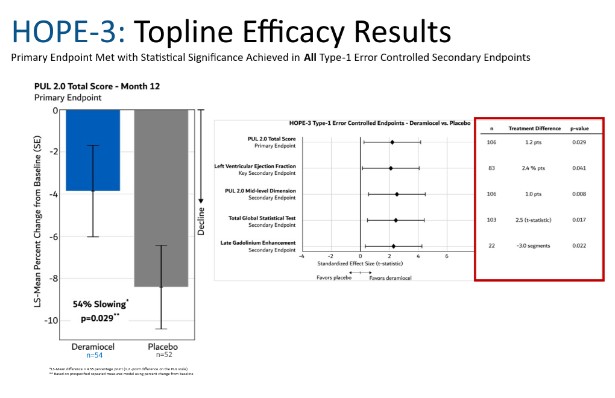
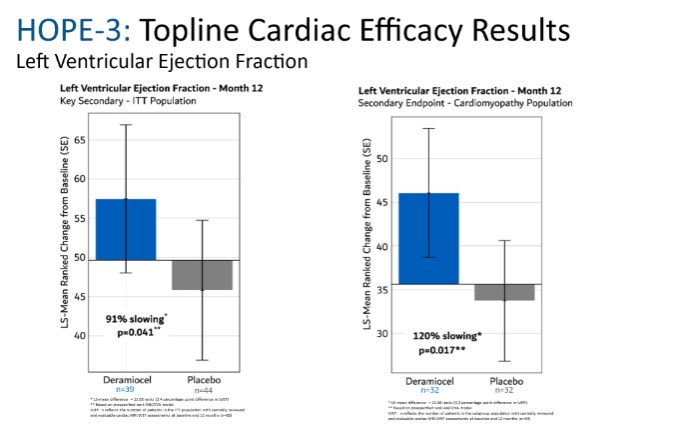
34

Table of Contents

significantly increase our costs to recover or reproduce the data. To the extent that any disruption or security breach were to result in a loss of, or damage to, our data or applications, or inappropriate disclosure of confidential or proprietary information, we could incur liability and the further development and commercialization of our product candidates could be significantly delayed.

We continue to build and improve our information systems and infrastructure and believe we have taken appropriate security measures to minimize these risks to our data, information technology systems and computer systems, and we intend to defend against and respond to data security incidents. There can be no assurance that our efforts will prevent breakdowns or breaches in our systems, or adequately contain and mitigate risks from a data security incident, which could result in a material disruption of our development programs and business operations, and our business, financial condition, results of operations and prospects could be adversely impacted.

If we achieve our near-term product development milestones, we may not be able to manage any subsequent growth.

Should we achieve our near-term product development milestones, of which no assurance can be given, our long-term viability will depend upon the expansion of our operations and the effective management of our growth, which will place a significant strain on our management and on our administrative, operational and financial resources, especially if we expand our business and operations internationally. To manage this growth, we will need to expand our facilities, augment our operational, financial and management systems and hire and train additional qualified personnel, including people and companies with expertise in commercialization activities, some of whom may be outside consultants who are not our full-time employees. If we are unable to manage our growth effectively, our business would be harmed.

Risks Related to Clinical and Commercialization Activities

Our success depends upon the viability of our product candidates and we cannot be certain any of them will receive regulatory approval to be commercialized.

We will need FDA approval to market and sell any of our product candidates in the United States and approvals from FDA-equivalent regulatory authorities in foreign jurisdictions to commercialize our product candidates in those jurisdictions. In order to obtain FDA approval of Deramiocel for the treatment of DMD, we submitted to the FDA a BLA for potential approval of Deramiocel, which currently is under review. This application requires significant research and animal testing, which are referred to as preclinical studies, as well as human testing, which are referred to as clinical trials. Satisfaction of the FDA’s regulatory requirements typically takes many years, depends upon the type, complexity, and novelty of the product candidate, and requires substantial resources for research, development, testing and manufacturing. We cannot predict whether our research and clinical approaches will result in drugs that the FDA considers safe for humans and effective for indicated uses. The FDA and other foreign regulatory agencies have substantial discretion in the approval process and may require us to conduct additional preclinical and clinical testing or to perform post-marketing studies. In addition, for biologic and cell therapy products, regulatory review may include scrutiny of our CMC package, manufacturing controls and facility readiness, and may require process changes, comparability data, or other remediation that could delay approval or limit the scope of an approved indication. The approval process may also be delayed by changes in government regulation, future legislation, administrative action or changes in FDA policy that occur prior to or during our regulatory review.

Even if we comply with all FDA requests, the FDA may ultimately reject one or more of our BLAs or NDAs, as applicable. We cannot be sure that we will ever obtain regulatory clearance for our product candidates. Failure to obtain FDA approval of any of our product candidates will reduce our number of potentially salable products, if any, and, therefore, corresponding product revenues, and will have a material and adverse impact on our business.

We have limited experience in conducting late-stage clinical trials, which are complex and subject to strict regulatory oversight.

We have limited late-stage clinical trial experience with respect to our product candidates. The clinical testing process is governed by stringent regulations and is highly complex, costly, time-consuming, and uncertain as to outcome, and pharmaceutical products and products used in the regeneration of tissue may invite particularly close scrutiny and requirements from the FDA and other regulatory bodies. Our failure or the failure of our collaborators to conduct clinical trials successfully or our failure to capitalize on the results of clinical trials for our product candidates would have a material adverse effect on the Company. If our clinical trials of our product candidates or future product candidates do not

35

Table of Contents

sufficiently enroll or produce results necessary to support regulatory approval in the United States or elsewhere, or if they show undesirable side effects, we will be unable to commercialize these product candidates.

To receive regulatory approval for the commercial sale of our product candidates, we must conduct adequate and well-controlled clinical trials to demonstrate efficacy and safety in humans. Clinical failure can occur at any stage of testing. Our clinical trials may produce negative or inconclusive results, and we may decide, or regulators may require us, to conduct additional clinical and/or non-clinical testing. In addition, the results of our clinical trials may show that our product candidates are ineffective or may cause undesirable side effects, which could interrupt, delay or halt clinical trials, resulting in the denial of regulatory approval by the FDA and other regulatory authorities. Furthermore, negative, delayed or inconclusive results may result in:

the withdrawal of clinical trial participants;
the termination of clinical trial sites or entire trial programs;
costly litigation arising out of the trials;
substantial monetary awards to patients or other claimants;
the requirement that additional trials be conducted;
impairment of our business reputation;
loss of potential revenues resulting from the inability to commercialize our product candidates.

As the results of earlier preclinical studies or clinical trials are not necessarily predictive of future results, any product candidate we advance into clinical trials may not have favorable results in later clinical trials or receive regulatory approval.

Even if our preclinical studies and clinical trials are completed as planned, we cannot be certain that their results will support the claims of our product candidates. Positive results in preclinical testing and early clinical trials do not ensure that results from later clinical trials will also be positive, and we cannot be sure that the results of later clinical trials will replicate the results of prior clinical trials and preclinical testing.

Our clinical trial process may fail to demonstrate that our product candidates are safe for humans and effective for indicated uses. This failure would cause us to abandon a product candidate and may delay development of other product candidates. Any delay in, or termination of, our clinical trials will delay or cause us to refrain from the filing of our BLAs and/or NDAs with the FDA and, ultimately, our ability to commercialize our product candidates and generate product revenues. In addition, our clinical trials to date involve small patient populations. Because of the small sample size, the results of these clinical trials may not be indicative of future results.

Despite the results reported in earlier clinical trials for our product candidates, we do not know whether any Phase 2, Phase 3 or other clinical trial which we may conduct will demonstrate adequate efficacy and safety to result in regulatory approval to market our product candidates. A number of companies in the pharmaceutical industry, including those with greater resources and experience, have suffered significant setbacks in Phase 2 or Phase 3 clinical trials, even after seeing promising results in earlier clinical trials.

Our exosome technologies are based on a novel therapeutic approach which makes it difficult to predict the time and cost of development and the probability of subsequently obtaining regulatory approval, if at all.

Our exosome technologies involve a relatively new therapeutic approach which will face both clinical and regulatory challenges. To date, and to the best of our knowledge, no products based on exosomes have been approved in the United States for therapeutic use. It is therefore difficult to accurately predict the developmental challenges we may face for our exosome technologies as they proceed through preclinical studies and clinical trials. In addition, because we have only conducted preclinical studies and, in collaboration with NIAID, recently initiated a Phase 1 clinical study, with our exosome technologies, we have not yet been able to assess their safety in humans, and there may be short-term or long-term effects from treatment with our exosomes that we cannot predict at this time. Also, animal models for the indications we may explore may not exist or may be difficult to obtain for our preclinical studies. As a result of these factors, we are unable to predict the time and cost of development of our exosome technologies and we cannot predict whether the application of our exosome technologies, or any similar or competitive exosome technologies, will result in regulatory approval of any products. There can be no assurance that any development problems we experience in the future related to our exosomes or any of our research programs will not cause significant delays or unanticipated costs, or that such development problems can be solved. We may also decide to discontinue exosome development programs if we

36

Table of Contents

believe that there is excessive competition in a disease target. Any of these factors may prevent us from completing our preclinical studies or any clinical trials that we may initiate or commercializing any product candidates we may develop on a timely or profitable basis, if at all.

The clinical trial requirements of the FDA, the EMA, and other regulatory authorities and the criteria these regulators use to determine the safety and efficacy of a product candidate vary substantially according to the type, complexity and intended use and market of the product candidate. As a result, the regulatory approval process for our exosomes is uncertain and may be more expensive and take longer than the approval process for other product candidates. It is difficult to determine how long it will take or how much it will cost to obtain regulatory approvals for our exosomes in either the United States or the European Union or other regions of the world or how long it will take to commercialize our product candidates, if at all. Delay or failure to obtain, or unexpected costs in obtaining, the regulatory approval necessary to bring a potential product candidate to market could decrease our ability to generate sufficient product revenue, and our business, financial condition, results of operations and prospects may be adversely impacted.

Negative developments in the field of exosomes could damage public perception of any product candidates that we develop, which could adversely affect our ability to conduct our business or obtain regulatory approvals for such product candidates.

Exosome-based therapeutics and vaccines are novel and unproven therapies which may not gain the acceptance of the public, patients or the medical community. To date, efforts by others to leverage natural exosomes have generally demonstrated an inability to generate exosomes with predictable biologically active properties or to manufacture exosomes at suitable scale to treat more than a small number of patients. Our success will depend on our ability to demonstrate that our exosome technologies can overcome these challenges.

Additionally, our success will depend upon physicians who specialize in the treatment of diseases targeted by our exosomes prescribing treatments that involve the use of our product candidates in lieu of, or in addition to, existing treatments with which they are more familiar and for which greater clinical data may be available. Adverse events in clinical trials of our exosomes or in clinical trials of others developing similar products and the resulting publicity, as well as any other adverse events in the field of exosome therapeutics, could result in a decrease in demand for any products that we may develop. These events could also result in the suspension, discontinuation, or clinical hold of, or modification to, our clinical trials. Any future negative developments in the field of exosomes and their use as therapies could also result in greater governmental regulation, stricter labeling requirements and potential regulatory delays in the testing or approvals of our exosomes or other potential future product candidates. Any increased scrutiny could delay or increase the costs of obtaining marketing approval for our exosomes or any other product candidates which we may develop in the future.

Advancing product candidates based on our exosome platform as novel products creates significant challenges for us, including:

to our knowledge, obtaining marketing approval from the FDA or comparable foreign regulatory authorities has never been done before;
educating medical personnel regarding the potential efficacy and safety benefits, as well as the challenges, of incorporating our product candidates, if approved, into treatment regimens; and
establishing the sales and marketing capabilities to gain market acceptance, if approved.

We may not be able to file INDs to commence additional clinical trials on the timelines we expect, and even if we are able to do so, the FDA may not permit us to proceed.

We hope to file additional INDs over the next several years, including with respect to our exosome technologies in one or more indications as well as potentially in BMD. However, the timing of our filing of these INDs is primarily dependent on receiving further data from our preclinical studies, having sufficient processes in place in connection with the manufacturing of the exosomes and the availability of necessary funding for any potential clinical trial.

We cannot be sure that submission of an IND will result in the FDA allowing further clinical trials to begin, or that, once begun, issues will not arise that result in the suspension or termination of such clinical trials. Any IND we submit could be denied by the FDA or the FDA could place any future investigation of ours on clinical hold until we provide additional information, either before or after clinical trials are initiated. Additionally, even if such regulatory authorities agree with the design and implementation of the clinical trial set forth in an IND or clinical trial application, we cannot

37

Table of Contents

guarantee that such regulatory authorities will not change their requirements in the future. The FDA may also impose clinical holds at any time before or during clinical trials due to unacceptable and significant risks to clinical trial subjects or non-compliance with FDA requirements. Unfavorable future trial results or other factors, such as insufficient capital to continue development of a product candidate or program, could also cause us to voluntarily withdraw an effective IND.

Delays in the commencement, enrollment, and completion of clinical testing, as well as reduced government funding of certain clinical trials, could result in increased costs to us and delay or limit our ability to obtain regulatory approval for our product candidates.

Delays in the commencement, enrollment or completion of clinical testing could significantly affect our product development costs. Additionally, a clinical trial may be suspended or terminated by the Company, the FDA, or other regulatory authorities due to a number of factors. The commencement and completion of clinical trials require us to identify and maintain a sufficient number of trial sites, many of which may already be engaged in other clinical trial programs for the same indication as our product candidates or may otherwise be resource constrained. We may be required to withdraw from a clinical trial as a result of changing standards of care, or we may become ineligible to participate in clinical studies. In addition, clinical trials which were due to receive support from the U.S. government, such as the NIAID clinical trial using our StealthXTM vaccine candidate, may be impacted by staffing reductions as well as changes in government priorities with a new U.S. presidential administration. We do not know whether planned clinical trials will begin on time or be completed on schedule, if at all. The commencement, enrollment and completion of clinical trials can be delayed for a number of reasons, including, but not limited to, delays related to:

findings in preclinical studies;
reaching agreements on acceptable terms with prospective CROs, vendors and trial sites, the terms of which can be subject to extensive negotiation and may vary significantly among different CROs, vendors and trial sites;
obtaining regulatory clearance to commence a clinical trial;
complying with conditions imposed by a regulatory authority regarding the scope or term of a clinical trial, or being required to conduct additional trials before moving on to the next phase of trials;
obtaining IRB approval to conduct a clinical trial at numerous prospective sites;
recruiting and enrolling patients to participate in clinical trials for a variety of reasons, including the size of the patient population, nature of trial protocol, meeting the enrollment criteria for our studies, screening failures, the inability of the sites to conduct trial procedures properly, the inability of the sites to devote their resources to the trial, the availability of approved effective treatments for the relevant disease and competition from other clinical trial programs for similar indications;
the impact of infectious disease outbreaks or pandemics on site personnel availability, patient screening and patient enrollment;
competition from other companies operating in the same disease setting;
developing and validating any companion diagnostic to be used in the trial, to the extent we are required to do so;
patients failing to comply with the clinical trial protocol or dropping out of a trial;
clinical trial sites failing to comply with the clinical trial protocol or dropping out of a trial;
addressing any conflicts with new or existing laws or regulations;
the need to add new clinical trial sites;
retaining patients who have initiated their participation in a clinical trial but may withdraw due to the treatment protocol, lack of efficacy, personal issues, or side effects from the therapy, or who are lost to further follow-up;
manufacturing sufficient quantities of a product candidate for use in clinical trials on a timely basis;
obtaining advice from regulatory authorities regarding the statistical analysis plan to be used to evaluate the clinical trial data or other trial design issues;
demonstrating the bioequivalence of products we manufacture to prior products manufactured by us;
complying with design protocols of any applicable special protocol assessment we receive from the FDA;
severe or unexpected drug-related side effects experienced by patients in a clinical trial;
collecting, analyzing and reporting final data from the clinical trials;
breaches in quality of manufacturing runs that compromise all or some of the doses made; positive results in FDA-required viral testing; karyotypic abnormalities in our cell product; or contamination in our manufacturing facilities, as well as equipment failures, operator error, variability in yields or cell viability,

38

Table of Contents

or other deviations that may result in lot failures or product loss, all of which events would necessitate disposal of all cells made from that source;
availability of materials provided by third parties necessary to manufacture our product candidates;
availability of adequate amounts of acceptable tissue for preparation of master cell banks for our products;
requirements to conduct additional trials and studies, and increased expenses associated with the services of the Company’s CROs and other third parties; and
meeting logistical requirements for the delivery of investigational product.

If we are required to conduct additional clinical trials or other testing of our product candidates beyond those that we currently contemplate, we or our development partners, if any, may be delayed in obtaining, or may not be able to obtain or maintain, clinical or marketing approval for these product candidates. We may not be able to obtain approval for indications that are as broad as intended, or we may be able to obtain approval only for indications that are entirely different from those indications for which we sought approval.

Changes in regulatory requirements and guidance may occur, and we may need to amend clinical trial protocols to reflect these changes with appropriate regulatory authorities. In August 2023, the FDA published a guidance document, Informed Consent, Guidance for IRBs, Clinical Investigators, and Sponsors, which supersedes past guidance and finalizes draft guidance on informed consent. The FDA’s new guidance presents evolving requirements for informed consent which may affect recruitment and retention of patients in clinical trials. Further, in December 2023, the FDA published a final rule, Institutional Review Board Waiver or Alteration of Informed Consent for Minimal Risk Clinical Investigations, which allows exceptions from informed consent requirements when a clinical investigation poses no more than minimal risk to the human subject and includes appropriate safeguards to protect the rights, safety, and welfare of human subjects. Modifications to informed consent or other clinical trial requirements may affect enrollment or retention of patients, require modifications to trial documents and may cause delays to the trial.

Amendments may require us to resubmit our clinical trial protocols to IRBs for re-examination which may impact the costs, timing, or successful completion of a clinical trial. If we experience delays in the completion of, or if we terminate, our clinical trials, the commercial prospects for our product candidates will be harmed, and our ability to generate product revenues will be delayed or will not be realized. In addition, many of the factors that cause, or lead to, a delay in the commencement or completion of clinical trials may also ultimately lead to the denial of regulatory approval of a product candidate. Even if we are able to ultimately commercialize our product candidates, other therapies for the same or similar indications may have been introduced to the market and already established a competitive advantage. Any delays in obtaining regulatory approvals may:

delay commercialization of, and our ability to derive product revenues from, our product candidates;
impose costly procedures on us; or
diminish any competitive advantages that we may otherwise enjoy.

We may experience numerous unforeseen events during, or as a result of, clinical trials that could delay or prevent our ability to receive marketing approval or commercialize our product candidates, including:

we may receive feedback from regulatory authorities that requires us to modify the design of our clinical trials;
clinical trials of our product candidates may produce negative or inconclusive results, and we may decide, or regulators may require us, to conduct additional clinical trials or abandon drug development programs;
the number of patients required for clinical trials of our product candidates may be larger than we anticipate, enrollment in these clinical trials may be slower than we anticipate or participants may drop out of these clinical trials at a higher rate than we anticipate;
our third-party contractors, including our CROs, may fail to comply with regulatory requirements or meet their contractual obligations to us in a timely manner, or at all;
we, our investigators, or any of the overseeing IRBs or ethics committees might decide to suspend or terminate clinical trials of our product candidates for various reasons, including non-compliance with regulatory requirements, a finding that our product candidates have undesirable side effects or other unexpected characteristics, or a finding that the participants are being exposed to unacceptable health risks;
the cost of clinical trials of our product candidates may be greater than we anticipate;

39

Table of Contents

the supply or quality of our product candidates or other materials necessary to conduct clinical trials of our product candidates may be insufficient or inadequate;
regulators may revise the requirements for approving our product candidates, or such requirements may not be as we anticipate; and
any future collaborators that conduct clinical trials may face any of the above issues, and may conduct clinical trials in ways they view as advantageous to them but that are suboptimal for us.

If we are required to conduct additional clinical trials or other testing of our product candidates beyond those that we currently contemplate, if we are unable to successfully complete clinical trials of our product candidates or other testing, if the results of these trials or tests are not positive or are insufficiently positive to support marketing approval, or if there are safety concerns, we may:

incur unplanned costs;
be delayed in obtaining marketing approval for our product candidates or not obtain marketing approval at all;
obtain marketing approval in some countries and not in others;
obtain marketing approval for indications or patient populations that are narrower or more limited in scope than intended or desired;
obtain marketing approval subject to significant use or distribution restrictions or with labeling that includes significant safety warnings, including boxed warnings;
be subject to additional post-marketing testing requirements; or
have the drug removed from the market after obtaining marketing approval.

Our drug development costs will also increase if we experience delays in testing or marketing approvals. We do not know whether clinical trials will begin as planned, will need to be restructured or will be completed on schedule, or at all. Furthermore, we rely on third-party CROs and clinical trial sites to ensure the proper and timely conduct of our clinical trials, and while we have agreements governing their committed activities, we have limited influence over their actual performance. Significant clinical trial delays also could shorten any periods during which we may have the exclusive right to commercialize our product candidates or allow our competitors to bring drugs to market before we do and impair our ability to successfully commercialize our product candidates and may harm our business and results of operations.

The biopharmaceutical industry is subject to extensive regulatory obligations and policies that may be subject to significant and abrupt change, including due to judicial challenges, election cycles, and resulting regulatory updates and changes in policy priorities.

On June 28, 2024, the U.S. Supreme Court issued an opinion holding that courts reviewing agency action pursuant to the Administrative Procedure Act (APA) “must exercise their independent judgment” and “may not defer to an agency interpretation of the law simply because a statute is ambiguous.” The decision may have a significant impact on how lower courts evaluate challenges to agency interpretations of law, including those by the U.S. Department of Health and Human Services, CMS, FDA and other agencies with significant oversight of the biopharmaceutical industry.  The new framework is likely to increase both the frequency of such challenges and their odds of success by eliminating one way in which the government previously prevailed in such cases. As a result, significant regulatory policies may be subject to increased litigation and judicial scrutiny.

In addition, federal agency activities, priorities, leadership, policies, rulemaking, communications, spending, and staffing may be significantly impacted by election cycles and legislative developments. For example, the current presidential administration has signaled its continued commitment to significantly reduce government spending through cuts to federal healthcare programs and reductions in the workforces of key government agencies, such as the U.S. Department of Health and Human Services, CMS and FDA.  Efforts by the current administration to further limit federal agency budgets or personnel may result in reductions to agency budgets, employees, and operations. The administration and agencies have also made abrupt announcements about new or changed regulatory policies, such as policies related to use of AI to review product applications.

And, federal government shutdowns may prevent the FDA or other regulatory authorities from conducting their regular inspections, reviews or other regulatory activities, and may significantly impact the ability of the FDA to timely review and process our regulatory submissions. These developments may lead to slower response times and longer review

40

Table of Contents

periods, potentially affecting our ability to progress development of our product candidates or obtain regulatory approval for our product candidates. Any resulting changes in regulation may result in unexpected delays, increased costs, or other negative impacts on our business that are difficult to predict. In addition, changes in the administration’s policies and personnel could result in decisions that differ from, or supersede, those made by government personnel under prior administrations.

There are also a number of healthcare-related legislative and regulatory initiatives and reforms in the United States that significantly affect the biopharmaceutical industry. For example, there has been heightened governmental scrutiny in the U.S. of pharmaceutical pricing practices in light of the rising cost of prescription drugs and biologics. Such scrutiny has resulted in several congressional inquiries and proposed and enacted federal and state legislation designed to, among other things, bring more transparency to product pricing, review the relationship between pricing and manufacturer patient programs, and reform government program reimbursement methodologies for products. Any resulting changes in regulation may result in unexpected delays, increased costs, or other negative impacts on our business that are difficult to predict. Also, changes in the administration’s policies and personnel may result in decisions contrary to or overriding decisions previously made by government personnel under prior administrations.

The outcome of preclinical testing and early clinical trials may not be predictive of the success of later clinical trials, interim results of a clinical trial do not necessarily predict final results, and the results of our clinical trials may not satisfy the requirements of the FDA or comparable foreign regulatory authorities.

We currently have no products approved for sale and we cannot guarantee that we will ever have marketable drugs. Clinical failure can occur at any stage of clinical development. Clinical trials may produce negative or inconclusive results, and we or any future collaborators may decide, or regulators may require us, to conduct additional clinical trials or preclinical studies. We will be required to demonstrate with substantial evidence through adequate and well-controlled clinical trials that our product candidates are safe and effective for use in treating specific conditions in order to obtain marketing approvals for their commercial sale. Success in preclinical studies and early-stage clinical trials does not mean that future larger registration clinical trials will be successful because product candidates in later-stage clinical trials may fail to demonstrate safety and efficacy to the satisfaction of the FDA and non-U.S. regulatory authorities despite having progressed through preclinical studies and early-stage clinical trials. Product candidates that have shown promising results in preclinical studies and early-stage clinical trials may still suffer significant setbacks in subsequent registration clinical trials. Additionally, the outcome of preclinical studies and early-stage clinical trials may not be predictive of the success of later-stage clinical trials.

From time to time, we may publish or report interim or preliminary data from our clinical trials, once initiated. Interim or preliminary data from clinical trials that we may conduct may not be indicative of the final results of the trial and are subject to the risk that one or more of the clinical outcomes may materially change as patient enrollment continues and more patient data become available. Interim or preliminary data also remain subject to audit and verification procedures that may result in the final data being materially different from the interim or preliminary data. As a result, interim or preliminary data should be viewed with caution until the final data are available.

In addition, the design of a clinical trial can determine whether its results will support approval of a drug and flaws in the design of a clinical trial may not become apparent until the clinical trial is well advanced. We have limited experience in designing late-stage clinical trials and may be unable to design and conduct a clinical trial to support marketing approval. Further, if our product candidates are found to be unsafe or lack efficacy, we will not be able to obtain marketing approval for them and our business would be harmed. A number of companies in the pharmaceutical industry, including those with greater resources and experience than us, have suffered significant setbacks in advanced clinical trials, even after obtaining promising results in preclinical studies and earlier clinical trials.

In some instances, there can be significant variability in safety and efficacy results between different clinical trials of the same product candidate due to numerous factors, including changes in trial protocols, differences in size and type of the patient populations, differences in and adherence to the dosing regimen and other trial protocols and the rate of dropout among clinical trial participants. We do not know whether any clinical trials we may conduct will demonstrate consistent or adequate efficacy and safety sufficient to obtain marketing approval to market our product candidates.

In the event that an adverse safety issue, clinical hold or other adverse finding occurs in one or more of our clinical trials, once initiated, or in a clinical trial conducted by a third-party sponsor or investigator using the same product candidate, such event could adversely affect our other clinical trials and ability to obtain marketing approval. Moreover,

41

Table of Contents

there is a relatively limited safety data set for product candidates using an exosome platform. An adverse safety issue or other adverse finding in a clinical trial conducted by a third-party with a product candidate similar to ours could adversely affect our clinical trials.

Further, our product candidates may not be approved even if they achieve their primary endpoints in Phase 3 clinical trials or registration trials. The FDA or comparable foreign regulatory authorities may disagree with our trial design and our interpretation of data from preclinical studies and clinical trials. In addition, any of these regulatory authorities may change requirements for the approval of a product candidate even after reviewing and providing comments or advice on a protocol for a pivotal clinical trial that has the potential to result in approval by the FDA or comparable foreign regulatory authorities. In addition, any of these regulatory authorities may also approve a product candidate for fewer or more limited indications than we request or may grant approval contingent on the performance of costly post-marketing clinical trials. In addition, the FDA or other comparable foreign regulatory authorities may not approve the labeling claims that we believe would be necessary or desirable for the successful commercialization of our product candidates.

Before obtaining marketing approval for the commercial sale of any product candidate for a target indication, we must demonstrate with substantial evidence gathered in preclinical studies and adequate and well-controlled clinical trials, and, with respect to approval in the United States, to the satisfaction of the FDA and elsewhere to the satisfaction of other comparable foreign regulatory authorities, that the product candidate is safe and effective for use for that target indication. There is no assurance that the FDA or other comparable foreign regulatory authorities will consider our future clinical trials to be sufficient to serve as the basis for approval of one of our product candidates for any indication. The FDA and other comparable foreign regulatory authorities retain broad discretion in evaluating the results of our clinical trials and in determining whether the results demonstrate that a product candidate is safe and effective. If we are required to conduct additional clinical trials of a product candidate than we expect prior to its approval, we will need substantial additional funds and there is no assurance that the results of any such additional clinical trials will be sufficient for approval in our target markets, including the United States and Japan.

The regulatory pathway for COVID-19 or other infectious disease vaccines is continually evolving and may result in unexpected or unforeseen challenges.

The speed at which select parties have acted to create and test many therapeutics and vaccines for COVID-19 or other infection diseases is atypical. Further, changing plans or priorities within the FDA, other government departments, or the regulatory authorities in other jurisdictions, including changes based on new knowledge of COVID-19 or other infectious diseases, and new variants of the virus, may significantly affect the regulatory timeline for further authorizations or approvals. We cannot anticipate or predict with certainty the timelines or regulatory processes that may be required for the development of our potential COVID-19 vaccine that may be developed to fight against variants of the SARS-CoV-2 virus. We may also decide to discontinue exosome development programs if we believe that there is excessive competition in a disease target.

We may not be successful in our efforts to identify or discover additional potential product candidates or additional indications for our existing product candidates.

Our research programs may initially show promise in identifying potential product candidates or potential additional indications for existing product candidates, yet fail to lead to successful clinical development for a number of reasons, including:

the research methodology used may not be successful in identifying potential product candidates;
potential product candidates may, on further study, be shown to have harmful side effects or other characteristics that indicate that they are unlikely to be drugs that will receive marketing approval and/or achieve market acceptance; and
potential product candidates may not be safe or effective in treating their targeted diseases.

Research programs to identify new product candidates require substantial technical, financial and human resources. If we are unable to identify suitable compounds for preclinical and clinical development, our business would be harmed.

42

Table of Contents

If any of our product candidates receives marketing approval and we, or others, later discover that the drug is less effective than previously believed or causes undesirable side effects that were not previously identified, our ability, or that of any future distributors or collaborators, to market the drug could be compromised.

Clinical trials of our product candidates must be conducted in carefully defined subsets of patients who have agreed to enter into clinical trials. Consequently, it is possible that our clinical trials, or those of any future collaborator, may indicate an apparent positive effect of a product candidate that is greater than the actual positive effect, if any, or alternatively fail to identify undesirable side effects. If one or more of our product candidates receives marketing approval and we, or others, discover that the drug is less effective than previously believed or causes undesirable side effects that were not previously identified, a number of potentially significant negative consequences could result, including:

regulatory authorities may withdraw their approval of the drug or seize the drug;
we, or any future collaborators, may be required to recall the drug, change the way the drug is administered or conduct additional clinical trials;
additional restrictions may be imposed on the marketing of, or the manufacturing processes for, the particular drug;
we may be subject to fines, injunctions or the imposition of civil or criminal penalties;
regulatory authorities may require the addition of labeling statements, such as a “black box” warning or a contraindication;
we, or any future collaborators, may be required to create a Medication Guide outlining the risks of the previously unidentified side effects for distribution to patients;
we, or any future collaborators, could be sued and held liable for harm caused to patients;
the drug may become less competitive in the marketplace; and
our reputation may suffer.

Any of these events could have a material and adverse effect on our operations and business and could adversely impact our stock price.

Even if any of our product candidates receive marketing approval, they may fail to achieve the degree of market acceptance by physicians, patients, healthcare payors and others in the medical community necessary for commercial success.

If any of our product candidates receive marketing approval, they may nonetheless fail to gain sufficient market acceptance by physicians, patients, healthcare payors and others in the medical community. If our product candidates do not achieve an adequate level of acceptance, we may not generate sufficient revenues from sales of drugs to cover our costs and we may not become profitable. The degree of market acceptance of our product candidates, if approved for commercial sale, will depend on a number of factors, including:

the efficacy and safety of the product;
the potential advantages of the product compared to alternative therapies;
the prevalence and severity of any side effects;
whether the product is designated under physician and other provider treatment guidelines as a first-, second- or third-line therapy;
our ability, or the ability of any future collaborators, to offer the product for sale at competitive prices;
the product’s convenience and ease of administration for patients and healthcare practitioners compared to alternative treatments;
site-of-care requirements, infusion logistics, and the ability of treatment centers and payors to support administration and access on a timely basis;
the willingness of the target patient population to try, and of physicians to prescribe, the product;
limitations or warnings, including distribution or use restrictions and safety information contained in the product’s approved labeling;
the strength of sales, marketing and distribution support;
the performance of third-party distributors, such as our exclusive distributor for our lead product candidate, Deramiocel;
changes in the standard of care for the targeted indications for the product; and

43

Table of Contents

the availability of coverage by, and the amount of reimbursement from, government payors, managed care plans and other third-party payors.

We face substantial competition, which may result in others discovering, developing or commercializing products before or more successfully than we do.

The pharmaceutical and biotechnology industries are highly competitive and characterized by rapidly advancing technologies, evolving understanding of disease etiology and a strong emphasis on proprietary drugs. We face competition with respect to any product candidates that we may seek to discover and develop or commercialize in the future, from major pharmaceutical, specialty pharmaceutical and biotechnology companies. Potential competitors also include academic institutions and governmental agencies and public and private research institutions.

Many of the companies that we compete or may compete against in the future have significantly greater financial resources and expertise in research and development, manufacturing, preclinical testing, conducting clinical trials, obtaining regulatory approvals and marketing approved drugs than we do. Small or early-stage companies may also prove to be significant competitors, particularly through collaborative arrangements with large and established companies. These competitors also compete with us in recruiting and retaining qualified scientific and management personnel and establishing clinical trial sites and patient registration for clinical trials, as well as in acquiring technologies complementary to, or that may be necessary for, our programs.

There are numerous pharmaceutical and biotechnology companies, academic institutions, government agencies and research organizations developing therapies for Duchenne muscular dystrophy (“DMD”) in the United States and internationally. If approved, Deramiocel will compete with both currently approved therapies and product candidates in development. Several exon-skipping therapies have received accelerated approval from the FDA for genetically defined subsets of DMD patients, including EXONDYS 51® (eteplirsen), AMONDYS 45® (casimersen), and VYONDYS 53® (golodirsen), which are phosphorodiamidate morpholino oligomers (“PMOs”) marketed by Sarepta Therapeutics, as well as VILTEPSO® (viltolarsen), a PMO marketed by Nippon Shinyaku through its U.S. subsidiary, NS Pharma, Inc. In addition, gene therapy approaches are being developed to deliver functional microdystrophin to muscle cells, including ELEVIDYS® (delandistrogene moxeparvovec), also developed by Sarepta Therapeutics, which is approved in the United States for certain individuals with DMD aged four years and older. Numerous other companies are developing genetic and non-genetic therapies designed to target dystrophin expression or other mechanisms associated with disease progression in DMD.

Our commercial opportunity could be reduced or eliminated if our competitors develop and commercialize drugs that are safer, more effective, have fewer or less severe side effects, are more convenient or are less expensive than any drugs that we may develop. Our competitors also may obtain FDA or other comparable foreign regulatory approval for their drugs more rapidly than we may obtain approval for ours, which could result in our competitors establishing a strong market position before we are able to enter the market. The key competitive factors affecting the success of all of our product candidates, if approved, are likely to be their efficacy, safety, convenience, price, the effectiveness of companion diagnostics in guiding the use of related therapeutics, the level of generic competition and the availability of reimbursement from government and other third-party payors.

The FDA has granted orphan drug status and an RMAT designation to Deramiocel for the treatment of DMD, but we may be unable to maintain or receive the benefits associated with orphan drug status, including market exclusivity, or an RMAT designation.

Under the Orphan Drug Act, the FDA may grant orphan designation to a drug or biologic intended to treat a rare disease or condition or for which there is no reasonable expectation that the cost of developing and making available in the United States a drug or biologic for a disease or condition will be recovered from sales in the United States for that drug or biologic. If a biological product that has orphan drug designation subsequently receives the first FDA approval for the disease for which it has such designation, the product is entitled to orphan product exclusivity, which means that the FDA may not approve any other applications, including a full BLA, to market the same biologic for the same indication for seven years, except in limited circumstances, such as a showing of clinical superiority to the product with orphan drug exclusivity.

We have received orphan drug status for Deramiocel for the treatment of DMD from the U.S. and EMA. Even though we have received orphan drug designation (“ODD”) as described above, we may not be the first to obtain marketing

44

Table of Contents

approval for the orphan-designated indication due to the uncertainties associated with developing pharmaceutical products. For any product candidate for which we have been or will be granted ODD in a particular indication, it is possible that another company also holding ODD for the same product candidate will receive marketing approval for the same indication before we do. If that were to happen, our applications for that indication may not be approved until the competing company’s period of exclusivity expires.

In addition, our exclusive marketing rights in the United States, if obtained, may be limited if we seek approval for an indication broader than the orphan designated indication and may be lost if the FDA later determines that the request for designation was materially defective or if we are unable to assure the availability of sufficient quantities of the product to meet the needs of patients with the rare disease or condition. Even though we have obtained ODD for Deramiocel for a select indication, we may be unable to seek or obtain ODD for our future product candidates and we may not be the first to obtain marketing approval for any particular orphan indication.

In addition, Congress is considering updates to the orphan drug provisions of the FDCA in response to a recent 11th Circuit decision. Any changes to the orphan drug provisions could change our opportunities for, or likelihood of success in obtaining, orphan drug exclusivity and would materially adversely affect our business, financial condition, results of operations, cash flows and prospects.

We have also obtained an RMAT designation for Deramiocel for the treatment of DMD. The RMAT designation program is intended to fulfill the Cures Act requirement that the FDA facilitate an efficient development program for, and expedite review of, any drug that meets the following criteria: (1) it qualifies as a RMAT, which is defined as a cell therapy, therapeutic tissue engineering product, human cell and tissue product, or any combination product using such therapies or products, with limited exceptions; (2) it is intended to treat, modify, reverse, or cure a serious or life-threatening disease or condition; and (3) preliminary clinical evidence indicates that the drug has the potential to address unmet medical needs for such a disease or condition. Like breakthrough therapy designation, RMAT designation provides potential benefits that include more frequent meetings with FDA to discuss the development plan for the product candidate, and eligibility for rolling review and priority review. Products granted RMAT designation may also be eligible for accelerated approval on the basis of a surrogate or intermediate endpoint reasonably likely to predict long-term clinical benefit, or may be able to rely upon data obtained from a meaningful number of sites, including through expansion to additional sites. RMAT designation does not change the standards for product approval, and there is no assurance that such designation will result in expedited review or approval or that the approved indication will not be narrower than the indication covered by the RMAT designation. Additionally, RMAT designation can be revoked if the criteria for eligibility cease to be met as clinical data emerges.

Even if we were to obtain approval for Deramiocel for the treatment of DMD with the rare pediatric disease designation, the Rare Pediatric Disease Priority Review Voucher Program may no longer be in effect at the time of such approval.

Deramiocel has received rare pediatric disease designation from the FDA for the treatment of DMD. The FDA generally define a "rare pediatric disease" as a serious or life-threatening disease that affects fewer than 200,000 individuals in the U.S. primarily under the age of 18 years old. Under the FDA's Rare Pediatric Disease Priority Review Voucher program, upon the approval of a BLA or NDA for the treatment of a rare pediatric disease, the sponsor of such application would be eligible for a Rare Pediatric Disease Priority Review Voucher that can be used to obtain priority review for a subsequent BLA or NDA. The Priority Review Voucher may be sold or transferred an unlimited number of times, as long as the sponsor making the transfer has not yet submitted the application. Also, although Priority Review Vouchers may be sold or transferred to third parties, there is no guaranty that we will be able to realize any value if we were to sell a Priority Review Voucher. The FDA may also revoke any priority review voucher if the rare pediatric disease drug for which the voucher was awarded is not marketed in the U.S. within one year following the date of approval.

Congress had only authorized the rare pediatric disease priority review voucher program until September 30, 2024. However, the program was reauthorized by the Consolidated Appropriations Act, 2026, extending the FDA’s authority to award rare pediatric disease priority review vouchers until September 30, 2029. Accordingly, the prior sunset deadlines tied to designations and approvals have been superseded, and voucher eligibility will depend on satisfaction of applicable statutory requirements at the time of approval.

45

Table of Contents

Providing product for use in third-party trials or for compassionate use poses risks to our product candidates.

In addition to manufacturing Deramiocel for its own clinical trials, Capricor provided Deramiocel for investigational purposes in two clinical trials sponsored by CSMC. Additionally, we recently were selected to be part of Project NextGen, an initiative by the U.S. Department of Health and Human Services to advance a pipeline of new, innovative vaccines for COVID-19. As part of Project NextGen, the National Institute of Allergy and Infectious Diseases, part of the National Institutes of Health, is conducting a Phase 1 clinical study with our StealthX™ vaccine. NIAID's Division of Microbiology and Infectious Diseases (“DMID”) is overseeing the study.

Providing product for clinical trials sponsored by third parties poses significant risks for the Company as we will not have control over the conduct of the trial even though we have used our commercially reasonable efforts to ensure that the investigative sites are contractually bound to follow the protocol and other procedures established by Capricor. Similarly, providing product for compassionate use can pose risks for the Company as its use will not be subject to the same protocol and procedures established in our clinical trials. Additionally, even though the investigative sites have experience in conducting clinical trials, any adverse event that may occur during the trial may have a negative impact on our efforts to obtain regulatory approval for our product. There are no assurances that the clinical trial sites will perform the studies in accordance with the protocol, the manuals provided by Capricor or the sponsor’s instructions, or otherwise act in accordance with applicable law. There is no assurance that if research injuries are sustained, any insurance carrier will compensate Capricor for any liabilities or other losses sustained by Capricor arising out of these injuries. We have been informed by CSMC that both of the Deramiocel (REGRESS and ALPHA) trials have ceased enrollment and that the trials have been concluded. Notwithstanding their cessation, there is a risk that injuries could result from the use of the product or other claims may arise.

Our products face a risk of failure due to adverse immunological reactions.

A potential risk of an allogeneic therapy such as that being tested by the Company with Deramiocel is that patients might develop an immune response to the cells being infused. Such an immune response may induce adverse clinical effects which would impact the safety and efficacy of the Company’s products and the success of our trials. Additionally, if research subjects have pre-existing antibodies or other immune sensitization to our cells, our cells and the therapy could potentially be rendered ineffective which could have a negative impact on the regulatory pathway for our product as well as the viability for other potential indications. After a patient in the HOPE-2 trial had a serious adverse event in the form of anaphylaxis, we put a voluntary hold on dosing in December 2018 to develop a plan to manage potential allergic reactions. The investigation suggests that the patient may have been allergic to something contained in the investigational product, including possibly an excipient, or inactive ingredient, in the formulation. To reduce the risk of future events, we initiated a pre-medication strategy commonly used by physicians to prevent and treat allergic reactions. We cannot provide any assurances that similar events will not happen again in our current trials or in any future studies. If these or other reactions continue to occur, it could have a material adverse impact on the effectiveness of the product, our ability to receive approval of our product candidates, and could result in substantial delays, increased costs and potentially termination of the trial.

Our business faces significant government regulation, and there is no guarantee that our product candidates will receive regulatory approval.

Our research and development activities, preclinical studies, clinical trials, and manufacturing and marketing of our potential products are subject to extensive regulation by the FDA and other regulatory authorities in the United States, as well as by regulatory authorities in other countries. In the United States, our product candidates are subject to regulation as biological products or as combination biological products/medical devices under the Federal Food, Drug and Cosmetic Act, the Public Health Service Act and other statutes, and as further provided in the Code of Federal Regulations. Different regulatory requirements may apply to our products depending on how they are categorized by the FDA under these laws. These regulations can be subject to substantial and significant interpretation, addition, amendment or revision by the FDA and by the legislative process. The FDA may determine that we will need to undertake clinical trials beyond those currently planned. Furthermore, the FDA may determine that results of clinical trials do not support approval for the product or they may determine that our trials were not well-controlled or were deficient in some other way. Similar determinations may be encountered in foreign countries including determinations that our manufacturing processes being utilized in the United States are not compliant with the regulations adopted in those foreign countries. The FDA will continue to monitor products in the market after approval, if any, and may determine to withdraw its approval or otherwise seriously affect the marketing efforts for any such product. The same possibilities exist for trials to be conducted outside of the United States that are

46

Table of Contents

subject to regulations established by local authorities and local law. Any such determinations would delay or deny the introduction of our product candidates to the market and have a material adverse effect on our business, financial condition, and results of operations.

Drug manufacturers are subject to ongoing periodic unannounced inspection by the FDA, the Drug Enforcement Agency, other federal agencies and corresponding state agencies to ensure strict compliance with good manufacturing practices, and other government regulations and corresponding foreign standards. We do not have control over third-party manufacturers’ compliance with these regulations and standards, nor can we guarantee that we will maintain compliance with such regulations in regards to our own manufacturing processes. Other risks include:

regulatory authorities may require the addition of labeling statements, specific warnings, a contraindication, or field alerts to physicians and pharmacies;
regulatory authorities may withdraw their approval of the IND or the product or require us to take our approved products off the market;
we may be required to change the way the product is manufactured or administered, and we may be required to conduct additional clinical trials or change the labeling of our products;
we will be required to manufacture on our own behalf or retain the services of a commercial manufacturer to develop product suitable for commercial sale in compliance with cGMP requirements;
we may have limitations on how we or our distributor promote our products;
we may be subject to litigation or product liability claims; and
the products we manufacture may experience failures in the manufacturing process.

There are additional risks involved in conducting clinical trials internationally.

Regulatory authorities in the United States and other jurisdictions may not accept clinical data generated outside their jurisdiction, and obtaining foreign approvals may require additional studies or clinical trials. If we decide to expand or conduct one or more of our clinical trials to investigative sites in Europe, Japan, or other countries outside of the United States, we will have additional regulatory requirements that we will have to meet in connection with our manufacturing, distribution, use of data and other matters. For example, if we decide to conduct our trials in Europe, we may have to move our manufacturing facility to a facility located in Europe, enter into an agreement with a European manufacturer to manufacture our product candidates for us, enter into an agreement with a domestic manufacturer who maintains an acceptable cGMP facility or ensure that our facility meets Japanese, European or other foreign specifications. Any of those options would involve a significant monetary investment, time delays, and increased risk and may impact the progress of our clinical trials and regulatory approvals.

Further, we have entered into the Japanese Distribution Agreement with Nippon Shinyaku for the distribution of Deramiocel in Japan. In order for us to be able to sell Deramiocel in Japan, we will be required to satisfy the requirements of and get approval from the Pharmaceuticals and Medical Devices Agency (“PMDA”). At this time, we are uncertain as to the type or types of trials that may be required, whether the PMDA in Japan will accept product manufactured at our facilities, if approved, the price at which our product may be sold and market acceptance.

To the extent we conduct business in the European Union (“EU”), or receive information about EU residents, we will also have to comply with the EU General Data Protection Regulation (the “GDPR”), which governs data protection requirements in the EU. Failure to comply with the requirements of the GDPR can result in (among other things) substantial fines for breaches of data protections rules. The GDPR enhances data protection obligations for processors and controllers of personal data, including, for example, expanded disclosures about how personal information is to be used, limitations on retention of information, mandatory data breach notification requirements and onerous new obligations on services providers. Non-compliance with the GDPR may result in monetary penalties of up to €20 million or 4% of worldwide revenue, whichever is higher. The GDPR and other changes in laws or regulations associated with the enhanced protection of certain types of personal data, such as healthcare data or other sensitive information, could greatly increase our cost of providing our products and services or even prevent us from offering certain services in jurisdictions in which we operate.

Additionally, the U.S. Foreign Corrupt Practices Act (“FCPA”) prohibits U.S. corporations and their representatives from offering, promising, authorizing or making payments to any foreign government official, government staff member, political party or political candidate in an attempt to obtain or retain business abroad. The scope of the FCPA includes interactions with certain healthcare professionals in many countries. Other countries have enacted similar anti-

47

Table of Contents

corruption laws and/or regulations. As we expand our business outside of the United States, ensuring compliance with the FCPA and the laws of other countries will involve additional monetary and time commitments on behalf of the Company.

Even if our product candidates receive regulatory approval, we may still face future development and FDA regulatory difficulties.

Even if U.S. regulatory approval is obtained, the FDA may still impose significant restrictions on a product’s indicated uses or marketing, or impose ongoing requirements for potentially costly post-approval studies. If any of our products were granted accelerated approval, the FDA could require post-marketing confirmatory trials to verify and describe the anticipated effect on irreversible morbidity or mortality or other clinical benefit. Additional delays may result if an FDA Advisory Committee, EMA’s Committee for Medicinal Products for Human Use, or CHMP, or other regulatory authority recommends non-approval or restrictions on approval. In addition, we may experience delays or rejections based upon additional government regulation from future legislation or administrative action, or changes in regulatory authority policy during the period of product development, clinical trials, and the review process. The FDA may withdraw approval of a drug or indication approved under the accelerated approval pathway if any of the following were to occur: a trial required to verify the predicted clinical benefit of the product fails to verify such benefit; other evidence demonstrates that the product is not shown to be safe or effective under the conditions of use; the applicant fails to conduct any required post-approval trial of the drug with due diligence; or the applicant disseminates false or misleading promotional materials relating to the product. In addition, the FDA currently requires as a condition for accelerated approval the pre-approval of promotional materials, which could adversely impact the timing of the commercial launch of the product.

Given the number of recent high-profile adverse safety events with certain drug products, the FDA may require, as a condition of approval, costly risk management programs, which may include safety surveillance, restricted distribution and use, patient education, enhanced labeling, special packaging or labeling, expedited reporting of certain adverse events, pre-approval of promotional materials, and restrictions on direct-to-consumer advertising. Furthermore, heightened Congressional scrutiny on the adequacy of the FDA’s drug approval process and the FDA’s efforts to assure the safety of marketed drugs have resulted in the proposal of new legislation addressing drug safety issues. If enacted, any new legislation could result in delays or increased costs during the period of product development, clinical trials, and regulatory review and approval, as well as increased costs to assure compliance with any new post-approval regulatory requirements. Any of these restrictions or requirements could force us to conduct costly studies or increase the time for us to become profitable. For example, any labeling approved for any of our product candidates may include a restriction on the term of its use, or it may not include one or more of our intended indications.

Our product candidates will also be subject to ongoing FDA requirements for the labeling, packaging, storage, advertising, promotion, record-keeping, and submission of safety and other post-market information on the drug. New issues may arise during a product lifecycle that did not exist, or were unknown, at the time of product approval, such as adverse events of unanticipated severity or frequency, or problems with the facility where the product is manufactured. Since approved products, manufacturers, and manufacturers’ facilities are subject to continuous review and periodic inspections, these new issues post-approval may result in voluntary actions by Capricor or may result in a regulatory agency imposing restrictions on that product or us, including requiring withdrawal of the product from the market or for use in a clinical trial. If our product candidates fail to comply with applicable regulatory requirements, such as good manufacturing practices, a regulatory agency may:

issue warning or untitled letters;
require us to enter into a consent decree, which can include imposition of various fines, reimbursements for inspection costs, required due dates for specific actions, and penalties for noncompliance;
impose other civil or criminal penalties;
suspend regulatory approval;
suspend any ongoing clinical trials;
refuse to approve pending applications or supplements to approved applications filed by us;
impose restrictions on operations, including costly new manufacturing requirements; or
seize or detain products or require a product recall.

In order to market and commercialize any product candidate outside of the United States, we must establish and comply with numerous and varying regulatory requirements of other countries regarding manufacturing, safety and efficacy. Approval procedures vary among countries and can involve additional product testing and additional administrative review periods. The time required to obtain approval in other countries might differ from that required to

48

Table of Contents

obtain FDA approval. The regulatory approval process in other countries may include all of the risks detailed above regarding FDA approval in the United States as well as other risks. Regulatory approval in one country does not ensure regulatory approval in another, but a failure or delay in obtaining regulatory approval in one country may have a negative effect on the regulatory approval process in others. Failure to obtain regulatory approval in other countries, or any delay or setback in obtaining such approval, could have the same adverse effects detailed above regarding FDA approval in the United States. Such effects include the risks that our product candidates may not be approved for all indications requested, which could limit the uses of our product candidates and have an adverse effect on product sales and potential royalties, and that such approval may be subject to limitations on the indicated uses for which the product may be marketed or require costly, post-marketing follow-up studies.

If we or current or future collaborators, manufacturers, or service providers fail to comply with healthcare laws and regulations, we or they could be subject to enforcement actions and substantial penalties, which could affect our ability to develop, market, and sell our products and may harm our reputation.

Although we do not currently have any products on the market, if our therapeutic candidates or clinical trials become covered by federal healthcare programs, we will be subject to additional healthcare statutory and regulatory requirements and enforcement by the federal, state and foreign governments of the jurisdictions in which we conduct our business. Healthcare providers, physicians and third-party payors play a primary role in the recommendation and prescription of any therapeutic candidates for which we obtain marketing approval. Our future arrangements with third-party payors and customers may expose us to broadly applicable fraud and abuse, transparency, and other healthcare laws and regulations that may constrain the business or financial arrangements and relationships through which we market, sell and distribute our therapeutic candidates for which we obtain marketing approval. Some of our pre-commercial activities also may be subject to some of these laws. For more information on potentially applicable healthcare laws and regulations, See Part I, Item 1 – Other U.S. Healthcare Laws and Compliance Requirements.

The scope and enforcement of each of these laws is uncertain and subject to rapid change in the current environment of healthcare reform. Federal and state enforcement bodies have increased their scrutiny of interactions between healthcare companies and healthcare providers, which has led to a number of investigations, prosecutions, convictions, and settlements in the healthcare industry. Responding to investigations can be time-and resource-consuming and can divert management’s attention from the business. Any such investigation or settlement could increase our costs or otherwise have an adverse effect on our business.

Efforts to ensure that our current and future business arrangements with third parties comply with applicable healthcare laws and regulations could involve substantial costs. If our operations are found to be in violation of any of these or any other healthcare regulatory laws that may apply to us, we may be subject to significant penalties, including the imposition of significant civil, criminal and administrative penalties, damages, monetary fines, disgorgement, individual imprisonment, possible exclusion from participation in Medicare, Medicaid, and other federal healthcare programs or similar programs in other countries or jurisdictions, contractual damages, reputational harm, diminished profits and future earnings, additional reporting requirements and oversight if we become subject to a corporate integrity agreement or similar agreement and curtailment or restructuring of our operations, any of which could adversely impact our ability to operate our business and our results of operations.

Although effective compliance programs can mitigate the risk of investigation and prosecution for violations of these laws, these risks cannot be entirely eliminated. Any action against us for an alleged or suspected violation, even the mere issuance of a subpoena or the fact of an investigation alone, regardless of the merit, could result in negative publicity, a drop in our share price, or other harm to our business, financial condition and results of operations. Defending against any such actions could cause us to incur significant legal expenses and could divert our management’s attention from the operation of our business, even if our defense is successful. In addition, achieving and sustaining compliance with applicable laws and regulations may be costly to us in terms of money, time, and resources.

Any drugs we develop may become subject to unfavorable pricing regulations, third-party coverage, and reimbursement practices or healthcare reform initiatives, thereby harming our future business prospects.

The regulations that govern marketing approvals, pricing, coverage and reimbursement for new drugs vary widely from country to country. Some countries require approval of the sale price of a drug before it can be marketed. In many countries, the pricing review period begins after marketing or product licensing approval is granted. In some foreign markets, prescription pharmaceutical pricing remains subject to continuing governmental control even after initial approval

49

Table of Contents

is granted. As a result, we might obtain regulatory approval for a product in a particular country but then be subject to price regulations that delay our commercial launch of the product and negatively impact the revenues we are able to generate from the sale of the product in that country.

Our ability to commercialize any products successfully also will depend in part on the extent to which coverage and reimbursement for these products and related treatments will be available from government health administration authorities, private health insurers and other organizations. However, there may be significant delays in obtaining coverage for newly-approved drugs. Moreover, eligibility for coverage does not necessarily signify that a drug will be reimbursed in all cases or at a rate that covers our costs, including research, development, manufacture, sale and distribution costs. Also, interim payments for new drugs, if applicable, may be insufficient to cover our costs and may not be made permanent. Thus, even if we succeed in bringing one or more products to the market, these products may not be considered medically necessary or cost-effective, and the amount reimbursed for any products may be insufficient to allow our products to be sold on a competitive basis. Because our programs are in early stages of development or have otherwise not been approved for commercial sale, we are unable at this time to determine their cost effectiveness or the likely level or method of reimbursement. In addition, obtaining coverage and reimbursement approval of a product from a government or other third-party payor is a time-consuming and costly process that could require us to provide to each payor supporting scientific, clinical and cost-effectiveness data for the use of our product on a payor-by-payor basis, with no assurance that coverage and adequate reimbursement will be obtained. A payor’s decision to provide coverage for a product does not imply that an adequate reimbursement rate will be approved. Further, one payor’s determination to provide coverage for a product does not assure that other payors will also provide coverage for the product. Adequate third-party reimbursement may not be available to enable us to maintain price levels sufficient to realize an appropriate return on our investment in product development. If reimbursement is not available or is available only at limited levels, we may not be able to successfully commercialize any product candidate that we develop.

Increasingly, the third-party payors who reimburse patients or healthcare providers, such as government and private insurance plans, are seeking greater upfront discounts, additional rebates and other concessions to reduce the prices for pharmaceutical products. If the price we are able to charge for any products we develop, or the reimbursement provided for such products, is inadequate in light of our development and other costs, our return on investment could be adversely affected.

We currently expect that certain drugs we develop may need to be administered under the supervision of a physician on an outpatient basis. Under currently applicable U.S. law, certain drugs that are not usually self-administered (including injectable drugs) may be eligible for coverage under Medicare through Medicare Part B. Specifically, Medicare Part B coverage may be available for eligible beneficiaries when the following, among other requirements, have been satisfied:

the product is reasonable and necessary for the diagnosis or treatment of the illness or injury for which the product is administered according to accepted standards of medical practice;
the product is typically furnished incident to a physician's services;
the indication for which the product will be used is included or approved for inclusion in certain Medicare-designated pharmaceutical compendia (when used for an off-label use); and
the product has been approved by the FDA.

Average prices for drugs may be reduced by mandatory discounts or rebates required by government healthcare programs or private payors and by any future relaxation of laws that presently restrict imports of drugs from countries where they may be sold at lower prices than in the U.S. Reimbursement rates under Medicare Part B would depend in part on whether the newly approved product would be eligible for a unique billing code. Self-administered outpatient drugs are typically reimbursed under Medicare Part D, and drugs that are administered in an inpatient hospital setting are typically reimbursed under Medicare Part A under a bundled payment. It is difficult for us to predict how Medicare coverage and reimbursement policies will be applied to our products in the future and coverage and reimbursement under different federal healthcare programs are not always consistent. Medicare reimbursement rates may also reflect budgetary constraints placed on the Medicare program.

Third-party payors often rely upon Medicare coverage policies and payment limitations in setting their own reimbursement rates. These coverage policies and limitations may rely, in part, on compendia listings for approved therapeutics. Our inability to promptly obtain relevant compendia listings, coverage, and adequate reimbursement from both government-funded and private payors for new drugs that we develop and for which we obtain regulatory approval

50

Table of Contents

could have a material adverse effect on our operating results, our ability to raise capital needed to commercialize products and our financial condition. See Part I, Item 1 – Healthcare Reform for additional detail on legislative and regulatory changes that could affect our operations.

Our risk mitigation measures cannot guarantee that we effectively manage all operational risks and that we are in compliance with all potentially applicable U.S. federal and state regulations and all potentially applicable foreign regulations and other requirements.

The development, manufacturing, distribution, pricing, sale, marketing and reimbursement of our product candidates, together with our general operations, are subject to extensive federal and state regulation in the United States and may be subject to extensive regulation in foreign countries. In addition, our business is complex, involves significant operational risks and includes the use of third parties to conduct business. While we intend to implement numerous risk mitigation measures to comply with such regulations in this complex operating environment, we cannot guarantee that we will be able to effectively mitigate all operational risks. We cannot guarantee that we, our employees, our consultants, our contractors or other third parties are or will be in compliance with all potentially applicable U.S. federal and state regulations and/or laws, and all potentially applicable foreign regulations and/or laws. If we fail to adequately mitigate our operational risks or if we or our agents fail to comply with any of those regulations or laws, a range of actions could result, including, but not limited to, the termination of clinical trials, the failure to approve a product candidate, restrictions on our products or manufacturing processes, withdrawal of our products from the market, significant fines, exclusion from government healthcare programs or other sanctions or litigation. Any of these occurrences could have a material and adverse effect on our business and results of operations.

Our employees and consultants may engage in misconduct or other improper activities, including noncompliance with regulatory standards and requirements.

We are exposed to the risk of employee or consultant fraud or other misconduct. Misconduct by our employees or consultants could include intentional failures to comply with FDA regulations, provide accurate information to the FDA, comply with manufacturing standards, comply with federal and state healthcare fraud and abuse laws and regulations, report financial information or data accurately or disclose unauthorized activities to us. Employee and consultant misconduct could involve the improper use of information obtained in the course of clinical trials, which could result in regulatory sanctions and serious harm to our reputation. It is not always possible to identify and deter such misconduct, and the precautions we take to detect and prevent this activity may not be effective in controlling unknown or unmanaged risks or losses or in protecting us from governmental investigations or other actions or lawsuits stemming from a failure to be in compliance with such laws or regulations. If any such actions are instituted against us and we are not successful in defending ourselves or asserting our rights, those actions could have a material adverse effect on our business, financial condition and results of operations, and result in the imposition of significant fines or other sanctions against us.

Our ability to obtain reimbursement or funding for our programs from the federal government may be impacted by possible reductions in federal spending.

U.S. federal government agencies currently face potentially significant spending reductions. For example, through the process created by the Budget Control Act of 2011, there are automatic reductions of Medicare payments to providers up to 2% per fiscal year, which went into effect on April 1, 2013 and will remain in effect through the first eleven months of fiscal year 2032, unless additional Congressional action is taken (with the exception of a temporary suspension, and subsequent reduction, due to the COVID-19 pandemic). In January 2013, the American Taxpayer Relief Act of 2012 was signed into law, which, among other things, further reduced Medicare payments to several types of providers, including hospitals, imaging centers, and cancer treatment centers, and increased the statute of limitations period for the government to recover overpayments to providers from three to five years.

The U.S. federal budget remains subject to uncertainty and change, which could, among other things, result in additional reductions in Medicare payments to providers and otherwise affect federal spending on clinical and preclinical research and development. The Medicare program is frequently mentioned as a target for spending cuts. The full impact on our business of any future cuts in Medicare or other programs is uncertain. In addition, we cannot predict the impact that the actions of the current Trump administration and the U.S. Congress may have on the federal budget. If federal spending is reduced, and staffing reductions are put into effect, these actions will also impact the ability of relevant agencies, such as the FDA, CMS, the Department of Health and Human Services, or the National Institutes of Health, to continue to function at current levels. Amounts allocated to federal grants and contracts may be reduced or eliminated.

51

Table of Contents

These reductions may also impact the ability of relevant agencies to timely review and approve drug research and development, manufacturing, and marketing activities, which may delay our ability to develop, market, and sell any products we may develop.

Vaccines carry unique risks and uncertainties, which could have a negative impact on future results of operations.

We are planning to potentially develop vaccine candidates using our exosome technologies.  The successful development, testing, manufacturing and commercialization of vaccines is a long, complex, expensive and uncertain process.  There are unique risks and uncertainties associated with vaccines, including:

There may be limited access to, and supply of, normal and diseased tissue samples, cell lines, media pathogens, bacteria, viral strains, synthesized nucleic acids, including mRNA and other biological materials. In addition, government regulations in multiple jurisdictions, such as the United States, Japan and the EU, could result in restricted access to, or the transport or use of, such materials. If the Company in unable to access sufficient sources of such materials, or if tighter restrictions are imposed on the use of such materials, the Company may not be able to conduct research or product development activities as planned and may incur additional costs.
The development, manufacturing and marketing of vaccines are subject to regulation by the FDA, the EMA, PMDA and other regulatory bodies that are often more complex and extensive than the regulations applicable to other pharmaceutical products. For example, in the United States, a BLA, including both preclinical and clinical trial data and extensive data regarding the manufacturing procedures, is required for human vaccine candidates, and FDA approval is generally required for the release of each manufactured commercial lot.
Vaccines are frequently costly to manufacture because production ingredients are inactive biological materials derived from virus, animals, or plants and most biologics and vaccines cannot be made synthetically. In particular, keeping up with the demand for vaccines may be difficult due to the complexity of producing vaccines.
Changes in leadership, especially within the U.S. Department of Health and Human Services, have the potential to significantly impact vaccine-related policies and public health initiatives. Changes, including those resulting from the 2024 U.S. election and resulting changes in the Department of Health and Human Services may impact funding for vaccine research and development, reimbursement for vaccines and their administration, vaccine mandates and recommendations and public perception of vaccine importance.

Federal legislative and regulatory efforts to implement reference pricing or most-favored-nation pricing models could impact our future product revenues and materially harm our business.

On May 12, 2025, President Trump issued an executive order calling on pharmaceutical manufacturers to voluntarily reduce the prices of medicines in the U.S. and directing the Secretary of Health and Human Services (HHS) to communicate most-favored-nation (MFN) price targets to pharmaceutical manufacturers to align prices with those in comparably developed nations and, in the event significant progress towards MFN pricing is not delivered, to propose rulemaking to impose MFN pricing.

Since the May 12, 2025 order, the Trump administration has continued to exert pressure on drug manufacturers to implement MFN pricing, including by suggesting that the administration may impose significant tariffs on pharmaceuticals if such manufacturers do not reach agreements to implement MFN pricing. Further, in November 2025, the Centers for Medicare & Medicaid Services (CMS) introduced the GENEROUS (GENErating cost Reductions fOr U.S. Medicaid) Model, a voluntary Medicaid payment initiative under which participating drug manufacturers may voluntarily offer supplemental rebates to participating state Medicaid programs that are intended to provide such Medicaid programs with an MFN price for the manufacturers’ products. Additionally, in December 2025, CMS announced proposals for new mandatory demonstration payment models through two proposed rules under its Center for Medicare and Medicaid Innovation (“CMMI”) authority, the Global Benchmark for Efficient Drug Pricing (GLOBE) for Medicare Part B and Guarding U.S. Medicare Against Rising Drug Costs (GUARD) for Medicare Part D. If finalized, these models would impose additional mandatory rebates on manufacturers of certain Medicare Part B and Medicare Part D drugs, for select Medicare populations intended to represent 25% of Medicare patients, if the Medicare prices for such products exceed those paid in economically comparable countries. Both the GLOBE and GUARD models have proposed seven-year testing periods, with the GLOBE model proposed to begin on October 1, 2026 and the GUARD model proposed to begin on January 1, 2027.

52

Table of Contents

If the GLOBE and GUARD models are finalized as proposed under CMMI authority, we could be required to pay additional rebates on our product candidates, if approved, that are reimbursed by Medicare for the covered populations during the applicable model periods. In addition, if MFN pricing or similar reference pricing policies are enacted or implemented in the U.S. outside of the CMMI framework and applied more broadly, we could be required to pay rebates on our product candidates, if approved, based on utilization by a broader portion of U.S. patients to align with prices in certain reference countries. We expect to derive a substantial portion of our revenue from U.S. sales, and any requirement to pay additional rebates in the U.S. to match international reference prices would impact our future overall net revenue.

MFN pricing models in the U.S. could also affect our international commercial strategy, directly and/or through our commercial partners, and future decisions on reimbursement and commercialization in certain jurisdictions.

These reforms remain subject to change, potential legal challenges, or expansion through additional rulemaking or sub regulatory guidance, creating uncertainty for our overall commercial strategy. It remains to be seen whether and how these drug pricing initiatives will apply to our product candidates, if approved, how they will affect the broader pharmaceutical industry, and whether similar reform measures may be adopted in the future.

Risks Related to the Manufacturing of our Product Candidates

We have limited commercial manufacturing experience and our manufacturing facilities may not receive or maintain the regulatory approvals required to support commercialization.

In 2022, we completed construction of our primary manufacturing facility within our research and development facility in San Diego, California as we prepare for a potential commercial launch. This facility is designed to produce GMP Deramiocel for clinical and potential commercial use, subject to FDA approval. The FDA conducted a pre-license inspection (“PLI”) of our San Diego manufacturing facility as part of the BLA review process. The inspection concluded with a Form 483 containing several observations, to which the Company provided written responses. The FDA subsequently confirmed that all responses to the Form 483 observations were found acceptable.

While this inspection represents an important step in the regulatory review process, there can be no assurance that the FDA will ultimately determine that our facility, manufacturing processes and controls are acceptable for commercial manufacturing, or that additional information, remediation or follow-up inspections will not be required prior to approval. Product manufactured from our San Diego facility was used to support Cohort B of the HOPE-3 trial and our open-label extension (“OLE”) trials. We recently entered into an amendment to our lease adding approximately 22,000 square feet of space to support additional manufacturing expansion, including the potential construction of additional cleanrooms for commercial manufacturing, subject to FDA approval.

We also maintain laboratory, research and manufacturing facilities in leased premises at Cedars-Sinai Medical Center (“CSMC”) in Los Angeles, California. Deramiocel manufactured at this facility has been used to support our current and prior clinical studies, including Cohort A of the HOPE-3 trial. Although we believe that we follow current good manufacturing practices applicable to the stage of our clinical programs at the CSMC facility, the facility is not qualified for commercial cGMP manufacturing. Our lease at the CSMC facility is scheduled to expire on July 31, 2026, and we currently plan to vacate the premises and cease manufacturing operations at that location at that time.

The FDA may determine that the manufacturing process used at our San Diego facility is not sufficiently comparable to the process used to manufacture product at our Los Angeles facility that supplied earlier clinical trials. If the FDA does not agree that these processes are comparable, we may be required to conduct additional analytical testing, nonclinical studies or clinical trials prior to approval of our BLA. Even if our clinical trials are completed and meet their prespecified endpoints, the FDA may disagree with our conclusions regarding the sufficiency of the data to support approval of our BLA.

We obtain the donor hearts from which our CDCs are manufactured from organ procurement organizations (“OPOs”).  There is no guarantee that the OPOs which currently provide donor hearts to us will be able to continue to supply us with donor hearts in the future or, in that case, that an alternative OPO will be available to us. If those OPOs or an alternative OPO is not able or willing to supply us with donor hearts, we would be unable to produce our CDCs or CDC-exosomes and the development of our lead product candidate would be significantly impaired and possibly terminated. Additionally, OPOs are subject to regulations of various government agencies. There is no guarantee that laws and regulations pursuant to which our OPOs provide donor hearts will not change, making it more difficult or even

53

Table of Contents

impossible for the OPOs to continue to supply us with the hearts we need to produce our product candidates. There are also no guarantees that the OPOs which supply hearts have followed federal or state regulations addressing the donation of human organs and other regulatory matters. We are required to obtain and maintain certain licenses in connection with our manufacturing facilities and activities. There is no guarantee that any licenses issued to us will not expire, be revoked, or forfeited by operation of law or otherwise. If we were denied any required license or if any of our licenses were to be revoked or forfeited, we would suffer significant harm. Additionally, if a serious adverse event in any of our clinical trials or during any time when our product is being commercially distributed were to occur during the period in which any required license was not in place, we could be exposed to additional liability if it were determined that the event was due to our fault and we had not secured the required license. Other states may impose additional licensing requirements upon us which, until obtained, would limit our ability to conduct our trials or sell our product in such states.

The manufacture of cell-based therapies such as Deramiocel is complex, highly regulated and subject to multiple operational and technical risks.

We are currently producing doses of Deramiocel in order to conduct our ongoing clinical trials as well as prepare for potential commercial launch. The complex processes associated with the manufacture of our product candidates expose us to various manufacturing challenges and risks, which may include delays in manufacturing adequate supply of our product candidates, limits on our ability to increase manufacturing capacity, and the potential for product failure and product variation that may interfere with preclinical and clinical trials, along with additional costs. We also may make changes to our manufacturing process at various points during development, and even after commercialization, for various reasons, such as controlling costs, achieving scale, decreasing processing time, increasing manufacturing success rate, or other reasons. Such changes carry the risk that they will not achieve their intended objectives, and any of these changes could cause our product candidates to perform differently and affect the results of current or future clinical trials, or the performance of the product, once commercialized. In some circumstances, changes in the manufacturing process may require us to perform ex vivo comparability studies and to collect additional data from patients prior to undertaking more advanced clinical trials. For instance, changes in our process during the course of clinical development may require us to show the comparability of the product used in earlier clinical trials or at earlier portions of a trial to the product used in later clinical trials or later portions of the trial. We may also make further changes to our manufacturing process before or after commercialization, and such changes may require us to show the comparability of the resulting product to the product used in the clinical trials using earlier processes. We may be required to collect additional clinical data from any modified process prior to obtaining marketing approval for the product candidate produced with such modified process. If clinical data are not ultimately comparable to that seen in the earlier trials in terms of safety or efficacy, we may be required to make further changes to our process and/or undertake additional clinical and/or nonclinical testing, which could significantly delay the clinical development or commercialization of the associated product candidate.

Although we continue to build on our experience in manufacturing our product candidates, we have no experience, as a company, manufacturing product candidates for commercial supply. We may never be successful in manufacturing product candidates in sufficient quantities or with sufficient quality for commercial use. Our manufacturing capabilities could be affected by cost-overruns, unexpected delays, supply chain failures, equipment failures, labor shortages, operator error, natural disasters, unavailability of qualified personnel, difficulties with logistics and shipping, problems regarding yields or stability of product, contamination or other quality control issues, power failures, and numerous other factors that could prevent us from realizing the intended benefits of our manufacturing strategy and have a material adverse effect on our business.

Furthermore, compliance with cGMP requirements and other quality issues may arise during our internal efforts to scale-up manufacturing, and with our current suppliers, or any future CMOs. If contaminants are discovered in our supply of our product candidates or in our manufacturing facilities or those of our CMOs, such manufacturing facilities may need to be closed for an extended period of time to investigate and remedy the contamination. We cannot assure that any stability failures or other issues relating to the manufacture of our product candidates will not occur in the future. Additionally, we may experience manufacturing difficulties due to resource constraints or as a result of labor disputes or unstable political environments. If we were to encounter any of these difficulties, our ability to provide our product candidate to patients in clinical trials, or to provide product for treatment of patients once approved, would be jeopardized.

54

Table of Contents

We will need to increase our manufacturing capacity in the future and we may encounter problems at our current manufacturing facilities.

In order to manufacture Deramiocel in quantities sufficient to meet our anticipated commercial opportunity in the U.S. and other global markets, we will need to continue to increase our manufacturing capabilities. Scaling manufacturing from clinical to commercial production may introduce additional process variability, equipment requirements, and regulatory scrutiny. We may encounter technical challenges to increasing the scale at which we manufacture Deramiocel, including with respect to material procurement and quality control and assurance. An increase in production could make it more difficult for us to comply with quality system regulations or other applicable requirements that are currently enforced by the FDA and other regulatory authorities, or that may be introduced in the future, in both the United States and in other countries. Commercial scale production of Deramiocel on a continuing basis also will require us to continue to hire and retain additional management and technical personnel who have the necessary manufacturing experience and skills. We might not successfully identify, hire or retain qualified personnel on a timely basis or at all. Our inability to increase the scale of our manufacturing of Deramiocel could impair our ability to generate revenue and adversely affect market acceptance of our product.

In addition, we are planning to conduct our commercial manufacturing operations at our facility in San Diego, California. Any interruption in operations at this location could result in our inability to satisfy product demand. Despite our efforts to safeguard this facility, including acquiring insurance on commercially reasonable terms, adopting environmental health and safety protocols, a number of factors could damage or destroy our manufacturing equipment or our inventory of component supplies or finished goods, cause substantial delays in our operations, result in the loss of key information, and cause us to incur additional expenses, including:

operating restrictions, partial suspension or total shutdown of production imposed by regulatory authorities;
equipment malfunctions or failures;
technology malfunctions;
work stoppages;
damage to or destruction of the facility due to natural disasters or other events; or
regional or local power shortages.

Our insurance may not cover our losses in any particular case, or insurance may not be available on commercially reasonable terms to cover certain of these catastrophic events. In addition, regardless of the level of insurance coverage, damage to our facilities or any disruption that impedes our ability to manufacture Deramiocel in a timely manner could materially and adversely affect our business, financial condition, operating results, cash flows and prospects.  

Additionally, we rely on third-party vendors to perform certain tests (such as sterility testing) required for product release. If these vendors are unable to perform the required services due to capacity limitations, availability of materials, regulatory constraints or other factors, we may be unable to release product for clinical or commercial use until alternative vendors are retained. We may be unable to transition to alternative vendors in a timely or cost-effective manner, or at all, which could harm our business and results of operations.

Cell therapy medicines are complex biologic products that may be difficult to manufacture consistently. We could experience delays in satisfying regulatory authorities or production problems that result in delays in our development or commercialization programs, limit the supply of our product candidates we may develop, or otherwise harm our business.

Our product candidates being developed will likely require processing steps that are more complex than those required for most chemical pharmaceuticals. Moreover, unlike chemical pharmaceuticals, the physical and chemical properties of a biologic such as the product candidates we intend to develop generally cannot be fully characterized. As a result, assays of the finished product candidate may not be sufficient to ensure that the product candidate will perform in the intended manner. Problems with the manufacturing process, including even minor deviations from the normal process, could result in product defects or manufacturing failures that result in lot failures, product recalls, product liability claims, insufficient inventory, or potentially delay progression of our potential regulatory filings. If we successfully develop product candidates, we may encounter problems achieving adequate quantities and quality of clinical-grade materials that meet FDA, EMA or other comparable applicable foreign standards or specifications with consistent and acceptable production yields and costs.

55

Table of Contents

In addition, the FDA, the EMA, and other regulatory authorities may require us to submit samples of any lot of any approved product together with the protocols showing the results of applicable tests at any time. Slight deviations in the manufacturing process, including those affecting quality attributes and stability, may result in unacceptable changes in the product that could result in lot failures or product recalls. Lot failures or product recalls could cause us to delay clinical trials or product launches, which could be costly to us and otherwise harm our business, financial condition, results of operations, and prospects.

Given the nature of biologics manufacturing, there is a risk of contamination during manufacturing. Any contamination could materially harm our ability to produce product candidates on schedule and could harm our results of operations and cause reputational damage. Some of the raw materials that we anticipate will be required in our manufacturing process are derived from biologic sources. Such raw materials are difficult to procure and may be subject to contamination or recall. A material shortage, contamination, recall, or restriction on the use of biologically derived substances in the manufacture of any product candidates we may develop could adversely impact or disrupt the commercial manufacturing or the production of clinical material, which could materially harm our development timelines and our business, financial condition, results of operations, and prospects.

Any problems in our manufacturing process or the facilities with which we contract could make us a less attractive collaborator for potential partners, including larger pharmaceutical companies and academic research institutions, which could limit our access to additional attractive development programs.

We may need to rely exclusively on third parties to formulate and manufacture our product candidates and provide us with the devices and other products necessary to administer such a product.

Our resources and expertise to formulate or manufacture our product candidates on a large or commercial scale basis are still very limited. If we need to secure an additional manufacturer of our product candidates, demand for third-party manufacturing or testing facilities may grow at a faster rate than their existing capacity, which could disrupt our ability to find and retain third-party manufacturers capable of producing sufficient quantities of such raw materials, components, parts, and consumables required to manufacture our products. If Deramiocel or any of our exosome technologies receives FDA approval, we may need to ultimately rely on one or more third-party contractors to manufacture supplies of these products which may cause delays in our ability to sell commercially. Our current and anticipated future reliance on a limited number of third-party manufacturers exposes us to the following risks:

We may be unable to identify manufacturers needed to manufacture our product candidates on acceptable terms or at all because the number of potential manufacturers is limited, and subsequent to approval of a BLA or NDA, the FDA must approve any replacement contractor. This approval would require new testing and compliance inspections. In addition, a new manufacturer may have to be educated in, or develop substantially equivalent processes for, production of our products or the devices after receipt of FDA approval, if any.
Our third-party manufacturers may not be able to formulate and manufacture our drugs in the volume and of the quality required to meet our clinical and commercial needs, if any.
Our third-party manufacturers may not be able to manufacture or supply us with sufficient quantities of acceptable materials necessary for the development or use of our product candidates.
Our future contract manufacturers may not perform as agreed or may not remain in the contract manufacturing business for the time required to supply our clinical trials or to successfully produce, store, and distribute our products or the materials needed to manufacture or utilize our product candidates.
Our contract manufacturers may elect to terminate our agreements with them.
Drug manufacturers are subject to ongoing periodic unannounced inspection by the FDA, the Drug Enforcement Agency, and corresponding state agencies to ensure strict compliance with good manufacturing practices and other government regulations and corresponding foreign standards. We do not have control over third-party manufacturers’ compliance with these regulations and standards.

Each of these risks could delay our clinical trials, the approval, if any, of our product candidates by the FDA, or the commercialization of our product candidates, or result in higher costs or deprive us of potential product revenues.

Disruptions in our supply chain or failure to adequately forecast product demand could result in significant delays or lost sales.

56

Table of Contents

The loss of a material supplier could significantly disrupt our business. Some specialized raw materials used in cell therapy manufacturing may be available only from one or a limited number of suppliers. In some cases, we obtain components used in certain of our products from single sources. If we experience difficulties acquiring sufficient quantities of required materials or products from our existing suppliers, if our suppliers stop manufacturing one or more of our raw materials, or if our suppliers are found to be non-compliant with the FDA, EMA or other comparable applicable foreign bodies, then qualifying and obtaining the required regulatory approvals to use alternative suppliers may be a lengthy and uncertain process during which production could be delayed and we could lose sales.

Our sources of supply for raw materials may be threatened by shortages and other market forces, tariffs and other trade barriers, by natural disasters, climate impacts, public health crises or other disruptive events, by the supplier’s failure to maintain adequate quality, or a recall initiated by the supplier. Substitute suppliers may not be available and even if substitute suppliers are available, the need to verify the substitute supplier’s regulatory compliance and the quality standards of the replacement material could significantly delay production and materially reduce our sales. Any failure by us to forecast demand for, or to maintain an adequate supply of, raw material and finished product could result in an interruption in the supply of certain products, which could impact potential sales of that product. If we or our suppliers are unable or our suppliers are unwilling to meet our increased manufacturing requirements, we may not be able to produce enough materials or products in a timely manner, which could impact our sales.

Even if our product candidates receive regulatory approval, they may still face future development and regulatory difficulties.

Our product candidates, if approved, will also be subject to ongoing FDA requirements for the labeling, packaging, storage, advertising, promotion, record-keeping and submission of safety and other post-market information on the drug. In addition, approved products, manufacturers and manufacturers’ facilities are subject to continual review and periodic inspections. If a regulatory agency discovers previously unknown problems with a product, such as adverse events of unanticipated severity or frequency or problems with the facility where the product is manufactured, a regulatory agency may impose restrictions on that product or us, including requiring withdrawal of the product from the market. If our product candidates or manufacturing operations fail to comply with applicable regulatory requirements, including cGMPs:

issue warning letters or untitled letters;
require us to enter into a consent decree, which can include imposition of various fines, reimbursements for inspection costs, required due dates for specific actions and penalties for non-compliance;
impose other civil or criminal penalties;
suspend regulatory approval;
suspend any ongoing clinical trials;
refuse to approve pending applications or supplements to approved applications filed by us;
impose restrictions on operations, including costly new manufacturing requirements; or
seize or detain products or require a product recall.

The third parties we use in the manufacturing process for our product candidates may fail to comply with cGMP regulations.

If we decide to transfer the manufacturing of our product candidates for future clinical trials or for commercial supply, our contract manufacturers will be required to produce our products in compliance with cGMP. These contract manufacturers are subject to periodic unannounced inspections by the FDA and corresponding state and foreign authorities to ensure strict compliance with cGMP and other applicable government regulations and corresponding foreign requirements. We do not have control over a third-party manufacturer’s compliance with these regulations and requirements. In addition, changes in cGMP could negatively impact the ability of our contract manufacturers to complete the manufacturing process of our product candidates in a compliant manner on the schedule we require for clinical trials or for potential commercial use. The failure to achieve and maintain high quality compliance, including failure to detect or control anticipated or unanticipated manufacturing errors, could result in patient injury or death or product recalls. Any difficulties or delays in our contractors’ manufacturing and supply of product candidates, or any failure of our contractors to maintain compliance with the applicable regulations and requirements could increase our costs, make us postpone or cancel clinical trials, prevent or delay regulatory approvals by the FDA and corresponding state and foreign authorities, prevent the import and/or export of our products, cause us to lose revenue, result in the termination of the development of a product candidate, or have our product candidates recalled or withdrawn from use.

57

Table of Contents

Risks Related to Our Intellectual Property

We may face uncertainty and difficulty in obtaining and enforcing our patents and other proprietary rights.

Our success will depend in large part on our ability to obtain, maintain, and defend patents on our product candidates, obtain licenses to use third-party technologies, protect our trade secrets and operate without infringing the valid and enforceable proprietary rights of others. Legal standards regarding the scope of claims and validity of biotechnology patents are uncertain and evolving. There can be no assurance that our pending, in-licensed or Company-owned patent applications will be approved, or that challenges will not be instituted against the validity or enforceability of any patent licensed-in or owned by us. Additionally, we have entered into various confidentiality agreements with employees and third parties. There is no assurance that such agreements will be honored by such parties or enforced in whole or part by the courts. The cost of litigation to uphold the validity and enforce against infringement of a patent is substantial. Furthermore, there can be no assurance that others will not independently develop substantially equivalent technologies not covered by patents to which we have rights or obtain access to our know-how. In addition, the laws of certain countries may not adequately protect our intellectual property. Our competitors may possess or obtain patents on products or processes that are necessary or useful to the development, use, or manufacture of our product candidates.

There can also be no assurance that our proposed technology will not infringe upon valid and enforceable patents or proprietary rights owned by others, with the result that others may bring infringement claims against us and require us to license such proprietary rights, which may not be available on commercially reasonable terms, if at all. Any such litigation, if instituted, could have a material adverse effect, potentially including monetary penalties, diversion of management resources, and injunction against continued manufacture, use, or sale of certain products or processes.

Some of our technology has resulted and/or will result from research funded by agencies of the U.S. government and the State of California. As a result of such funding, the U.S. government and the State of California have certain rights in the technology developed with the funding. These rights may include a non-exclusive, non-transferable, irrevocable, paid-up, worldwide license to practice or have practiced for or on behalf of the government(s) such inventions. In addition, the government(s) has the right to “march in” and require us to grant third parties licenses to such technology, in certain circumstances, such as if we fail to take effective steps to achieve practical application of such inventions.

The licenses by which we have obtained some of our intellectual property are subject to the rights of the funding agencies. We also rely upon non-patented proprietary know-how and trade secrets. There can be no assurance that we can adequately protect our rights in such non-patented proprietary know-how and trade secrets, or that others will not independently develop substantially equivalent proprietary information or techniques or gain access to our proprietary know-how and trade secrets. Any of the foregoing events could have a material adverse effect on us. In addition, if any of our trade secrets, know-how or other proprietary information were to be disclosed, or misappropriated, the value of our trade secrets, know-how and other proprietary rights would be significantly impaired and our business and competitive position would suffer.

In September 2011, the Leahy-Smith America Invents Act (the “Leahy-Smith Act”) was signed into law. The Leahy-Smith Act includes a number of significant changes to U.S. patent law. These include provisions that affect the way patent applications will be prosecuted and may also affect patent litigation. In particular, under the Leahy-Smith Act, the United States transitioned in March 2013 to a “first inventor to file” system in which the first inventor to file a patent application will be entitled to the patent. Third parties are allowed to submit prior art before the issuance of a patent by the U.S. Patent and Trademark Office (“USPTO”), and may become involved in derivation, post-grant review, or inter partes review, proceedings challenging our patent rights or the patent rights of our licensors. An adverse determination in any such submission, proceeding or litigation could reduce the scope of, or render unpatentable, our or our licensors’ patent rights, which could adversely affect our competitive position.

It is difficult and costly to protect our proprietary rights, and we may not be able to ensure their protection. If we fail to protect or enforce our intellectual property rights adequately or secure rights to patents of others, the value of our intellectual property rights and product candidates would diminish.

Our commercial viability will depend, in part, on obtaining and maintaining patent protection and trade secret protection of our product candidates, and the methods used to manufacture and utilize them, as well as successfully defending these patents against third-party challenges. Our ability to stop third parties from making, using, selling, offering

58

Table of Contents

to sell, or importing our products is dependent upon the extent to which we have rights under valid and enforceable patents or trade secrets that cover these products and activities.

We have licensed certain patent and other intellectual property rights that cover cardiospheres, and cardiosphere-derived cells, (including our Deramiocel product candidate) from the University of Rome, JHU, and CSMC. We have also licensed certain patent and other intellectual property rights from CSMC that cover certain aspects of certain extracellular vesicles, such as exosomes and microvesicles. Under the license agreements with the University of Rome and JHU, those institutions prosecute and maintain their patents and patent applications in collaboration with us. We rely on these institutions to file, prosecute, and maintain patent applications, and otherwise protect the intellectual property to which we have a license, and we have not had and do not have primary control over these activities for certain of these patents or patent applications and other intellectual property rights. We cannot be certain that such activities by these institutions have been or will be conducted in compliance with applicable laws and regulations or will result in valid and enforceable patents and other intellectual property rights. Under our Amended and Restated Exclusive License Agreement with CSMC and our Exclusive License Agreement with CSMC, as the same have been amended, we have assumed, in coordination with CSMC, financial responsibility for the prosecution and maintenance of certain patents and patent applications thereunder. Our enforcement of certain of these licensed patents or defense of any claims asserting the invalidity and/or unenforceability of these patents would also be subject to the cooperation of the University of Rome, JHU, and/or CSMC.

The patent positions of pharmaceutical and biopharmaceutical companies can be highly uncertain and involve complex legal and factual questions for which important legal principles remain uncertain and unclear. No clear statutes or common law regarding the breadth of claims allowed in biopharmaceutical patents has clearly emerged to date in the United States. The biopharmaceutical patent situation outside the United States may be more uncertain. Changes in either the patent laws or in interpretations of patent laws in the United States and other countries may diminish the value of our intellectual property. Accordingly, we cannot predict the breadth of claims that may be allowed, or remain valid or enforceable in the patents we own or that are in-licensed. Further, if any of our owned or in-licensed patents are determined by legal authority to be invalid or unenforceable, it could impact our ability to commercialize or license our technology.

The degree of future protection for our proprietary rights is uncertain because legal means afford only limited protection and may not adequately protect our rights or permit us to gain or keep our competitive advantage. For example:

others may be able to make products that are similar to our product candidates but that are not covered by the claims of any of our patents;
we might not have been the first to make the inventions covered by any issued patents or patent applications we may have (or third parties from whom we license intellectual property may have);
we might not have been the first to file patent applications for these inventions;
it is possible that any pending patent applications we may have will not result in issued patents;
any issued patents may not provide us with any competitive advantage, or may be held invalid or unenforceable as a result of legal challenges by third parties;
we may not develop additional proprietary technologies that are patentable or protectable under trade secrets law; and
the patents of others may have an adverse effect on our business.

We also may rely on trade secrets to protect our technology, especially where we do not believe patent protection is appropriate or obtainable. However, trade secrets are difficult to protect. Although we use reasonable efforts as proscribed in state and federal statutes to protect our trade secrets, our employees, consultants, contractors, outside scientific collaborators, and other advisors may unintentionally or willfully disclose our information to competitors. In addition, courts outside the United States are sometimes less willing to protect trade secrets. Moreover, our competitors may independently develop equivalent knowledge, methods, and know-how.

If any of our trade secrets, know-how or other proprietary information is improperly disclosed, the value of our trade secrets, know-how and other proprietary rights would be significantly impaired and our business and competitive position would suffer.

Our viability also depends upon the skills, knowledge and experience of our scientific and technical personnel, our consultants and advisors, as well as our licensors and contractors. To help protect our proprietary know-how and our inventions for which patents may be unobtainable or difficult to obtain, we rely on trade secret protection and confidentiality agreements. To this end, we require all of our employees, consultants, advisors and contractors to enter into

59

Table of Contents

agreements which prohibit unauthorized disclosure and use of confidential information and, where applicable, require disclosure and assignment to us of the ideas, developments, discoveries and inventions important to our business. These agreements are often limited in duration and may not provide adequate protection for our trade secrets, know-how or other proprietary information in the event of any unauthorized use or disclosure or the lawful development by others of such information. In addition, enforcing a claim that a third-party illegally obtained and is using any of our trade secrets is expensive and time consuming, and the outcome is unpredictable. If any of our trade secrets, know-how or other proprietary information is improperly disclosed, the value of our trade secrets, know-how and other proprietary rights would be significantly impaired and our business and competitive position would suffer.

We may incur substantial costs as a result of litigation or other adversarial proceedings relating to patent and other intellectual property rights and we may be unable to protect our rights to, or use of, our technology.

If we choose to go to court to stop a third-party from using the inventions covered by our patents, that individual or company has the right to ask the court to rule that such patents are invalid and/or should not be enforced against that third-party. These lawsuits are expensive and would consume time and other resources, even if we were successful in discontinuing the infringement of our patents. In addition, there is a risk that the court will determine that these patents are not valid and that we do not have the right to stop the other party from using the inventions. There is also the risk that, even if the validity of these patents is upheld, the court will refuse to stop the other party on the ground that such other party’s activities do not infringe our rights to these patents. In addition, the U.S. Supreme Court has modified certain legal tests so as to make it harder to obtain patents from the USPTO, and to defend issued patents against invalidity challenges. As a consequence, issued patents may be found by federal courts to contain invalid claims according to the revised legal standards. Some of our own or in-licensed patents may be subject to challenge and subsequent invalidation in a variety of post-grant proceedings, before the Patent Trial and Appeal Board of the USPTO or in litigation under the revised legal standards, which make it more difficult to defend the patentability or validity of claims in already issued patents.

Furthermore, a third-party may claim that we or our manufacturing or commercialization partners are using inventions covered by the third-party’s patent rights and may go to court to stop us from engaging in our normal operations and activities, including making or selling our product candidates. These lawsuits are costly and could affect the results of our operations and divert the attention of managerial and technical personnel. There is a risk that a court could determine that we or our commercialization partners are infringing the third-party’s patents and order us or our partners to stop the activities covered by the patents. In addition, there is a risk that a court could order us or our partners to pay the other party damages for having violated the other party’s patents. We have agreed to indemnify certain of our commercial partners against certain patent infringement claims brought by third parties. The biotechnology industry has produced a proliferation of patents, and it is not always clear to industry participants, including us, which patents cover various types of products, manufacturing processes or methods of use. The coverage of patents is subject to claim construction by the courts, which is not always predictable or favorable. If we are sued for patent infringement, we would need to demonstrate that our products, manufacturing processes or methods of use either do not infringe the patent claims of the relevant patent and/or that the patent claims are invalid, and we may not be able to do this. Proving invalidity, in particular, is difficult since it requires proof by clear and convincing evidence to overcome the presumption of validity enjoyed by issued patents.

As some patent applications in the United States may be maintained in secrecy until the patents are issued, because patent applications in the United States and many foreign jurisdictions are typically not published until eighteen months after filing, and because publications in the scientific literature often lag behind actual discoveries, we cannot be certain that others have not filed patent applications for technology covered by our issued patents or our pending applications, or that we were the first to invent the technology. Our competitors may have filed, and may in the future file, patent applications covering technology similar to ours. Any such patent applications may have priority over our patent applications or patents, which could further require us to obtain licenses to these issued patents covering such technologies. For patent applications filed before the Leahy-Smith Act, if another party has filed a United States patent application on inventions similar to ours, we may have to participate in an interference proceeding declared by the USPTO to determine priority of invention in the United States. The costs of these proceedings could be substantial, and it is possible that such efforts would be unsuccessful if, unbeknownst to us, the other party had independently arrived at the same or similar invention prior to our own invention, resulting in a loss of our U.S. patent position with respect to such inventions.

Some of our competitors may be able to sustain the costs of complex patent litigation more effectively than we can because they have substantially greater resources. In addition, any uncertainties resulting from the initiation and continuation of any litigation or inter partes review proceedings could have a material adverse effect on our ability to raise the funds necessary to continue our operations.

60

Table of Contents

Some jurisdictions in which we operate have enacted legislation which allows members of the public to access information under statutes similar to the U.S. Freedom of Information Act. Even though we believe our information would be excluded from the scope of such statutes, there are no assurances that we can protect our confidential information from being disclosed under the provisions of such laws. If any confidential or proprietary information is released to the public, such disclosures may negatively impact our ability to protect our intellectual property rights.

We may be subject to claims that we or our employees, consultants or independent contractors have wrongfully used or disclosed confidential information of third parties.

We have received confidential and proprietary information from third parties. In addition, we employ individuals who were previously employed at other biotechnology or pharmaceutical companies. We may be subject to claims that we or our employees, consultants or independent contractors have inadvertently or otherwise improperly used, misappropriated or disclosed confidential information of these third parties or our employees’ former employers. Litigation may be necessary to defend against these claims. Even if we are successful in defending against these claims, litigation could result in substantial cost and be a distraction to our management and employees.

We depend on intellectual property licensed from third parties and termination of any of these licenses could result in the loss of significant rights, which would harm our business.

We are dependent on patents, trade secrets, know-how and proprietary technology, both our own and that licensed from others. We have several license agreements, including with the University of Rome, JHU and CSMC. These licenses may be terminated upon certain conditions, including in some cases, if we fail to meet certain minimum funding or spending requirements, fail to take certain developmental actions, fail to attain certain developmental milestones, fail to pay certain minimum royalties, or fail to maintain the licensed intellectual property. Any termination of these licenses could result in the loss of significant rights and could harm our ability to commercialize our product candidates. Disputes may also arise between us and our licensors regarding intellectual property subject to a license agreement, including: the scope of rights granted under the license agreement and other contract interpretation-related issues; whether and the extent to which our technology and processes infringe on intellectual property of the licensor that is not subject to the licensing agreement; our right to sublicense patent and other rights to third parties under collaborative development relationships; our diligence obligations with respect to the use of the licensed technology in relation to our development and commercialization of our product candidates, and what activities satisfy those diligence obligations; and the ownership of inventions and know-how resulting from the joint creation or use of intellectual property by our licensors and us and our partners.

If disputes over intellectual property that we have licensed prevent or impair our ability to maintain our current licensing arrangements on acceptable terms, we may be unable to successfully develop and commercialize the affected product candidates. If we or our licensors fail to adequately protect this intellectual property, our ability to commercialize products could suffer.

Risks Related to Our Relationships with Third Parties

We will depend on our exclusive distributor, Nippon Shinyaku, for the commercial sale of Deramiocel in Duchenne muscular dystrophy (“DMD”) in the United States and Japan, if regulatory approval is obtained in those territories.

A substantial portion of our potential revenue for the foreseeable future is expected to depend on milestone, revenue sharing  and other payments received from Nippon Shinyaku under our distribution agreements. Nippon Shinyaku has exclusive distribution rights for Deramiocel in the United States and Japan for a significant period of time, with only limited rights of either party to terminate these agreements. If Nippon Shinyaku fails to successfully commercialize Deramiocel in the United States or Japan, whether due to strategic priorities, financial constraints, insufficient commercial resources, inadequate performance or other factors, our ability to generate revenue from Deramiocel in those territories would be materially limited, which would adversely affect our business, financial condition and results of operations.

If we enter into strategic partnerships, we may be required to relinquish important rights to and control over the development of our product candidates or otherwise be subject to terms unfavorable to us.

We are actively looking into potential additional strategic partnerships for our product candidates, particularly for Deramiocel in additional territories outside the United States and Japan, and for our exosomes product candidates. For

61

Table of Contents

example, we are in negotiations pursuant to a binding term sheet with Nippon Shinyaku for the distribution of Deramiocel in the European region. If we do not establish strategic partnerships, we potentially will have to undertake development and commercialization efforts with respect to our product candidates on our own, which would be costly and adversely impact our ability to commercialize any future products or product candidates. If we enter into any strategic partnerships with pharmaceutical, biotechnology or other life science companies, we will be subject to a number of risks, including:

we may not be able to control the amount and timing of resources that our strategic partners devote to the development or commercialization of product candidates;
strategic partners may delay clinical trials, provide insufficient funding, terminate a clinical trial or abandon a product candidate, repeat or conduct new clinical trials or require a new version of a product candidate for clinical testing;
strategic partners may not pursue further development and commercialization of products resulting from the strategic partnering arrangement or may elect to discontinue research and development programs;
strategic partners may not commit adequate resources to necessary pre-launch activities or the marketing and distribution of any future products, limiting our potential revenues from these products;
disputes may arise between us and our strategic partners that result in the delay or termination of the research, development or commercialization of our product candidates or that result in costly litigation or arbitration that diverts management’s attention and consumes resources;
strategic partners may experience financial difficulties;
strategic partners may not properly maintain or defend our intellectual property rights or may use our proprietary information in a manner that could jeopardize or invalidate our proprietary information or expose us to potential litigation;
business combinations or significant changes in a strategic partner’s business strategy may also adversely affect a strategic partner’s willingness or ability to complete its obligations under any arrangement; and
strategic partners could independently move forward with a competing product candidate developed either independently or in collaboration with others, including our competitors.

Our results of operations could be materially harmed if we or our distributor are unable to accurately forecast customer demand for our products and manage our inventory.

We seek to maintain sufficient levels of inventory in order to protect ourselves from supply interruptions and to support the projected demand for our product candidates, but keep limited materials on hand. To ensure adequate inventory supply and manage our operations with our suppliers, we forecast anticipated materials requirements and demand for our products (if commercialized) in order to predict inventory needs and then place orders with our suppliers based on these predictions. Our ability to accurately forecast demand for Deramiocel could be negatively affected by many factors, including, product recalls, labor shortages, the failure to accurately manage our commercial strategy, product introductions by competitors, an increase or decrease in demand for our products, our failure or the failure of our distributor to accurately forecast demand, unanticipated changes in general market conditions or regulatory matters, insurance reimbursement levels, and weakening of economic conditions or consumer confidence in future economic conditions.

Inventory levels in excess of product demand may result in a portion of our inventory becoming obsolete or expiring, as well as inventory write-downs or write-offs. Conversely, if we underestimate patient demand for Deramiocel or our own requirements for materials, our manufacturing partners and suppliers may not be able to deliver components or other materials to meet our requirements and our manufacturing may be affected by the impact of inflation and labor shortages on our suppliers, which could result in inadequate inventory levels or interruptions, delays or cancellations of deliveries, any of which would damage our reputation and business. In addition, several materials incorporated into our products require lengthy order lead times and additional supplies or materials may not be available when required on terms that are acceptable to us or our manufacturing partners, or at all, and our manufacturing partners and suppliers may not be able to allocate sufficient capacity in order to meet our increased requirements, any of which could have an adverse effect on our ability to meet demand for our products and our results of operations.

We are dependent on our relationships with our licensors and collaborators and there is no guarantee that such relationships will be maintained or continued.

We have entered into certain license agreements for certain intellectual property rights which are essential to enable us to develop and commercialize our products. Agreements have been entered into with the University of Rome, JHU and CSMC. Each of those agreements provides for an exclusive license to certain patents and other intellectual

62

Table of Contents

property and requires the payment of fees, milestone payments and/or royalties to the institutions that will reduce our net revenues, if and to the extent that we have future revenues. Each of those agreements also contains additional obligations that we are required to satisfy. There is no guarantee that we will be able to satisfy all of our obligations under our license agreements to each of the institutions and that such license agreements will not be terminated.

Each of the institutions receives funding from independent sources such as the NIH and other private or not-for-profit sources and are investigating scientific and clinical questions of interest to their own principal investigators as well as the scientific and clinical communities at large. These investigators (including Capricor, Inc.’s founder, Dr. Eduardo Marbán, who is the Director of the Smidt Heart Institute at CSMC) are under no obligation to conduct, continue, or conclude either current or future studies utilizing our cell therapy or exosomes technology, and they are not compelled to license any further technologies or intellectual property rights to us except as may be stated in the applicable licensing agreements or research agreements between those institutions and us. Further, the failure of any third-party licensor to comply with its licensing obligations under its respective agreement with us would have a material adverse effect on us. We are substantially dependent on our relationships with these institutions from which we license the rights to our technologies and know-how. If requirements under our license agreements are not met, including meeting defined milestones, we could suffer significant harm, including losing rights to our product candidates.

In addition, we are responsible for the cost of filing and prosecuting certain patent applications and maintaining certain issued patents licensed to us. If we do not meet our obligations under our license agreements in a timely manner, we could lose the rights to the proprietary technology.

Finally, we may be required to obtain licenses to patents or other proprietary rights of third parties (including and other than the University of Rome, JHU and CSMC) in connection with the development and use of our product candidates and technologies. Licenses required under any such patents or proprietary rights might not be made available on terms acceptable to us, if at all.

We have received government grants and a loan award which impose certain conditions on our operations.

Commencing in 2009, we received several grants from the NIH and DoD to fund various projects. Some of these awards remain subject to annual and quarterly reporting requirements and require us to allocate expenses to the applicable project.

On June 16, 2016, Capricor was granted a CIRM Award in the amount of approximately $3.4 million to fund, in part, the HOPE-Duchenne trial. Pursuant to the terms of the CIRM Award, disbursements were tied to the achievement of specified operational milestones. The CIRM Award was further subject to the conditions and requirements set forth in the CIRM Grants Administration Policy for Clinical Stage Projects. Such requirements include, without limitation, the filing of quarterly and annual reports with CIRM, the sharing of intellectual property pursuant to Title 17, California Code of Regulations (“CCR”) Sections 100600-100612, and potentially sharing with the State of California of a fraction of licensing revenue received from a CIRM funded research project and net commercial revenue from a commercialized product which resulted from the CIRM funded research as set forth in Title 17, CCR Section 100608. In the first quarter of 2025, Capricor notified CIRM that it was electing to convert the CIRM Award into a loan. As a result, certain requirements of the CIRM Award will no longer be applicable, including the revenue sharing requirements. The terms of the loan agreement are currently under discussion with CIRM. The Company accounts for this award as a liability rather than income.

We rely and will rely on third parties to conduct our clinical trials. If these third parties do not successfully carry out their contractual duties or meet expected deadlines, we may not be able to obtain regulatory approval of or commercialize our product candidates.

We depend and will depend upon independent investigators and collaborators, such as universities, medical institutions, CROs, vendors and strategic partners to conduct our preclinical and clinical trials under agreements with us. We have limited ability to directly control the performance of these third parties. We negotiate budgets and contracts with CROs, vendors and trial sites which may result in delays to our development timelines and increased costs. We rely heavily on these third parties over the course of our clinical trials, and we control only certain aspects of their activities. Nevertheless, we are responsible for ensuring that each of our studies is conducted in accordance with applicable protocol, legal, regulatory and scientific standards, and our reliance on third parties does not relieve us of our regulatory responsibilities. We and these third parties are required to comply with current good clinical practices (“cGCPs”), which

63

Table of Contents

are regulations and guidelines enforced by the FDA and comparable foreign regulatory authorities for product candidates in clinical development. Regulatory authorities enforce these cGCPs through periodic inspections of trial sponsors, principal investigators and trial sites. If we or any of these third parties fail to comply with applicable cGCP regulations, the clinical data generated in our clinical trials may be deemed unreliable and the FDA or comparable foreign regulatory authorities may require us to perform additional clinical trials before approving our marketing applications. We cannot assure that, upon inspection, such regulatory authorities will determine that any of our clinical trials comply with the cGCP regulations. Further, GCP requirements may evolve. In June 2023, the FDA published a draft guidance, E6(R3) Good Clinical Practice (GCP), which seeks to unify standards for clinical trial data for ICH member countries and regions. Changes to data requirements may cause the FDA or comparable foreign regulatory authorities to disagree with data from preclinical studies or clinical trials, and may require further studies.

Biologic products for commercial purposes must also be produced under cGMP. Our failure or any failure by these third parties to comply with these regulations or to recruit a sufficient number of patients may require us to repeat clinical trials, which would delay the regulatory approval process. Moreover, our business may be implicated if any of these third parties violates federal or state fraud and abuse or false claims laws and regulations or healthcare privacy and security laws and regulations.

Any third parties conducting our clinical trials are not and will not be our employees and, except for remedies available to us under our agreements with such third parties, which in some instances may be limited, we cannot control whether or not they devote sufficient time and resources to our ongoing preclinical, clinical and nonclinical programs. These third parties may also have relationships with other commercial entities, including our competitors, for whom they may also be conducting clinical studies or other drug development activities, which could affect their performance on our behalf. If these third parties do not successfully carry out their contractual duties or obligations or meet expected deadlines, if they need to be replaced or if the quality or accuracy of the clinical data they obtain is compromised due to the failure to adhere to our clinical protocols or regulatory requirements or for other reasons, our clinical trials may be extended, delayed or terminated and we may not be able to complete development of, obtain regulatory approval of or successfully commercialize our product candidates. As a result, our financial results and the commercial prospects for our product candidates would be harmed, our costs could increase and our ability to generate revenue could be delayed. Switching or adding third parties to conduct our clinical trials involves substantial cost and requires extensive management time and focus. In addition, there is a natural transition period when a new third-party commences work. As a result, delays occur, which can materially impact our ability to meet our desired clinical development timelines.

As we advance our programs through potential commercial launch, we have substantial fixed costs associated with third party contracts that will increase and will not be able to be terminated, even if our product candidates are not ultimately approved.

As we advance our programs toward potential commercial launch, in particular our lead product candidate Deramiocel, we have incurred and will continue to incur substantial costs associated with those programs.  For example, we are increasing our spending on manufacturing-related costs as we prepare to be able to manufacture Deramiocel for a potential commercial launch following potential regulatory approval.  We have continued to expand our use of real estate as we expand our capacity to manufacture and otherwise support Deramiocel. We have also increased our spending on certain pre-commercial activities, including in the expansion of our manufacturing, regulatory and marketing support capabilities. While we seek to be prudent with our spending programs, many of our agreements are for agreed upon amounts with our counterparties and may not be terminable by us without significant financial penalties, even if we ultimately are unable to commercially launch Deramiocel due to failure to receive regulatory approvals.

Risks Related to Competitive Factors

Our products will likely face intense competition.

The Company is engaged in fields that are characterized by extensive worldwide research and competition by pharmaceutical companies, medical device companies, specialized biotechnology companies, hospitals, physicians and academic institutions, both in the United States and abroad. We will experience intense competition with respect to our existing and future product candidates. The pharmaceutical industry is highly competitive, with a number of established, large pharmaceutical companies, as well as many smaller companies. Many of these organizations competing with us have substantially greater financial resources, larger research and development staffs and facilities, greater clinical trial experience, longer drug development history in obtaining regulatory approvals, and greater manufacturing, distribution,

64

Table of Contents

sales and marketing capabilities than we do. There are many pharmaceutical companies, biotechnology companies, public and private universities, government agencies, and research organizations actively engaged in research and development of products which may target the same indications as our product candidates. We expect any future products and product candidates that we develop to compete on the basis of, among other things, product efficacy and safety, time to market, price, extent of adverse side effects, and convenience of treatment procedures. One or more of our competitors may develop products based upon the principles underlying our proprietary technologies earlier than we do, obtain approvals for such products from the FDA more rapidly than we do, or develop alternative products or therapies that are safer, more effective and/or more cost effective than any product developed by us. Our competitors may obtain regulatory approval of their products more rapidly than we are able to or may obtain patent protection or other intellectual property rights that limit our ability to develop or commercialize our product candidates. Our competitors may also develop drugs that are more effective, useful, and less costly than ours, and may also be more successful than us in manufacturing and marketing their products.

Our future success will depend in part on our ability to maintain a competitive position with respect to evolving therapies as well as other novel technologies. Existing or future therapies developed by others may render our potential products obsolete or noncompetitive. The drugs that we are attempting to develop will have to compete with existing therapies. In addition, companies pursuing different but related fields represent substantial competition. These organizations also compete with us to attract qualified personnel and parties for acquisitions, joint ventures, or other collaborations.

If we are unable to retain and recruit qualified scientists and advisors, or if any of our key executives, key employees or key consultants discontinues his or her employment or consulting relationship with us, it may delay our development efforts or otherwise harm our business. In addition, several of our consultants render services on a part-time basis to other entities which may result in the creation of intellectual property rights in favor of those entities.

Because of the specialized nature of our technology, we are dependent upon existing key personnel and on our ability to attract and retain qualified executive officers and scientific personnel for research, clinical studies, and development activities conducted or sponsored by us. There is intense competition for qualified personnel in our fields of research and development, as well as manufacturing and quality assurance, and there can be no assurance that we will be able to continue to attract additional qualified personnel necessary for the development and commercialization of our product candidates or retain our current personnel.

We have experienced employee turnover from time to time, including involving some of our key employees. The loss of any of our current key employees or key consultants could impede the achievement of our research and development objectives. Furthermore, recruiting and retaining qualified scientific personnel to perform research and development work in the future is critical to the Company’s success, both to enable the Company to grow, and to allow the Company to replace any employees or consultants whose relationships with the Company have been terminated. The market for employees with experience in the cell therapy and exosome industries is especially competitive, and we may not be able to recruit employees needed to develop and manufacture our products or be able to retain the employees whom we do recruit.

There has been a close working relationship between the academic lab at CSMC and our research and development team where employees and consultants of both entities from time to time have contributed time and services to the research being performed by the other. As a result, it can sometimes be unclear whether intellectual property developed out of these services for CSMC would be owned by CSMC or by the Company, although if owned by CSMC, the Company may have rights to that intellectual property under the terms of its license agreements with CSMC.

The Company may be unable to attract and retain personnel on acceptable terms given the competition among biotechnology, biopharmaceutical, and health care companies, universities, and non-profit research institutions for experienced scientists. Certain of the Company’s officers, directors, scientific advisors, and/or consultants or certain of the officers, directors, scientific advisors, and/or consultants hereafter appointed may from time to time serve as officers, directors, scientific advisors, and/or consultants of other biopharmaceutical or biotechnology companies. The Company currently does not maintain “key man” insurance policies on any of its officers or employees. All of the Company’s employees are and will be employed “at will” and, therefore, each employee may leave the employment of the Company at any time. If we are unable to retain our existing employees, including qualified scientific and manufacturing personnel, and attract additional qualified candidates, the Company’s business and results of operations could be adversely affected.

65

Table of Contents

If we do not establish strategic partnerships, we will have to undertake development and commercialization efforts on our own, which would be costly and delay our ability to commercialize any future products or product candidates.

An element of our business strategy includes potentially partnering with pharmaceutical, biotechnology and other companies to obtain assistance for the development and potential commercialization of our product candidates, including having access to the cash and other resources we need for such development and potential commercialization. We may not be able to negotiate strategic partnerships on acceptable terms, or at all. If we are unable to negotiate strategic partnerships for our product candidates, we may be forced to curtail the development of a particular candidate, reduce, delay, or terminate its development program, delay its potential commercialization, reduce the scope of our sales or marketing activities or undertake development or commercialization activities at our own expense. In addition, we will bear all risk related to the development of that product candidate. If we elect to increase our expenditures to fund development or commercialization activities on our own, we will need to obtain substantial additional capital, which may not be available to us on acceptable terms, or at all. If we do not secure sufficient funds, we will not be able to complete our trials or bring our product candidates to market and generate product revenue. We have entered into the U.S. Distribution Agreement and the Japan Distribution Agreement with Nippon Shinyaku for the exclusive commercialization and distribution rights in the United States and Japan, respectively, of Deramiocel for DMD. We continue to evaluate additional potential partners for this program in other territories outside of these territories, subject to any rights of Nippon Shinyaku.

We have no experience selling, marketing, or distributing products and no current internal capability to do so.

To date, the Company has had no sales, marketing, or distribution capabilities. As we prepare for launch, we are allocating certain resources, in order to enhance the organization in preparation for commercial readiness. Our future success depends, in part, on our ability to enter into and maintain sales and marketing collaborative relationships, or on our ability to build sales and marketing capabilities internally. As we entered into the U.S. Distribution Agreement and the Japan Distribution Agreement with Nippon Shinyaku, we will depend upon Nippon Shinyaku’s strategic interest in our Deramiocel product candidate and Nippon Shinyaku’s ability to successfully market and sell any such products, if and when approved. If any of our other product candidates are cleared for commercialization, we intend to pursue collaborative arrangements regarding the sales and marketing of such products, however, there can be no assurance that we will be able to establish or maintain such collaborative arrangements, or if we are able to do so, that such collaborators will have effective sales forces. To the extent that we decide not to, or are unable to, enter into collaborative arrangements with respect to the sales and marketing of our proposed products, significant capital expenditures, management resources, and time will be required to establish and develop an in-house marketing and sales force with sufficient technical expertise. There can also be no assurance that we will be able to establish or maintain relationships with third-party collaborators or develop in-house sales and distribution capabilities. To the extent that we depend on third parties for marketing and distribution, such as our partnership with Nippon Shinyaku, any revenues we receive will depend upon the efforts of such third parties, and there can be no assurance that such efforts will be successful.

If any of our product candidates for which we receive regulatory approval do not achieve broad market acceptance, the revenues that we generate from their sales, if any, will be limited.

The commercial viability of our product candidates for which we may obtain marketing approval from the FDA or other regulatory authorities will depend upon their acceptance among physicians, the medical community, patients, and the availability of coverage and reimbursement by third-party payors, including government payors. The degree of market acceptance of any of our approved products will depend on a number of factors, including:

limitations or warnings contained in a product’s FDA-approved labeling;
changes in the standard of care for the targeted indications for any of our product candidates, which could reduce the marketing impact of any claims that we could make following FDA approval;
limitations inherent in the approved indication for any of our product candidates compared to more commonly understood or addressed conditions;
demonstrated clinical safety and efficacy compared to other products;
prevalence and severity of adverse effects;
the effectiveness of marketing and distribution efforts;
availability of reimbursement from managed care plans and other third-party payors;
cost-effectiveness;
timing of market introduction and perceived effectiveness of competitive products;

66

Table of Contents

availability of alternative therapies at similar costs; and
potential product liability claims.

Our ability to effectively promote and sell our product candidates in the marketplace will also depend on pricing, including our ability to manufacture a product at a competitive price. We will also need to demonstrate acceptable evidence of safety and efficacy and may need to demonstrate relative convenience and ease of administration. Market acceptance could be further limited depending on the prevalence and severity of any expected or unexpected adverse side effects associated with our product candidates. If our product candidates are approved but do not achieve an adequate level of acceptance by physicians, health care payors, and patients, we may not generate sufficient revenue from these products, and we may not become or remain profitable. In addition, our efforts to educate the medical community and third-party payors on the benefits of our product candidates may require significant resources and may never be successful. If our approved drugs fail to achieve market acceptance, we will not be able to generate significant revenue, if any.

Our development of a potential vaccine for COVID-19 or other indications is at an early stage and is subject to significant risks.

Our development of a vaccine of COVID-19 is in early stages and we may be unable to produce a vaccine that successfully treats a particular virus in a timely manner, if at all. Additionally, a number of pharmaceutical companies have already obtained regulatory approval for COVID-19 vaccines, and other companies with significantly more resources and visibility than us are developing COVID-19 vaccines. Even if we were able to successfully develop and obtain regulatory approval for a COVID-19 vaccine, vaccines produced by these other companies may be superior to our vaccine. Even if a vaccine that we develop is not inferior to other available vaccines, it could be difficult to obtain market acceptance. We are committing financial resources and personnel to the development of a COVID-19 vaccine which may cause delays in or otherwise negatively impact our other development programs, despite uncertainties surrounding the longevity and extent of coronavirus as a global health concern. Our business could be negatively impacted by our allocation of significant resources to a global health threat that is unpredictable and could rapidly dissipate or against which our vaccine, if developed, may not be partially or fully effective, or for which better vaccine options may be available.

Even if our product candidates are approved, our ability to generate product revenues will be diminished if our products sell for inadequate prices or patients are unable to obtain adequate levels of reimbursement.

Our or our collaborators’ ability to generate significant sales of our products, if approved, depends on the availability of adequate coverage and reimbursement from third-party payors. Healthcare providers that purchase medicine or medical products for treatment of their patients generally rely on third-party payors to reimburse all or part of the costs and fees associated with the products. Adequate coverage and reimbursement from governmental payors, such as Medicare and Medicaid, and commercial payors is critical to new product acceptance. Patients are unlikely to use our products if they do not receive reimbursement adequate to cover the cost of our products. Orphan drugs in particular have received negative publicity for the perceived high prices charged for them by their manufacturers, and as a result, other orphan drug developers such as us may be negatively impacted by such publicity and any U.S. or other government regulatory response.

In the United States, no uniform policy of coverage and reimbursement for products exists among third-party payors. Third-party payors often rely upon Medicare coverage policy and payment limitations in setting their own coverage and reimbursement policies but also have their own methods and approval processes to decide which drugs they will pay for and establish reimbursement levels. Coverage decisions may depend upon clinical and economic standards that disfavor new drug products when more established or lower cost therapeutic alternatives are already available or subsequently become available. If any of our product candidates fail to demonstrate sufficient efficacy profiles, they may not qualify for coverage and reimbursement. However, decisions regarding the extent of coverage and amount of reimbursement to be provided for any product candidates that we develop through approval will be made on a plan-by-plan basis. Each plan determines whether or not it will provide coverage for a drug, what amount it will pay for the drug, the applicable formulary tier, and whether to require step therapy or other utilization management controls. Such decisions can strongly influence the adoption of a drug by patients and physicians. Patients may be unlikely to use and prescribers unlikely to prescribe our products unless adequate coverage is provided and reimbursement is available.

A primary trend in the U.S. healthcare industry and elsewhere is cost containment. Government authorities and third-party payors have attempted to control costs by limiting coverage and the amount of reimbursement for particular medications. We may also be required to conduct expensive pharmacoeconomic studies to justify the coverage and the amount of reimbursement for particular medications. We cannot be sure that coverage and reimbursement will be available

67

Table of Contents

for any product that we commercialize and, if reimbursement is available, what the level of reimbursement will be. Inadequate coverage or reimbursement may impact the demand for, or the price of, any product for which we obtain marketing approval.

Risks Related to Product and Environmental Liability

Our products may expose us to potential product liability, and there is no guarantee that we will be able to obtain and maintain adequate insurance to cover these liabilities.

The testing, marketing, and sale of human cell therapeutics, pharmaceuticals, biologics, and services entail an inherent risk of adverse effects or medical complications to patients and, as a result, product liability claims may be asserted against us. A future product liability claim or product recall could have a material adverse effect on the Company. There can be no assurance that product liability insurance will be available to us in the future on acceptable terms, if at all, or that coverage will be adequate to protect us against product liability claims. In the event of a successful claim against the Company, insufficient or lack of insurance or indemnification rights could result in liability to us, which could have a material adverse effect on the Company and its future viability. The use of our product candidates in clinical trials and the sale of any products for which we obtain marketing approval, if at all, expose the Company to the risk of product liability claims. Product liability claims might be brought against the Company by consumers, health care providers or others using, administering or selling our products. If we cannot successfully defend ourselves against these claims, we will incur substantial liabilities. Regardless of merit or eventual outcome, liability claims may result in:

withdrawal of clinical trial participants;
termination of clinical trial sites or entire trial programs;
costs of related litigation;
substantial monetary awards to patients or other claimants;
decreased demand for our product candidates;
impairment of our business reputation;
loss of revenues; and
the inability to commercialize our product candidates.

The Company has obtained clinical trial insurance coverage for its clinical trials. However, such insurance coverage may not reimburse the Company or the levels of coverage may not be sufficient to reimburse it for expenses or losses it may suffer or for its indemnification obligations. Moreover, insurance coverage is becoming increasingly expensive, and, in the future, we may not be able to maintain insurance coverage at a reasonable cost or in sufficient amounts to protect the Company against losses due to liability. We intend to expand our insurance coverage to include the sale of commercial products if we obtain marketing approval for our product candidates in development, but we may be unable to obtain commercially reasonable product liability insurance for any products approved for marketing. On occasion, large judgments have been awarded in class action lawsuits based on drugs that had unanticipated side effects. A successful product liability claim or series of claims brought against the Company could have a material adverse effect on us and, if judgments exceed our insurance coverage, could significantly decrease our cash position and adversely affect our business.

In addition, our clinical trial agreements and most agreements with third-party vendors contain provisions requiring us to maintain certain levels of insurance extending for multiple years beyond the termination or expiration of the agreement as well as indemnification obligations requiring us to indemnify them from any losses and claims that may be brought in connection with their provision of services, testing, manufacture or other activities in connection with the use of our products. If we are unable to procure policies in the amounts, with suitable coverage and for the duration required, we could be in breach of our agreements with such third parties.

Our business involves risk associated with handling hazardous and other dangerous materials.

Our research and development activities involve the controlled use of hazardous materials, chemicals, human blood and tissue, animal blood and blood products, animal tissue, biological waste, and various radioactive compounds. The risk of accidental contamination or injury from these materials cannot be completely eliminated. The failure to comply with current or future regulations could result in the imposition of substantial fines against the Company, suspension of production, alteration of our manufacturing processes, or cessation of operations.

68

Table of Contents

Our business depends on compliance with ever-changing environmental and human health and safety laws.

We cannot accurately predict the outcome or timing of future expenditures that may be required to comply with comprehensive federal, state and local environmental laws and regulations, as well as laws and regulations designed to protect employees and others who handle hazardous materials. We must comply with environmental laws that govern, among other things, all emissions, waste water discharge and solid and hazardous waste disposal, and the remediation of contamination associated with generation, handling and disposal activities. To date, the Company has not incurred significant costs and is not aware of any significant liabilities associated with its compliance with federal, state and local environmental laws and regulations. However, both federal and state environmental laws have changed in recent years and the Company may become subject to stricter environmental standards in the future and may face large capital expenditures to comply with environmental laws. We have limited capital and we are uncertain whether we will be able to pay for significantly large capital expenditures that may be required to comply with new laws. Also, future developments, administrative actions or liabilities relating to environmental matters may have a material adverse effect on our financial condition or results of operations.

Risks Related to Our Common Stock

We expect that our stock price will continue to fluctuate significantly.

The stock market, particularly for pharmaceutical, biotechnology and other life sciences companies, has experienced significant volatility in recent years. Our operating results may fluctuate from period to period for a number of reasons, and as a result our stock price may be subject to significant fluctuations. Factors that could cause volatility in the market price of our common stock include, but are not limited to:

our financial condition, including our need for additional capital, as well as the impact of any terms imposed on our business and operations by the providers of additional capital;
results from, delays in, or discontinuation of, any of the clinical trials for our drug candidates, including delays resulting from slower than expected or suspended patient enrollment or discontinuations resulting from a failure to meet pre-defined clinical endpoints;
announcements concerning clinical trials and regulatory developments;
failure or delays in entering drug candidates into clinical trials;
failure or discontinuation of any of our research or development programs;
developments in establishing and maintaining new strategic alliances or with existing alliances or collaborators;
failure to meet milestone requirements under distribution agreements, including the U.S. Distribution Agreement and Japan Distribution Agreement with Nippon Shinyaku;
failure to satisfy contractual obligations, including our ability to meet milestone requirements under our license agreements;
market conditions in the pharmaceutical, biotechnology and other healthcare related sectors;
actual or anticipated fluctuations in our quarterly financial and operating results;
developments or disputes concerning our intellectual property or other proprietary rights;
introduction of technological innovations or new commercial products by us or our competitors;
issues in manufacturing our drug candidates or drugs;
issues with the supply or manufacturing of any devices or materials needed to manufacture or utilize our drug candidates;
FDA or other U.S. or foreign regulatory actions affecting us or our industry;
the risks and costs associated with expanding our operations, including clinical and manufacturing activities internationally;
market acceptance of our drugs when they enter the market;
third-party healthcare coverage and reimbursement policies;
litigation or public concern about the safety of our drug candidates or drugs or the operations of the Company;
issuance of new or revised securities analysts’ reports or recommendations;
additions or departures of key personnel;
short reports or other negative commentary issued by third parties;
potential delisting of our stock from the Nasdaq Stock Market; or
volatility in the stock prices of other companies in our industry.

69

Table of Contents

We have never paid dividends and we do not anticipate paying dividends in the future.

We have never paid dividends on our capital stock and do not anticipate paying any dividends for the foreseeable future. We expect to retain any future earnings, if any, to fund the development and expansion of our business. Investors seeking cash dividends should not invest in the Company’s common stock for that purpose. Accordingly, you will have to rely on capital appreciation, if any, to earn a return on your investment in our common stock.

We may issue shares of blank check preferred stock without stockholder approval in the future.

Our certificate of incorporation authorizes the issuance of up to 5,000,000 shares of preferred stock, none of which are currently issued or outstanding. If issued, our Board of Directors will have the authority to fix and determine the relative rights and preferences of preferred shares, as well as the authority to issue such shares, without further stockholder approval. As a result, our Board of Directors could authorize the issuance of a series of preferred stock that is senior to our common stock that would grant to holders preferred rights to our assets upon liquidation, the right to receive dividends, additional registration rights, anti-dilution protection, and the right to the redemption of such shares, together with other rights, none of which will be afforded holders of our common stock.

Market and economic conditions may adversely affect our industry, business and ability to obtain financing.

Global financial markets have experienced periods of volatility and uncertainty in recent years. These conditions and any adverse impact on the financial markets may adversely affect our liquidity and financial condition, including our ability to access the capital markets to meet our liquidity needs.

If securities analysts do not publish research or reports about our business or if they publish negative evaluations of our stock, the price of our stock could decline.

The trading market for our common stock may depend in part on the research and reports that industry or financial analysts publish about us or our business. If no or few analysts maintain coverage of us, the trading price of our stock could decrease. If one or more of the analysts covering our business downgrade their evaluations of our stock, the price of our stock could also decline. If one or more of these analysts cease to cover our stock altogether, we could lose visibility in the market for our stock, which in turn could cause our stock price to decline.

The operational and other projections and forecasts that we may make from time to time are subject to inherent risks, many of which are beyond our control.

The projections and forecasts that our management may provide from time to time (including, but not limited to, those relating to timing, progress and anticipated results of clinical development, regulatory processes, clinical trial timelines and any anticipated benefits of our product candidates) reflect numerous assumptions made by management, including assumptions with respect to our specific as well as general business, economic, market and financial conditions and other matters, all of which are difficult to predict and many of which are beyond our control. Accordingly, there is a risk that the assumptions made in preparing the projections, or the projections themselves, will prove inaccurate. There will be differences between actual and projected results, and actual results may be materially different from those contained in the projections. The inclusion of such projections in our public disclosures should not be regarded as an indication that we consider them to be reliable predictions of future events. Additionally, final data may differ significantly from preliminary reported data.

Our certificate of incorporation and by-laws contain provisions that may discourage, delay or prevent a change in our management team that stockholders may consider favorable.

Our certificate of incorporation, our bylaws and Delaware law contain provisions that may have the effect of preserving our current management and board structure, such as:

authorizing the issuance of “blank check” preferred stock without any need for action by stockholders; and
establishing advance notice requirements for nominations for election to the board of directors or for proposing matters that can be acted on by stockholders at stockholder meetings.

These provisions could make it more difficult for our stockholders to affect our corporate policies or make changes in our Board of Directors and for a third-party to acquire us, even if doing so would benefit our stockholders.

70

Table of Contents

A significant number of shares of our common stock are issuable pursuant to outstanding stock awards and warrants, and we expect to issue additional stock awards and shares of common stock in the future. Exercise of these awards and warrants, and sales of shares will dilute the interests of existing security holders and may depress the price of our common stock.

As of December 31, 2025, there were approximately 57.4 million shares of common stock outstanding and approximately 3.3 million common warrants outstanding, as well as outstanding awards to purchase approximately 12.3 million shares of common stock under various incentive stock plans of the Company. Additionally, as of December 31, 2025, there were approximately 3.6 million shares of common stock available for future issuance under our incentive plans. This number of shares available for future issuance under those plans was subsequently increased by 2,868,420 shares on January 1, 2026 in accordance with the terms of our 2025 Equity Incentive Plan which include an automatic increase previously approved by our Board and stockholders. We may issue additional common stock, warrants and other convertible securities from time to time to finance our operations. We may also issue additional shares to fund potential acquisitions or in connection with additional stock options or other equity awards granted to our employees, officers, directors and consultants under our various incentive plans. The issuance of additional shares of common stock, warrants or other convertible securities and the perception that such issuances may occur or the exercise of outstanding warrants or options may have a dilutive impact on other stockholders and could have a material negative effect on the market price of our common stock.

The Company’s ability to utilize Nile’s net operating loss and tax credit carryforwards in the future is subject to substantial limitations and may further be limited as a result of the merger with Capricor.

Federal and state income tax laws impose restrictions on the utilization of net operating loss (“NOL”), and tax credit carryforwards in the event that an “ownership change” occurs for tax purposes, as defined by Section 382 of the Internal Revenue Code of 1986, as amended (the “Code”). In general, an ownership change occurs when stockholders owning 5% or more of a “loss corporation” (a corporation entitled to use NOL or other loss carryforwards) have increased their aggregate ownership of stock in such corporation by more than 50 percentage points during any three-year period. If an “ownership change” occurs, Section 382 of the Code imposes an annual limitation on the amount of post-ownership change taxable income that may be offset with pre-ownership change NOLs of the loss corporation experiencing the ownership change. The annual limitation is calculated by multiplying the loss corporation’s value immediately before the ownership change by the greater of the long-term tax-exempt rate determined by the U.S. Internal Revenue Service (“IRS”) in the month of the ownership change or the two preceding months. This annual limitation may be adjusted to reflect any unused annual limitation for prior years and certain recognized built-in gains and losses for the year. Section 383 of the Code also imposes a limitation on the amount of tax liability in any post-ownership change year that can be reduced by the loss corporation’s pre-ownership change tax credit carryforwards.

The merger between Nile and Capricor resulted in an “ownership change” of Nile. In addition, previous or current changes in the Company’s stock ownership may have triggered or, in the future, may trigger an “ownership change,” some of which may be outside of our control. Accordingly, the Company’s ability to utilize Nile’s NOL and tax credit carryforwards may be substantially limited. These limitations could, in turn, result in increased future tax payments for the Company, which could have a material adverse effect on the business, financial condition, or results of operations of the Company.

The requirements of being a public company may strain our resources and divert management’s attention from operating our business.

As a public company, we are subject to the reporting requirements of the Securities Exchange Act of 1934, as amended (the “Exchange Act”), and other applicable securities rules and regulations, and are subject to the listing requirements of The Nasdaq Stock Market LLC (“Nasdaq”). Compliance with these rules and regulations will increase our legal and financial compliance costs, make some activities more difficult, time-consuming or costly and increase demand on our systems and resources. The Exchange Act requires, among other things, that we file annual, quarterly and current reports with respect to our business and operating results and maintain effective disclosure controls and procedures and internal control over financial reporting. In order to maintain and, if required, improve our disclosure controls and procedures and internal control over financial reporting to meet this standard, significant resources and management oversight is required. In addition, these rules and regulations make it more difficult and more expensive for us to obtain director and officer liability insurance. As a result, management’s attention may be diverted from other business concerns, which could harm our business and operating results. Although we have hired employees in order to comply with these requirements, we may need to hire more employees in the future, which will increase our costs and expenses.

71

Table of Contents

Failure to achieve and maintain effective internal controls in accordance with Section 404 of the Sarbanes-Oxley Act of 2002 could have a material adverse effect on our business and stock price.

The Sarbanes-Oxley Act of 2002, as amended (“Sarbanes-Oxley”), as well as rules implemented by the SEC, Nasdaq and any market on which the Company’s shares may be listed in the future, impose various requirements on public companies, including those related to corporate governance practices. The Company’s management and other personnel will need to devote a substantial amount of time to these requirements. Moreover, these rules and regulations will increase the Company’s legal and financial compliance costs and will make some activities more time consuming and costly.

Section 404 of Sarbanes-Oxley (“Section 404”) requires that we establish and maintain an adequate internal control structure and procedures for financial reporting. Our annual reports on Form 10-K must contain an assessment by management of the effectiveness of our internal control over financial reporting and must include disclosure of any material weaknesses in internal control over financial reporting that we have identified. The requirements of Section 404 are ongoing and also apply to future years. We expect that our internal control over financial reporting will continue to evolve as our business develops. Although we are committed to continue to improve our internal control processes and we will continue to diligently and vigorously review our internal control over financial reporting in order to ensure compliance with Section 404 requirements, any control system, regardless of how well designed, operated and evaluated, can provide only reasonable, not absolute, assurance that its objectives will be met. Therefore, we cannot be certain that in the future material weaknesses or significant deficiencies will not exist or otherwise be discovered. If material weaknesses or other significant deficiencies occur, these weaknesses or deficiencies could result in misstatements of our results of operations, restatements of our consolidated financial statements, a decline in our stock price, or other material adverse effects on our business, reputation, results of operations, financial condition or liquidity.

You may experience future dilution as a result of future equity offerings.

In order to raise additional capital, we may offer additional shares of our common stock or other securities convertible into or exchangeable for our common stock at prices that may not be the same as the price per share paid by any investor. We may sell shares or other securities in any other offering at a price per share that is less than the price per share paid by any investor, and investors purchasing shares or other securities in the future could have rights superior to you. The price per share at which we sell additional shares of our common stock, or securities convertible or exchangeable into common stock, in future transactions may be higher or lower than the price per share paid by any investor.

If our business plans are unsuccessful, our stockholders could lose all or a substantial portion of their investment in us.

We have historically incurred substantial losses to fund our business operations including our research and development activities. We will, in all likelihood, sustain operating expenses without corresponding revenues for the foreseeable future. This may result in our incurring net operating losses that will increase continuously until we are able to obtain regulatory approval for, and commercialize, our product candidates, the occurrence of which cannot be assured. If our business plans are not successful, our stockholders may lose their entire investment in us.

Short sellers may engage in market manipulating activities and seek to drive down the market price of our common shares.

Short selling is the practice of selling securities that the seller does not own, but rather has borrowed or intends to borrow from a third party with the intention of buying identical securities at a later date to return to the lender. A short seller hopes to profit from a decline in the value of the securities between the sale of the borrowed securities and the purchase of the replacement shares, as the short seller expects to pay less in that purchase than it received in the sale. It is therefore in the short seller’s interest for the price of the stock to decline, and some short sellers publish, or arrange for the publication of, opinions or characterizations regarding the relevant issuer, often involving misrepresentations of the issuer’s business prospects and similar matters calculated to create negative market momentum, which may permit them to obtain profits for themselves as a result of selling the stock short.

As a public entity, we may be the subject of concerted efforts by short sellers to spread negative information in order to gain a market advantage. In addition, the publication of misinformation could also lead to litigation, the uncertainty and expense of which could adversely impact our reputation, business, financial condition, and operating results. There are no assurances that we will not face short sellers’ efforts or similar tactics in the future, and the market price of our common shares may decline as a result of their actions.

72

Table of Contents

We may be at risk of securities class action litigation or litigation initiated by individual stockholders.

We may be subject to securities class action litigation or litigation initiated by individual stockholders. This risk is especially relevant due to our dependence on clinical trial outcomes and regulatory approvals. In the past, biotechnology and pharmaceutical companies have experienced significant stock price volatility, particularly when associated with binary events such as clinical trials and product approvals. Additionally, we may be subject to litigation and business challenges in the operation of our company due to actions instituted by activist stockholders. Perceived uncertainties as to our future direction as a result of stockholder activism may lead to the perception of a change in the direction of the business or other instability and may affect our relationships with vendors, distributors, collaborators, prospective and current employees and others. Responding to legal and/or business challenges related to securities class action litigation, or litigation initiated by individual stockholders, including activist stockholders, could be costly and time-consuming, may not align with our business strategies, and could divert management’s attention and resources from the pursuit of our business strategies, any of which could harm our business and result in a decline in the market price of our common stock.

ITEM 1B. UNRESOLVED STAFF COMMENTS

None.

73

Table of Contents

ITEM 1C. CYBERSECURITY

We operate in the biotechnology sector, which is subject to various cybersecurity risks that could adversely affect our business, financial condition, and results of operations, including intellectual property theft; fraud; extortion; harm to employees; violation of privacy laws and other litigation and legal risk; and reputational risk. We have implemented and maintain various information security processes designed to identify, assess and manage material risks from cybersecurity threats to our critical computer networks, third-party hosted services, communications systems, hardware and software, and our critical data, including intellectual property, as well as confidential information that is proprietary, strategic or competitive in nature.

The Company’s information technology department helps identify, assess and manage Capricor’s cybersecurity threats and risks. The information technology department, in coordination with the finance and/or legal departments, identifies and assesses risks from cybersecurity threats by monitoring and evaluating our threat environment using various methods including, for example, evaluating threats reported to us, conducting audits, performing threat assessments, and conducting vulnerability assessments to identify vulnerabilities. We use third-party service providers to assist us to identify, assess, and manage material risks from cybersecurity threats, including for example: professional service firms, including legal counsel, and cybersecurity software providers. Our cybersecurity risk management program shares common methodologies, reporting channels and governance processes that apply across the enterprise risk management program to other legal, compliance, strategic, operational and financial risk areas, including the involvement of cross-functional teams and, depending on the nature and severity of an incident, an escalation path to notify our executive and senior management teams and our board of directors. For example, the information technology department works with management to prioritize our risk management processes and mitigate cybersecurity threats that are more likely to lead to a material impact on our business. The Company is currently in the process of retaining an additional vendor to provide enhanced cybersecurity expertise to ensure governance and dedicated focus on cybersecurity risk management. This vendor will work closely with our in-house information technology department to provide regular updates on the organization’s cybersecurity posture, performance, and emerging risks, while ensuring that cybersecurity strategies align with business objectives and regulatory requirements.

For a description of the risks from cybersecurity threats that may materially affect us and how they may do so, see our risk factors included in Part I, Item 1A. “Risk Factors” of this Annual Report on Form 10-K, including “Risk Factors — Risks Related to our Business — A breakdown, corruption or breach of our information technology systems or computer systems, or those used or hosted by our CROs, contractors, consultants or third-party vendors could subject us to liability or interrupt the operation of our business.”

Our business depends on the availability, reliability, and security of our information systems, networks, data, and intellectual property. As of the date of this report, we have not experienced a cybersecurity incident that has materially affected or is reasonably likely to materially affect our business strategy, results of operations, or financial condition. Any disruption, compromise, or breach of our systems or data due to a cybersecurity threat or incident could adversely affect our operations, research, product development, and competitive position. They may also result in a breach of our contractual obligations or legal duties to protect the privacy and confidentiality of our stakeholders. Such a breach could expose us to business interruption, future lost revenue, ransom payments, remediation costs, liabilities to affected parties, cybersecurity protection costs, lost assets, litigation, regulatory scrutiny and actions, reputational harm, and harm to our vendor relationships.

74

Table of Contents

ITEM 2. PROPERTIES

We do not own any real property. Our primary operations are conducted at the leased facilities summarized in the below table. We believe our facilities are adequate and suitable for our current needs and that we will be able to obtain new or additional leased space in the future, if necessary.

Location of Property

Lease Expiration Date (1)

Purpose

Square Footage (approximate)

10865 Road to the Cure, San Diego, California

September 30, 2033

Corporate headquarters: manufacturing, laboratory and office space

34,348

10865 Road to the Cure, Room 7, San Diego, California

December 31, 2026

Laboratory space

(vivarium)

234

8840 Wilshire Blvd., 2nd Floor, Beverly Hills, California

April 22, 2026

Office space

1,627

8700 Beverly Blvd., Davis Building, Los Angeles, California

July 31, 2026

Laboratory, manufacturing and office space

1,892

10835 Road to the Cure, Suite 140, San Diego, California

June 30, 2026

Laboratory and office space

11,173

(1)Certain leases have specific options for potential renewal or extensions.

ITEM 3. LEGAL PROCEEDINGS

For information regarding material legal proceedings, please refer to Note 15 – “Commitments and Contingencies – Legal Contingencies” in our consolidated financial statements included in this Annual Report on Form 10-K.

ITEM 4. MINE SAFETY DISCLOSURES

Not applicable.

75

Table of Contents

PART II

ITEM 5. MARKET FOR REGISTRANT’S COMMON EQUITY, RELATED STOCKHOLDER MATTERS AND ISSUER PURCHASES OF EQUITY SECURITIES

Market for Common Stock

Our common stock is traded on the Nasdaq Global Select Market under the symbol “CAPR”.

Holders

According to the records of our transfer agent, Equiniti Trust Company LLC, as of March 16, 2026, we had 112 holders of record of common stock, which does not include holders who held in “street name” or beneficial holders, whose shares are held of record by banks, brokers and other financial institutions.

Dividends

We have never declared or paid a dividend on our common stock and do not anticipate paying any cash dividends in the foreseeable future. The ability of our Board of Directors to declare a dividend is subject to limits imposed by Delaware corporate law.

Securities Authorized for Issuance Under Equity Compensation Plans

See Part III, Item 12, for the information required by this item.

Performance Graph

We are a smaller reporting company, as defined by Rule 12b-2 of the Securities Exchange Act of 1934, as amended, and are not required to provide a performance graph.

Recent Sales of Unregistered Securities and Use of Proceeds

None.

Issuer Purchases of Equity Securities

None.

ITEM 6. RESERVED

Not applicable.

76

Table of Contents

ITEM 7. MANAGEMENT’S DISCUSSION AND ANALYSIS OF FINANCIAL CONDITION AND RESULTS OF OPERATIONS

The following discussion of our financial condition and results of operations should be read in conjunction with the audited consolidated financial statements and the related audited consolidated notes to those statements included elsewhere in this Annual Report on Form 10-K. This discussion includes forward-looking statements that involve risks and uncertainties. As a result of many factors, including, but not limited to, those set forth under Item 1A., “Risk Factors” or elsewhere in this annual report, our actual results may differ materially from those anticipated in these forward-looking statements.

Company Overview

Capricor Therapeutics, Inc. is a biotechnology company focused on the development and potential commercialization of cell and exosome-based therapeutics for the treatment of Duchenne muscular dystrophy (“DMD”), a rare genetic disorder characterized by progressive muscle degeneration and premature death, as well as other diseases with significant unmet medical need. Since our inception, we have devoted substantial resources to the development of our lead product candidate, Deramiocel, a cell therapy designed to address the cardiac and skeletal muscle complications associated with DMD, as well as to advancing our exosome-based platform technologies, developing manufacturing capabilities and supporting our research and development activities. Our Biologics License Application (“BLA”) for Deramiocel for the treatment of DMD is currently under review by the U.S. Food and Drug Administration (“FDA”), with a Prescription Drug User Fee Act (“PDUFA”) target action date of August 22, 2026, for potential approval in the United States. We currently have no products approved for commercial sale. Our ability to generate product revenue and achieve profitability will depend on the successful development, regulatory approval and commercialization of Deramiocel and any other product candidates we may develop. If approved, we intend to commercialize Deramiocel in the United States and may seek commercialization through strategic partners in other select international markets.

Our development efforts for Deramiocel for the treatment of DMD have progressed through multiple clinical studies, and we continue activities to support regulatory review and potential approval in the United States, as well as commercialization preparation, if approved.

Cell Therapy (Deramiocel)

Our core program is focused on the development and commercialization of Deramiocel, a cell therapy product candidate comprised of cardiosphere-derived cells (“CDCs”), a population of cardiac-derived stromal cells isolated from qualified donated human hearts, for the treatment of Duchenne muscular dystrophy. Deramiocel is designed to slow disease progression through the immunomodulatory, anti-inflammatory, pro-angiogenic and anti-fibrotic activities of CDCs. These effects are mediated in part by exosomes secreted by CDCs that contain bioactive molecules, including microRNAs and other signaling factors, which may influence gene expression and cellular pathways involved in  inflammation, fibrosis, and tissue repair.

Our clinical development program for Deramiocel has focused primarily on adolescents and young adults with DMD, including many patients who are non-ambulatory and experiencing progressive cardiac and skeletal muscle decline. We believe therapies that address inflammatory and fibrotic processes contributing to muscle degeneration may provide potential benefit across a broad population of individuals with DMD.

Exosomes Platform Technology (StealthXTM)

Extracellular vesicles (“EVs”), including exosomes and microvesicles, are nano-scale membrane-enclosed vesicles secreted by many cell types that contain characteristic lipids, proteins and nucleic acids, including messenger RNA (“mRNA”) and microRNAs. These vesicles facilitate intercellular communication through the binding and activation of membrane receptors or through the delivery of molecular cargo into target cells. Through these mechanisms, EVs may influence a variety of biological processes, including cell survival, proliferation, inflammation and tissue repair.

Exosomes in particular have attracted increasing interest as potential therapeutic and diagnostic platforms. Their small size, generally low immunogenicity, and ability to deliver biologically active molecules to recipient cells may allow

77

Table of Contents

them to modulate complex biological pathways. Because exosomes are cell-free vesicles, they may be stored, handled, and administered using approaches similar to those used for certain established biologic therapies.

Our exosome platform is supported by internal research and external collaborations. Our collaborations and research around exosomes include the National Institutes of Health (“NIH”), the National Institute of Allergy and Infectious Diseases (“NIAID”), Johns Hopkins University (“JHU”), the Department of Defense (“DoD”), the U.S. Army Institute of Surgical Research (“USAISR”), and Cedars-Sinai Medical Center (“CSMC”). Our platform leverages advances in RNA biology, protein engineering and targeted delivery technologies to support the development of exosome-based therapeutics and vaccines. We are currently exploring exosome-based approaches for infectious diseases, monogenic diseases and other potential indications.

Our current strategy is focused on advancing these programs through collaborations and partnerships that may provide additional development resources and capital to support potential clinical development.

Our Pipeline – Key Programs

Deramiocel: Duchenne Muscular Dystrophy Program: Deramiocel is Capricor’s lead product candidate and is being developed for the treatment of DMD, a rare, progressive genetic disease characterized by degeneration of skeletal and cardiac muscle. Deramiocel is designed to slow disease progression in DMD through the immunomodulatory, anti-inflammatory, pro-angiogenic and anti-fibrotic actions of CDCs. Through these mechanisms, Deramiocel is designed to slow disease progression and preserve both skeletal and cardiac muscle function in patients with DMD.

We have conducted a comprehensive clinical development program evaluating Deramiocel in patients with DMD, including randomized controlled trials and long-term follow-up studies designed to assess safety and efficacy across multiple measures of disease progression. These studies include the Phase 3 HOPE-3 trial, the Phase 2 HOPE-2 trial and its ongoing open-label extension, and the earlier Phase I/II HOPE-Duchenne clinical trial.

Biologics License Application: In late 2024, we completed our submission of a BLA to the FDA seeking approval of Deramiocel for the treatment of Duchenne muscular dystrophy. The FDA accepted the BLA for review, granted Priority Review, and assigned a PDUFA target action date of August 31, 2025. In July 2025, we received a Complete Response Letter (“CRL”) from the FDA stating that the application did not meet the statutory requirement for substantial evidence of effectiveness and requesting additional clinical data.

Following a Type A meeting with the FDA in August 2025, we aligned with the Agency on a regulatory path forward to address the CRL, including the submission of additional clinical data from the Phase 3 HOPE-3 trial. We subsequently submitted our response to the CRL, which the FDA accepted as a complete response and classified as a Class 2 resubmission, assigning a new Prescription Drug User Fee Act target action date of August 22, 2026. If approved, Deramiocel has the potential to become the first therapy designed to address both skeletal and cardiac muscle manifestations of Duchenne muscular dystrophy.

In parallel with our U.S. regulatory activities, we have initiated regulatory engagement in Europe and Japan and are working with the relevant health authorities to determine the most appropriate regulatory pathway for Deramiocel in those regions.

StealthX™ Exosome Platform: Our StealthX™ exosome platform program consists of engineered exosomes for vaccine and therapeutic development.

Exosome Platform: Engineered Exosome-Based Vaccines: The StealthX™ vaccine is a proprietary vaccine developed internally by Capricor utilizing exosomes that were engineered to express either spike or nucleocapsid proteins on the surface. Preclinical results from murine and rabbit models published in the peer-reviewed journal, Microbiology Spectrum, showed the StealthX™ vaccine resulted in robust antibody production, potent neutralizing antibodies, a strong T-cell response and a favorable safety profile. These effects were obtained with administration of only nanogram amounts of protein and without adjuvant or synthetic lipid nanoparticles. Exosomes offer a new antigen delivery system that could potentially be utilized to rapidly generate multivalent protein-based vaccines. In 2024, we were selected to be part of Project NextGen, an initiative by the U.S. Department of Health and Human Services to advance a pipeline of new, innovative vaccines providing broader and more durable protection for COVID-19. As part of Project NextGen, the National Institute of Allergy and Infectious Diseases, part of the National Institutes of Health, is conducting a Phase 1

78

Table of Contents

clinical study with our StealthX™ vaccine which is currently ongoing. Preliminary data indicate the StealthX™ vaccine has been generally well tolerated and demonstrated a favorable safety profile across all dose levels tested. Early analyses showed limited neutralizing antibody responses at the evaluated dose levels, which may reflect prior vaccination or infection among trial participants. Final results from the trial, including cellular immune response data, are expected in the second quarter of 2026, subject to completion of the study by NIAID. If NIAID finds that our StealthX™ vaccine meets its criteria for safety and efficacy, they may consider our program for a funded Phase 2 study, for which we are actively preparing should that trial be initiated.

Exosome Platform: Engineered Exosome-Based Therapeutics: We are focused on developing a precision-engineered exosome platform technology that has the potential to deliver defined sets of effector molecules that exert their effects through defined mechanisms of action. At this time, we are exploring the use of our proprietary StealthX™ exosome platform for a broad range of therapeutic applications including targeted RNA, protein and small molecule therapeutics to treat or prevent a variety of diseases.

These programs represent our core technology and products.

Financial Operations Overview

As of December 31, 2025, we had cash, cash equivalents, and marketable securities totaling approximately $318.1 million. Since our inception, we have raised approximately $600 million through a combination of equity financings, strategic collaborations, grants and other non-dilutive funding sources.

Due to our significant research and development expenditures, and general administrative costs associated with our operations, we have generated substantial operating losses in each period since our inception. Our net losses were approximately $105.0 million and approximately $40.5 million, for the years ended December 31, 2025 and 2024, respectively. As of December 31, 2025, we had an accumulated deficit of approximately $304.9 million. We expect to incur significant expenses and operating losses for the foreseeable future.

As we seek to develop and commercialize Deramiocel or any other product candidates including those related to our exosomes program, we anticipate that our expenses will increase significantly and that we will need additional funding to support our continuing operations. Until such time when we can generate significant revenue from product sales, if ever, we expect to finance our operations through a combination of public or private equity financings, debt financings or other sources, which may include licensing agreements or strategic collaborations or other distribution agreements. We may be unable to raise additional funds or enter into such agreements or arrangements when needed on favorable terms, if at all. If we fail to raise capital or other potential funding or enter into such agreements as and when needed, we may have to significantly delay, scale back or discontinue the development or commercialization of Deramiocel or our other product candidates.

We have no commercial product sales to date and will not have the ability to generate any commercial product revenue until after we have received approval from the FDA or equivalent foreign regulatory bodies to begin selling our product candidates. Developing biological products is a lengthy and very expensive process. Even if we obtain the capital necessary to continue the development of our product candidates, whether through a strategic transaction or otherwise, we do not expect to complete the development of a product candidate for several years, if ever. To date, most of our development expenses have related to our product candidates, consisting of Deramiocel and our exosome technologies. As we proceed with the clinical development and potential commercialization of Deramiocel, and as we further develop our exosome technologies, our expenses will further increase. Accordingly, our success depends not only on the safety and efficacy of our product candidates, but also on our ability to finance the development of our products and our clinical programs. Our recent major sources of working capital have been primarily proceeds from public equity sales of securities and upfront payments pursuant to our U.S. and Japan Distribution Agreements with Nippon Shinyaku. While we pursue our preclinical and clinical programs, we continue to explore potential partnerships for the development of one or more of our product candidates in the U.S. and in other territories across the world, subject to the rights of Nippon Shinyaku.

Our results have included non-cash compensation expense due to the issuance of stock awards and warrants, as applicable. We expense the fair value of stock awards and warrants over their vesting period as applicable. When more precise pricing data is unavailable, we determine the fair value of stock options using the Black-Scholes option-pricing model. The terms and vesting schedules for share-based awards vary by type of grant and the employment status of the grantee. Generally, the stock awards vest based upon time-based conditions. Stock-based compensation expense is included in the consolidated statements of operations under general and administrative (“G&A”) or research and

79

Table of Contents

development (“R&D”) expenses, as applicable. We expect to record additional non-cash compensation expense in the future, which may be significant.

Results of Operations for the fiscal years ended December 31, 2025 and 2024

Revenue

Clinical Development Income. Clinical development income for the years ended December 31, 2025 and 2024 was zero and approximately $22.3 million, respectively. As of December 31, 2024, the Company has fully recognized $50.0 million in development milestone payments received from Nippon Shinyaku related to the Exclusive Commercialization and Distribution Agreement (the “U.S. Distribution Agreement”). The upfront payment of $30.0 million and the first milestone payment of $10.0 million was ratably recognized as revenue using a proportional performance method in relation to the completion of the HOPE-3 clinical trial (Cohort A) whereas the $10.0 million related to the second milestone payment was recognized as revenue at the point in time when the BLA was submitted in December 2024.

Operating Expenses

Research and Development Expenses. R&D expenses consist primarily of compensation and other related personnel costs, supplies, clinical trial costs, patient treatment costs, rent for laboratories and manufacturing facilities, consulting fees, costs of personnel and supplies for manufacturing, costs of service providers for preclinical, clinical and manufacturing, certain legal expenses resulting from intellectual property prosecution, stock-based compensation expense and other expenses relating to the design, development, testing and enhancement of our product candidates.

The following table summarizes our R&D expenses by category for each of the periods indicated:

Year ended December 31, 

  ​ ​ ​

2025

  ​ ​ ​

2024

  ​ ​ ​

Change ($)

  ​ ​ ​

Change (%)

  ​ ​ ​

Compensation and other personnel expenses

$

28,260,696

$

16,390,412

$

11,870,284

72

%

Duchenne muscular dystrophy program (Deramiocel)


34,254,585


23,049,349


11,205,236


49

%

Exosomes platform research

5,225,572


2,908,678


2,316,894


80

%

Facility expenses

5,991,848

2,759,096

3,232,752

117

%

Stock-based compensation

8,917,527

3,605,667

5,311,860

147

%

Depreciation and amortization

950,615

773,985

176,630

23

%

Research and other

853,752

481,398

372,354

77

%

Total research and development expenses

$

84,454,595

$

49,968,585

$

34,486,010

69

%

R&D expenses for 2025 increased by approximately $34.5 million, or 69%, compared to 2024. The increase was primarily driven by the following:

$11.9 million increase in compensation and other personnel expenses primarily due to increases in headcount;
$11.2 million increase in our DMD program-related expenses primarily related to our HOPE-3 clinical trial, our HOPE-2 OLE clinical trial and expanded manufacturing production efforts for Deramiocel in preparation for potential commercial launch;
$2.3 million increase in research expenses related to our exosomes platform, primarily related to our collaboration with NIAID;
$3.2 million increase in facility expenses primarily related to expanded leased space; and
$5.3 million increase in stock-based compensation expense, driven primarily by increased headcount and higher stock prices, which led to a higher fair value of granted options.

General and Administrative Expenses. G&A expenses consist primarily of compensation and other related personnel expenses for executive, finance and other administrative personnel, stock-based compensation expense, accounting, legal and other professional fees, consulting expenses, rent for corporate offices, business insurance and other corporate expenses.

80

Table of Contents

The following table summarizes our G&A expenses by category for each of the periods indicated:

Year ended December 31, 

  ​ ​ ​

2025

  ​ ​ ​

2024

  ​ ​ ​

Change ($)

  ​ ​ ​

Change (%)

Stock-based compensation

$

8,307,733

$

6,159,497

$

2,148,236

35

%

Compensation and other personnel expenses


7,224,517


4,446,897


2,777,620


62

%

Professional services

2,915,501


1,641,256


1,274,245


78

%

Facility expenses

695,480

310,342

385,138

124

%

Depreciation and amortization

938,889

651,229

287,660

44

%

Other corporate expenses

3,605,415

1,655,901

1,949,514

118

%

Total general and administrative expenses

$

23,687,535

$

14,865,122

$

8,822,413

59

%

G&A expenses for 2025 increased by approximately $8.8 million, or 59%, compared to 2024. The increase was primarily driven by the following:

$2.1 million increase in stock-based compensation expense primarily due to increased headcount and higher stock prices, which led to a higher fair value of granted options;
$2.8 million increase in compensation and other personnel expenses related to increases in headcount and recruiting costs;
$1.3 million increase in professional services largely attributable to elevated legal and consulting costs related to our continuing regulatory initiatives;
$1.9 million increase in other corporate expenses primarily related to increased overhead costs related to travel and corporate expenses due to increased headcount.

Other Income (Expense)

Investment Income. Investment income for the years ended December 31, 2025 and 2024 was approximately $6.3 million and $2.2 million, respectively. The increase in investment income in 2025 as compared to 2024 is due to a higher principal balance in our marketable securities, savings and money market fund accounts.

Interest expense. Interest expense for the years ended December 31, 2025 and 2024 was approximately $3.0 million and $0, respectively. The interest expense in 2025 was related to interest accrued related to CIRM Award.

Products Under Active Development

Deramiocel for the treatment of DMD – The expenses for our DMD program include costs for personnel, clinical, regulatory and manufacturing-related expenses, including expenses related to the scale-up for potential commercial scale manufacturing if our Deramiocel product is approved. In 2026, we expect to spend approximately $100.0 million to $125.0 million primarily consisting of CMC expansion, product inventory buildout, clinical, regulatory and pre-commercial expenses for our Deramiocel program.

Exosome-Based Therapeutics and Vaccines – Our exosome platform is in early-stage preclinical development. We expect to spend approximately $7.0 million to $10.0 million during 2026 on development expenses related to our exosomes program, which includes personnel, preclinical studies and manufacturing related expenses for these technologies. Our expenses for this program are primarily focused on the expansion of our engineered exosomes platform including the manufacturing of our StealthX™ vaccine to be used in connection with our collaboration with NIAID.

81

Table of Contents

Our expenditures on current and future clinical development programs, particularly our Deramiocel and exosomes programs, cannot be predicted with any significant degree of certainty as they are dependent on the results of our current trials and our ability to secure additional funding and a strategic partner. Further, we cannot predict with any significant degree of certainty the amount of time which will be required to complete our clinical trials, the costs of completing research and development projects or whether, when and to what extent we will generate revenues from the commercialization and sale of any of our product candidates. The duration and cost of clinical trials may vary significantly over the life of a project as a result of unanticipated events arising during manufacturing and clinical development and as a result of a variety of other factors, including:

the number of trials and studies in a clinical program;
the number of patients who participate in the trials;
the number of sites included in the trials;
the rates of patient recruitment and enrollment;
the duration of patient treatment and follow-up;
the costs of manufacturing our product candidates;
the availability of necessary materials required to make our product candidates; and
the costs, requirements and timing of, and the ability to secure, regulatory approvals.

Liquidity and Capital Resources for the fiscal years ended December 31, 2025 and 2024

The following table summarizes our liquidity and capital resources as of and for each of our last two fiscal years, and our net increase (decrease) in cash, cash equivalents, and marketable securities as of and for each of our last two fiscal years and is intended to supplement the more detailed discussion that follows. The amounts stated in the tables below are expressed in thousands. We believe that our current cash, cash equivalents, and marketable securities are sufficient to fund our operating capital requirements for at least the next twelve months from the issuance date of these consolidated financial statements.

Liquidity and capital resources

  ​ ​ ​

December 31, 2025

  ​ ​ ​

December 31, 2024

Cash and cash equivalents

$

287,847

$

11,287

Marketable securities

$

30,282

$

140,229

Working capital

$

287,103

$

142,359

Stockholders’ equity

$

305,792

$

145,462

Year ended December 31, 

Cash flow data

  ​ ​ ​

2025

  ​ ​ ​

2024

Cash provided by (used in):

Operating activities

$

(69,811)

$

(39,996)

Investing activities

97,479

(116,184)

Financing activities

248,892

152,772

Net increase in cash and cash equivalents


$

276,560


$

(3,408)

Our total cash, cash equivalents, and marketable securities as of December 31, 2025 were approximately $318.1 million compared to approximately $151.5 million as of December 31, 2024. The increase in cash, cash equivalents and marketable securities from December 31, 2025 as compared to December 31, 2024 is primarily due to an underwritten public offering in December 2025, equity financings through our at-the-market offering and proceeds received from warrants and options exercised, which is partially offset by our net loss of approximately $105.0 million, as well as investment made in purchases of property and equipment, and payments made for construction in progress. The net loss for the year ended December 31, 2025 was driven by the increased R&D expenses in connection with our clinical program in DMD. As of December 31, 2025, we had approximately $50.2 million in total liabilities, of which approximately $12.0 million relates to deferred revenue and approximately $14.5 million related to lease liabilities in connection with our operating lease right-of-use assets. As of December 31, 2025, we had approximately $287.1 million in net working capital.

Cash used in operating activities was approximately $69.8 million and $40.0 million for the years ended December 31, 2025 and 2024, respectively. The net change of approximately $29.8 million in cash from operating activities is due to an approximately $64.6 million increase in net loss for the years ended December 31, 2025 as compared to the same period in 2024. Furthermore, there was an increase of approximately $7.2 million in stock-based compensation, approximately $3.0 million in accrued interest liability, approximately $10.3 million in receivables, approximately $12.3

82

Table of Contents

million in deferred revenue, and approximately $4.0 million in accounts payable and accrued expenses for the year ended December 31, 2025 as compared to the same period in 2024. To the extent we obtain sufficient capital and/or long-term debt funding and are able to continue developing our product candidates, including if we expand our platform technology portfolio, engage in further research and development activities, and, in particular, conduct preclinical studies and clinical trials, we expect to continue incurring substantial losses, which will generate negative net cash flows from operating activities.

We had cash flow provided by investing activity of approximately $97.5 million for the year ended December 31, 2025 and cash flow used in investing activities of approximately $116.2 million for the year ended December 31, 2024. The change in cash flow by investing activities for the year ended December 31, 2025 as compared to the same period of 2024 is due to the net effect from purchases, sales, and maturities of marketable securities as well as purchases of property and equipment, leasehold improvements and construction in progress.

We had cash flow provided by financing activities of approximately $248.9 million and $152.8 million for the years ended December 31, 2025 and 2024, respectively. The increase in cash provided by financing activities for the year ended December 31, 2025 as compared to the same period of 2024 is primarily due to the net proceeds from the sale of common stock and from exercises of warrants and stock options. During 2025 we received net proceeds from the sale of stock of approximately $237.0 million compared to approximately $152.3 million over the same period of 2024. During 2025 we received net proceeds from exercises of warrants and stock options of approximately $11.9 million compared to approximately $0.5 million in 2024.

From inception through December 31, 2025, we financed our operations primarily through private and public sales of our equity securities, government grants, and payments from distribution agreements and collaboration partners. We may seek to raise additional funds through various potential sources, such as equity and debt financings, government grants, or through strategic collaborations and license agreements or other distribution agreements. We can give no assurances that we will be able to secure such additional sources of funds to support our operations, complete our clinical trials or if such funds become available to us, that such additional financing will be sufficient to meet our needs. Moreover, to the extent that we raise additional funds by issuing equity securities, our stockholders may experience significant dilution, and debt financing, if available, may involve restrictive covenants. To the extent that we raise additional funds through collaboration and licensing arrangements, it may be necessary to relinquish some rights to our technologies or our product candidates or grant licenses on terms that may not be favorable to us.

Our estimates regarding the sufficiency of our financial resources are based on assumptions that may prove to be wrong. We may need to obtain additional funds sooner than planned or in greater amounts than we currently anticipate. The actual amount of funds we will need to operate is subject to many factors, some of which are beyond our control. These factors include the following:

the progress of our clinical, regulatory, commercial, and research activities;
the number and scope of our clinical and research programs;
the costs involved in preparation for the potential commercialization of our Deramiocel product for the treatment of DMD;
the progress and success of our preclinical and clinical development activities;
the progress of the development efforts of parties with whom we have entered into research and development agreements;
our ability to successfully manufacture product for our clinical trials and potential commercial use;
the availability of materials necessary to manufacture our product candidates;
the costs of manufacturing our product candidates, and the progress of efforts with parties with whom we may enter into commercial manufacturing agreements, if necessary;
our ability to maintain current research and development programs and to establish new research and development and licensing arrangements;
additional costs associated with maintaining licenses and insurance;
the costs involved in prosecuting and enforcing patent claims and other intellectual property rights; and
the costs and timing of obtaining marketing approval both in the United States and in countries outside of the United States.

83

Table of Contents

Collaborations

Commercialization and Distribution Agreement (Nippon Shinyaku - United States)

On January 24, 2022, Capricor entered into the U.S. Distribution Agreement with Nippon Shinyaku, a Japanese corporation.

Under the terms of the U.S. Distribution Agreement, Capricor will be responsible for the clinical development and manufacturing of Deramiocel. Nippon Shinyaku and NS Pharma, Inc. (its wholly-owned U.S. subsidiary) will be responsible for the distribution of Deramiocel in the United States. Pursuant to the U.S. Distribution Agreement, Capricor received an upfront payment of $30.0 million. The first milestone payment of $10.0 million was paid upon completion of the futility analysis of the HOPE-3 trial whereby the outcome was determined to be not futile. The second milestone payment of $10.0 million was triggered in December 2024 upon submission of the BLA to the FDA seeking marketing approval of Deramiocel in the United States. Additionally, there is another potential milestone of $80.0 million due to Capricor upon receipt of marketing approval. The foregoing milestones are considered development milestones under the terms of the U.S. Distribution Agreement. Further, there are various potential sales-based milestones, if commercialized, tied to the achievement of certain sales thresholds for annual net sales of Deramiocel of up to $605.0 million. Subject to regulatory approval, Capricor will have the right to receive a share of product revenue which falls between 30 and 50 percent.

Commercialization and Distribution Agreement (Nippon Shinyaku - Japan)

On February 10, 2023, Capricor entered into a Commercialization and Distribution Agreement (the “Japan Distribution Agreement”) with Nippon Shinyaku. Under the terms of the Japan Distribution Agreement, Capricor appointed Nippon Shinyaku as its exclusive distributor in Japan of Deramiocel for the treatment of DMD.

Under the terms of the Japan Distribution Agreement, Capricor received an upfront payment of $12.0 million in 2023 and in addition, Capricor will potentially receive additional development and sales-based milestone payments of up to approximately $89.0 million, subject to foreign currency exchange rates, and a meaningful double-digit share of product revenue. Nippon Shinyaku will be responsible for the distribution of Deramiocel in Japan. Capricor will be responsible for the conduct of clinical development and regulatory approval in Japan, as may be required, as well as the manufacturing of Deramiocel. Subject to regulatory approval, Capricor or its designee will hold the Marketing Authorization in Japan if the product is approved in that territory.

European Region Binding Term Sheet

On September 16, 2024, Capricor entered into a Binding Term Sheet (the “Term Sheet”) with Nippon Shinyaku for the commercialization and distribution of Deramiocel for the treatment of DMD in the European region, as defined in the Term Sheet. Subject to finalization of a definitive agreement, under the terms of the Term Sheet, Capricor would be responsible for the development and manufacturing of Deramiocel for potential approval in the European region. Nippon Shinyaku would be responsible for the sales and distribution of Deramiocel in the European region. Subject to regulatory approval, Capricor would receive a double-digit share of product revenue and additional development and sales-based milestone payments. If the definitive agreement is entered into, Capricor will receive an upfront payment of $20.0 million upon execution of the definitive agreement, with potential additional development and sales-based milestone payments of up to $715.0 million. At this time, Capricor and Nippon Shinyaku have entered into several amendments to the Term Sheet, pursuant to which the parties agreed to extend the date during which the parties shall negotiate the terms of the definitive agreement to April 1, 2026.

84

Table of Contents

Financing Activities by the Company

December 2025 Underwritten Public Offering

On December 5, 2025, the Company entered into an underwriting agreement (the “2025 Underwriting Agreement”) with Piper Sandler & Co. (“Piper Sandler”) and Oppenheimer & Co., Inc. (“Oppenheimer”) as representatives of the underwriters (the “Underwriters”), pursuant to which the Company agreed to sell and issue, in a public offering an aggregate of 6,000,000 shares of common stock, including the exercise in full of the underwriters’ option to purchase additional 900,000 shares to cover over allotments, at a public offering price of $25.00 per share for total gross proceeds of approximately $172.5 million, before deducting underwriting commissions and other offering expenses payable by the Company. The Company paid cash commissions on the gross proceeds, plus reimbursement of expenses to the Underwriters, as well as legal and accounting fees in the aggregate amount of approximately $10.5 million.

October 2024 Underwritten Public Offering

On October 16, 2024, the Company entered into an underwriting agreement (the “2024 Underwriting Agreement”) with Piper Sandler and Oppenheimer as representatives of the underwriters (the “Underwriters”), pursuant to which the Company agreed to sell and issue, in a public offering, an aggregate of 5,073,800 shares of common stock, including the exercise in full of the underwriters’ option to purchase additional shares to cover over allotments, at a public offering price of $17.00 per share for total gross proceeds of approximately $86.3 million, before deducting underwriting commissions and other offering expenses payable by the Company. The Company paid cash commissions on the gross proceeds, plus reimbursement of expenses to the Underwriters, as well as legal and accounting fees in the aggregate amount of approximately $5.4 million.

September 2024 Private Placement

On September 16, 2024, the Company entered into a Subscription Agreement with Nippon Shinyaku pursuant to which the Company agreed to issue and sell to Nippon Shinyaku in a private placement (the “Private Placement”), an aggregate of 2,798,507 shares of the common stock of the Company at a price per Share of $5.36, which was issued at a 20% premium to the 60-day volume-weighted average price, for an aggregate purchase price of approximately $15.0 million. The Subscription Agreement also includes lock-up provisions restricting Nippon Shinyaku from selling or otherwise disposing of shares of the Company’s common stock until the six-month anniversary of the Closing Date which occurred on March 15, 2025.

In connection with the Private Placement, the Company also entered into a Registration Rights Agreement with Nippon Shinyaku on September 16, 2024 (the “Registration Rights Agreement”). Pursuant to the terms of the Registration Rights Agreement, the Company has filed with the SEC a registration statement to register for resale the shares sold in the Private Placement, which registration statement was declared effective on November 8, 2024.

ATM Programs

September 2025 ATM Program

On September 10, 2025, the Company established an at-the-market offering under a prospectus supplement for aggregate sales proceeds of up to $150.0 million (the “September 2025 ATM Program”), pursuant to an Equity Distribution Agreement with Piper Sandler and Oppenheimer (collectively, the “Agents”), by which the Agents may sell our common stock at the market prices prevailing at the time of sale. The Agents are entitled to compensation for their services at a commission rate of 3.0% of the gross sales price per share of common stock sold plus reimbursement of certain expenses. Effective December 5, 2025, the Company reduced the maximum offering amount from $150.0 million to $125.0 million.

Through December 31, 2025, the Company sold an aggregate of 2,682,307 shares of common stock under the September 2025 ATM Program at an average price of approximately $28.89 per share for gross proceeds of approximately $77.5 million. The Company paid approximately $2.4 million of aggregated fees related to this sale. Subsequent to December 31, 2025, no additional shares have been sold under the September 2025 ATM Program through the date of this filing.

85

Table of Contents

June 2021 ATM Program

The Company established an at-the-market offering under a prospectus supplement for aggregate sales proceeds of up to $75.0 million (the “June 2021 ATM Program”) on June 21, 2021, pursuant to a Common Stock Sales Agreement with H.C. Wainwright & Co. LLC (“Wainwright”) by which Wainwright sold our common stock at the market prices prevailing at the time of sale. Wainwright was entitled to compensation for its services at a commission rate of 3.0% of the gross sales price per share of common stock sold plus reimbursement of certain expenses.

From June 21, 2021 through October 1, 2024, the Company sold an aggregate of 9,228,383 shares of common stock under the June 2021 ATM Program at an average price of approximately $8.13 per share for gross proceeds of approximately $75.0 million which represents all amounts that were available to be sold under the June 2021 ATM program. Effective October 1, 2024, the June 2021 ATM Program was closed and terminated. The Company paid cash commissions on the gross proceeds, plus reimbursement of expenses to Wainwright, as well as legal and accounting fees in the aggregate amount of approximately $2.4 million.

CIRM Grant Award

On June 16, 2016, Capricor entered into an award (the “CIRM Award”) with the California Institute for Regenerative Medicine (“CIRM”) in the amount of approximately $3.4 million to fund, in part, Capricor’s Phase I/II HOPE-Duchenne clinical trial investigating Deramiocel for the treatment of DMD-associated cardiomyopathy. Pursuant to terms of the CIRM Award, the disbursements were tied to the achievement of specified operational milestones. In addition, the terms of the CIRM Award included a co-funding requirement pursuant to which Capricor was required to spend approximately $2.3 million of its own capital to fund the CIRM funded research project. The CIRM Award is further subject to the conditions and requirements set forth in the CIRM Grants Administration Policy for Clinical Stage Projects. Such requirements include, without limitation, the filing of quarterly and annual reports with CIRM, the sharing of intellectual property pursuant to Title 17, CCR Sections 100600-100612, and potentially the sharing with the State of California of a fraction of licensing revenue received from a CIRM funded research project and net commercial revenue from a commercialized product which resulted from the CIRM funded research as set forth in Title 17, CCR Section 100608. The maximum royalty on net commercial revenue that Capricor could have been required to pay to CIRM was equal to nine times the total amount awarded and paid to Capricor.

After completing the CIRM funded research project and at any time after the award period end date (but no later than the ten-year anniversary of the date of the award), Capricor had the right to convert the CIRM Award into a loan, the terms of which will be determined based on various factors, including the stage of the research and development of the program at the time the election is made. On June 20, 2016, Capricor entered into a Loan Election Agreement with CIRM whereby, among other things, CIRM and Capricor agreed that if Capricor elects to convert the grant into a loan, the term of the loan could be up to five years from the date of execution of the applicable loan agreement; provided that the maturity date of the loan will not surpass the ten-year anniversary of the grant date of the CIRM Award. Beginning on the date of the loan, the loan shall bear interest on the unpaid principal balance, plus the interest that has accrued prior to the election point according to the terms set forth in the CIRM Loan Policy and CIRM Grants Administration Policy for Clinical Stage Projects (the “New Loan Balance”), at a per annum rate equal to the LIBOR rate for a three-month deposit in U.S. dollars, as published by the Wall Street Journal on the loan date, plus one percent. Interest shall be compounded annually on the outstanding New Loan Balance commencing with the loan date and the interest shall be payable, together with the New Loan Balance, upon the due date of the loan. In 2019, Capricor completed all milestones and close-out activities associated with the CIRM Award and expended all funds received.

The Company accounts for this award as a liability rather than income. As of December 31, 2025, the total CIRM liability was approximately $6.4 million consisting of $3.4 million in principal and $3.0 million in accrued interest, of which the full amount is classified as current.

On February 26, 2025, Capricor notified CIRM of its election to convert the CIRM Award into a loan. The terms of the loan agreement are currently under discussion with CIRM. Depending on the results of these discussions and based on our reasonable best estimate for the anticipated loan terms, accrued interest on the CIRM Award could reach up to approximately $7.7 million, and may continue to accrue over time until the final payout. The estimate is dependent on many factors, some of which have yet to be determined. As of December 31, 2025, approximately $3.0 million was recorded as accrued interest.

86

Table of Contents

Off-Balance Sheet Arrangements

During the periods presented, we did not have, nor do we currently have, any off-balance sheet arrangements, as defined in the rules and regulations of the SEC.

Critical Accounting Policies and Estimates

Our financial statements are prepared in accordance with generally accepted accounting principles. The preparation of these financial statements requires us to make estimates and assumptions that affect the reported amounts of assets, liabilities, revenues, expenses and related disclosures. We evaluate our estimates and assumptions on an ongoing basis, including research and development and clinical trial accruals, and stock-based compensation estimates. Our estimates are based on historical experience and various other assumptions that we believe to be reasonable under the circumstances. Our actual results could differ from these estimates. We believe the following critical accounting policies reflect the more significant judgments and estimates used in the preparation of our financial statements and accompanying notes.

Leases

The Company accounts for its leases in accordance with ASC Topic 842, Leases (“ASC 842”), which requires lessees to recognize most leases on the balance sheet with a corresponding right-to-use asset (“ROU asset”) and a lease liability for most leases. ROU assets represent the Company’s right to use an underlying asset for the lease term and lease liabilities represent the Company’s obligation to make lease payments arising from the lease. ROU assets and lease liabilities are recognized at lease commencement based on present value of fixed lease payments over the lease term.

Leases are classified as either financing or operating leases. The Company’s leases are primarily operating leases. The Company elects the short-term lease exemption for leases with a term of twelve months or less.  

The Company uses its incremental borrowing rate to measure lease liabilities when the implicit rate is not readily determinable.

The Company has elected the practical expedient to combine lease and non-lease components for real estate leases. This practical expedient is not elected for manufacturing facilities and equipment embedded in product supply arrangements.

Revenue Recognition

The Company recognizes revenue in accordance with ASC Topic 606, Revenue from Contracts with Customers (“ASC 606”), using a five-step model to recognize revenue when control of promised goods or services is transferred to customers at an amount that reflects the consideration to which the entity expects to be entitled. The Company’s arrangements may include fixed consideration, such as upfront payments and milestones, as well as variable consideration, such as sales-based royalties and shared revenues. Variable consideration is included in the transaction price only to the extent that it is probable that a significant reversal of cumulative revenue recognized will not occur when the uncertainty is resolved.

Revenue is recognized either at a point in time or over time, depending on when control of the promised goods or services is transferred to the customer. For performance obligations satisfied over time, the Company recognizes revenue based on a measure of progress that depicts the transfer of services to the customer. Upfront payments received in advance of performance are recorded as deferred revenue.

Research and Development Expenses and Accruals

R&D expenses consist primarily of salaries and related personnel costs, supplies, clinical trial costs, patient treatment costs, rent for laboratories and manufacturing facilities, consulting fees, costs of personnel and supplies for manufacturing, costs of service providers for preclinical, clinical, manufacturing and commercial activities, and certain legal expenses resulting from intellectual property prosecution, stock compensation expense and other expenses relating to the design, development, testing and enhancement of our product candidates. Except for certain capitalized intangible assets, R&D costs are expensed as incurred.

87

Table of Contents

Our cost accruals for clinical trials and other R&D activities are based on estimates of the services received and efforts expended pursuant to contracts with numerous clinical trial centers and contract research organizations (“CROs”), clinical study sites, laboratories, consultants or other clinical trial vendors that perform activities in connection with a trial. Related contracts vary significantly in length and may be for a fixed amount, a variable amount based on actual costs incurred, capped at a certain limit, or for a combination of fixed, variable and capped amounts. Activity levels are monitored through close communication with the CROs and other clinical trial vendors, including detailed invoice and task completion review, analysis of expenses against budgeted amounts, analysis of work performed against approved contract budgets and payment schedules, and recognition of any changes in scope of the services to be performed. Certain CRO and significant clinical trial vendors provide an estimate of costs incurred but not invoiced at the end of each quarter for each individual trial. These estimates are reviewed and discussed with the CRO or vendor as necessary, and are included in R&D expenses for the related period. For clinical study sites which are paid periodically on a per-subject basis to the institutions performing the clinical study, we accrue an estimated amount based on subject screening and enrollment in each quarter. All estimates may differ significantly from the actual amount subsequently invoiced, which may occur several months after the related services were performed.

In the normal course of business, we contract with third parties to perform various R&D activities in the ongoing development of our product candidates. The financial terms of these agreements are subject to negotiation, vary from contract to contract and may result in uneven payment flows. Payments under the contracts depend on factors such as the achievement of certain events, the successful enrollment of patients, and the completion of portions of the clinical trial or similar conditions. The objective of the accrual policy is to match the recording of expenses in the financial statements to the actual services received and efforts expended. As such, expense accruals related to clinical trials and other R&D activities are recognized based on our estimates of the degree of completion of the event or events specified in the applicable contract.

No adjustments for material changes in estimates have been recognized in any period presented.

Stock-Based Compensation

Our results include non-cash compensation expense as a result of the issuance of stock options and restricted stock awards, as applicable. We have issued stock options and restricted stock awards to employees, directors and consultants under our six stock option plans: (i) the 2006 Stock Option Plan, (ii) the 2012 Restated Equity Incentive Plan (which superseded the 2006 Stock Option Plan) (the “2012 Plan”), (iii) the 2012 Non-Employee Director Stock Option Plan (the “2012 Non-Employee Director Plan”), (iv) the 2020 Equity Incentive Plan (the “2020 Plan”), (v) the 2021 Equity Incentive Plan (the “2021 Plan”), and (vi) the 2025 Equity Incentive Plan (the “2025 Plan”). At this time, the Company only issues stock options and restricted stock awards under the 2020 Plan, the 2021 Plan, and the 2025 Plan and no longer issues stock awards under the 2006 Stock Option Plan, the 2012 Plan, or the 2012 Non-Employee Director Plan.

We expense the fair value of stock-based compensation over the vesting period. For stock options, when more precise pricing data is unavailable, we determine the fair value using the Black-Scholes option-pricing model. This valuation model requires us to make assumptions and judgments about the variables used in the calculation. These variables and assumptions include the weighted-average period of time that the options granted are expected to be outstanding, the volatility of our common stock, and the risk-free interest rate. We account for forfeitures upon occurrence. For restricted stock awards, we determine the fair value using the Company’s stock price at the grant date.

The terms and vesting schedules for share-based awards vary by type of grant and the employment status of the grantee. Generally, the awards vest based upon time-based conditions. Stock-based compensation expense is included in general and administrative expense or research and development expense, as applicable, in the Statements of Operations and Comprehensive Income (Loss). We expect to record additional non-cash compensation expense in the future, which may be significant.

Clinical Trial Expense

As part of the process of preparing our consolidated financial statements, we are required to estimate our accrued expenses. Our clinical trial accrual process is designed to account for expenses resulting from our obligations under contracts with vendors, consultants, contract research organizations (“CROs”), and clinical site agreements in connection with conducting clinical trials. The financial terms of these contracts are subject to negotiations, which vary from contract

88

Table of Contents

to contract and may result in payment flows that do not match the periods over which materials or services are provided to us under such contracts.

Our objective is to reflect the appropriate clinical trial expenses in our consolidated financial statements by matching the appropriate expenses with the period in which services are provided and efforts are expended. We account for these expenses according to the progress of the trial as measured by patient progression and the timing of various aspects of the trial.

We determine accrual estimates through financial models that take into account discussions with applicable personnel and outside service providers as to the progress or state of completion of trials, or the services completed. During the course of a clinical trial, we adjust our clinical expense recognition if actual results differ from our estimates. We make estimates of our accrued expenses as of each balance sheet date in our consolidated financial statements based on the facts and circumstances known to us at that time.

Our clinical trial accrual and prepaid assets are dependent, in part, upon the receipt of timely and accurate reporting from CROs and other third-party vendors. Although we do not expect our estimates to be materially different from amounts actually incurred, our understanding of the status and timing of services performed relative to the actual status and timing of services performed may vary and may result in us reporting amounts that are too high or too low for any particular period.

Recently Issued or Newly Adopted Accounting Pronouncements

In December 2024, the FASB issued ASU 2023-09, Improvements to Income Tax Disclosures (Topic 740), which requires disaggregated information about a reporting entity’s effective tax rate reconciliation as well as additional information on income taxes paid. ASU 2023-09 is effective on a prospective basis for annual periods beginning after December 15, 2024. The Company adopted ASU 2023-09 in the fourth quarter of 2025 and applied it retrospectively. Please refer to Note 13 - "Income Taxes” for further information and disclosure.

In December 2025, the FASB issued ASU 2025-11, Interim Reporting (Topic 270): Narrow-Scope Improvements, which is intended to improve the navigability of the guidance in ASC 270, Interim Reporting, and clarify when it applies. Under the amendments, an entity is subject to ASC 270 if it provides interim financial statements and notes in accordance with GAAP. ASU 2025-11 also addresses the form and content of such financial statements, interim disclosures requirements, and establishes a principle under which an entity must disclose events since the end of the last annual reporting period that have a material impact on the entity. ASU 2025-11 is effective for interim reporting periods within annual reporting periods beginning after December 15, 2027, and early adoption is permitted. The Company is currently evaluating the impact of this ASU on its financial statements.

In September 2025, the FASB issued ASU 2025-06, Intangibles - Goodwill and Other - Internal-Use Software (Subtopic 350-40): Targeted Improvements to the Accounting for Internal-Use Software, which amends the guidance in ASC 350-40, Intangibles – Goodwill and Other – Internal-Use Software. The amendments modernize the recognition and disclosure framework for internal-use software costs, removing the previous “development stage” model and introducing a more judgment-based approach. The ASU is effective for fiscal years beginning after December 15, 2027, and for interim periods within those annual reporting periods, with early adoption permitted. The Company is currently evaluating the impact this guidance will have on its financial statement.

In November 2024, the FASB issued ASU No. 2024-03, Disaggregation of Income Statement Expenses (Subtopic 220-40). The ASU requires the disaggregated disclosure of specific expense categories, including purchases of inventory, employee compensation, depreciation, and amortization, within relevant income statement captions. This ASU also requires disclosure of the total amount of selling expenses along with the definition of selling expenses. The ASU is effective for annual periods beginning after December 15, 2026, and interim periods within fiscal years beginning after December 15, 2027. Adoption of this ASU can either be applied prospectively to consolidated financial statements issued for reporting periods after the effective date of this ASU or retrospectively to any or all prior periods presented in the consolidated financial statements. Early adoption is also permitted. This ASU will likely result in the required additional disclosures being included in our consolidated financial statements, once adopted. The Company is currently evaluating the impact this guidance will have on its financial statement disclosures.

89

Table of Contents

Other recent accounting pronouncements issued by the Financial Accounting Standards Board, including its Emerging Issues Task Force, the American Institute of Certified Public Accountants, and the SEC, did not or are not believed by management to have a material impact on the Company’s present or future consolidated financial statement presentation or disclosures.

ITEM 7A.QUANTITATIVE AND QUALITATIVE DISCLOSURES ABOUT MARKET RISK

Interest Rate Sensitivity

Our exposure to market risk for changes in interest rates relates primarily to our marketable securities and cash and cash equivalents. As of December 31, 2025, the fair value of our cash, cash equivalents, and marketable securities was approximately $318.1 million. Additionally, as of December 31, 2025, Capricor’s investment portfolio was classified as cash, cash equivalents and marketable securities which consisted primarily of money market funds and bank money market accounts, which included short term U.S. treasuries, bank savings and checking accounts.

The goal of our investment policy is to place our investments with highly rated credit issuers and limit the amount of credit exposure. We seek to improve the safety and likelihood of preservation of our invested funds by limiting default risk and market risk. Our investments may be exposed to market risk due to fluctuation in interest rates, which may affect our interest income and the fair market value of our investments, if any. We will manage this exposure by performing ongoing evaluations of our investments. Due to the short-term maturities, if any, of our investments to date, their carrying value has always approximated their fair value. Our policy is to mitigate default risk by investing in high credit quality securities, and we currently do not hedge interest rate exposure. Due to our policy of making investments in U.S. treasury securities with primarily short-term maturities, we believe that the fair value of our investment portfolio would not be materially impacted by a hypothetical 100 basis point increase or decrease in interest rates.

90

Table of Contents

ITEM 8.FINANCIAL STATEMENTS AND SUPPLEMENTARY DATA

CAPRICOR THERAPEUTICS, INC.

INDEX TO FINANCIAL STATEMENTS


Page

Report of Independent Registered Public Accounting Firm (PCAOB ID 468)

92


Consolidated Balance Sheets

93


Consolidated Statements of Operations and Comprehensive Loss

94


Consolidated Statements of Stockholders’ Equity

95


Consolidated Statements of Cash Flows

96


Notes to Consolidated Financial Statements

97

91

Table of Contents

REPORT OF INDEPENDENT REGISTERED PUBLIC ACCOUNTING FIRM

To the Board of Directors and

Stockholders of Capricor Therapeutics, Inc. and Subsidiary

Opinion on the Consolidated Financial Statements

We have audited the accompanying consolidated balance sheets of Capricor Therapeutics, Inc. and Subsidiary (the Company) as of December 31, 2025 and 2024, and the related consolidated statements of operations and comprehensive loss, stockholders’ equity, and cash flows for each of the years in the two-year period ended December 31, 2025, and the related notes (collectively referred to as the consolidated financial statements). In our opinion, the consolidated financial statements present fairly, in all material respects, the consolidated financial position of the Company as of December 31, 2025 and 2024, and the consolidated results of its operations and its cash flows for each of the years in the two-year period ended December 31, 2025, in conformity with accounting principles generally accepted in the United States of America.

Basis for Opinion

These consolidated financial statements are the responsibility of the Company’s management. Our responsibility is to express an opinion on the Company’s consolidated financial statements based on our audits. We are a public accounting firm registered with the Public Company Accounting Oversight Board (United States) (PCAOB) and are required to be independent with respect to the Company in accordance with the U.S. federal securities laws and the applicable rules and regulations of the Securities and Exchange Commission and the PCAOB.

We conducted our audits in accordance with the standards of the PCAOB. Those standards require that we plan and perform the audit to obtain reasonable assurance about whether the consolidated financial statements are free of material misstatement, whether due to error or fraud. The Company is not required to have, nor were we engaged to perform, an audit of its internal control over financial reporting. As part of our audits, we are required to obtain an understanding of internal control over financial reporting, but not for the purpose of expressing an opinion on the effectiveness of the Company’s internal control over financial reporting. Accordingly, we express no such opinion.

Our audits included performing procedures to assess the risks of material misstatement of the consolidated financial statements, whether due to error or fraud, and performing procedures that respond to those risks. Such procedures included examining, on a test basis, evidence regarding the amounts and disclosures in the consolidated financial statements. Our audits also included evaluating the accounting principles used and significant estimates made by management, as well as evaluating the overall presentation of the consolidated financial statements. We believe that our audits provide a reasonable basis for our opinion.

Critical Audit Matters

Critical audit matters are matters arising from the current period audit of the consolidated financial statements that were communicated or required to be communicated to the audit committee and that: (1) relate to accounts or disclosures that are material to the consolidated financial statements and (2) involved or especially challenging, subjective or complex judgments. We determined that there are no critical audit matters.

/s/ Rose, Snyder & Jacobs LLP

Rose, Snyder & Jacobs LLP

We have served as the Company’s auditor since 2011.

Encino, California

March 17, 2026

92

Table of Contents

CAPRICOR THERAPEUTICS, INC.

CONSOLIDATED BALANCE SHEETS

DECEMBER 31, 2025 AND 2024

ASSETS

  ​ ​ ​

  ​ ​ ​

December 31, 2025

December 31, 2024

CURRENT ASSETS

Cash and cash equivalents

$

287,847,312

$

11,286,996

Marketable securities


30,281,603


140,228,881

Receivables


59,167


10,368,489

Prepaid expenses and other current assets


4,751,674


1,500,901

TOTAL CURRENT ASSETS


322,939,756


163,385,267

PROPERTY AND EQUIPMENT, net


18,312,238


5,561,597

OTHER ASSETS


  ​


  ​

Lease right-of-use assets, net

13,537,820

1,312,522

Other assets


1,159,480


221,700

TOTAL ASSETS

$

355,949,294

$

170,481,086

LIABILITIES AND STOCKHOLDERS’ EQUITY

CURRENT LIABILITIES


  ​


  ​

Accounts payable

$

1,654,754

$

3,283,712

Accrued expenses

15,557,646

4,907,665

Lease liabilities, current

202,376

834,799

CIRM liability, current

6,421,984

Deferred revenue, current

12,000,000

12,000,000

TOTAL CURRENT LIABILITIES


35,836,760


21,026,176

LONG-TERM LIABILITIES


  ​


  ​

CIRM liability, net of current

3,376,259

Lease liabilities, net of current

14,320,389

616,315

TOTAL LONG-TERM LIABILITIES


14,320,389


3,992,574

TOTAL LIABILITIES


50,157,149


25,018,750

COMMITMENTS AND CONTINGENCIES (NOTE 15)


  ​


  ​

STOCKHOLDERS’ EQUITY


  ​


  ​

Preferred stock, $0.001 par value, 5,000,000 shares authorized, none issued and outstanding


Common stock, $0.001 par value, 100,000,000 shares authorized, 57,370,909 and 45,582,288 shares issued and outstanding, respectively


57,371


45,582

Additional paid-in capital


610,330,105


344,224,338

Accumulated other comprehensive income


283,154


1,026,955

Accumulated deficit


(304,878,485)


(199,834,539)

TOTAL STOCKHOLDERS’ EQUITY


305,792,145


145,462,336

TOTAL LIABILITIES AND STOCKHOLDERS’ EQUITY

$

355,949,294

$

170,481,086

See accompanying notes to the audited consolidated financial statements.

93

Table of Contents

CAPRICOR THERAPEUTICS, INC.

CONSOLIDATED STATEMENTS OF OPERATIONS AND COMPREHENSIVE LOSS

FOR THE YEARS ENDED DECEMBER 31, 2025 AND 2024

Years ended December 31, 

2025

  ​ ​ ​

2024

REVENUE

Revenue

$

$

22,270,465

TOTAL REVENUE


22,270,465

OPERATING EXPENSES


  ​


  ​

Research and development


84,454,595


49,968,585

General and administrative


23,687,535


14,865,122

TOTAL OPERATING EXPENSES


108,142,130


64,833,707

LOSS FROM OPERATIONS


(108,142,130)


(42,563,242)

OTHER INCOME (EXPENSE)


  ​


  ​

Other income


45,421


7,471

Investment income

6,257,607

2,202,990

Interest expense

(3,045,725)

Loss on disposal of fixed assets

(157,519)

(112,805)

TOTAL OTHER INCOME (EXPENSE)


3,099,784


2,097,656

LOSS BEFORE INCOME TAXES

(105,042,346)

(40,465,586)

(Provision for) benefit from income taxes

(1,600)

(1,600)

NET LOSS

$

(105,043,946)

$

(40,467,186)

OTHER COMPREHENSIVE INCOME (LOSS)


  ​

Net unrealized gain (loss) on marketable securities


(743,801)


791,142

COMPREHENSIVE LOSS

$

(105,787,747)

$

(39,676,044)

Net loss per share, basic and diluted

$

(2.26)

$

(1.15)

Weighted average number of shares, basic and diluted

46,478,416

35,218,628

See accompanying notes to the audited consolidated financial statements.

94

Table of Contents

CAPRICOR THERAPEUTICS, INC.

CONSOLIDATED STATEMENTS OF CHANGES IN STOCKHOLDERS’ EQUITY

FOR THE PERIOD FROM DECEMBER 31, 2023 THROUGH DECEMBER 31, 2025

OTHER

TOTAL

COMMON STOCK

ADDITIONAL PAID-

COMPREHENSIVE

ACCUMULATED

STOCKHOLDERS'

  ​ ​ ​

SHARES

  ​ ​ ​

AMOUNT

  ​ ​ ​

IN CAPITAL

  ​ ​ ​

INCOME

  ​ ​ ​

DEFICIT

  ​ ​ ​

EQUITY 

Balance at December 31, 2023


31,148,320

$

31,148

$

181,701,859

$

235,813

$

(159,367,353)

$

22,601,467

Issuance of common stock, net of fees


14,124,536


14,125


152,307,451


152,321,576

Exercise of common warrants

105,782

106

144,288


144,394

Stock-based compensation


9,765,164


9,765,164

Stock options exercised


203,650

203

305,576


305,779

Unrealized gain on marketable securities


791,142


791,142

Net loss


(40,467,186)


(40,467,186)

Balance at December 31, 2024


45,582,288

$

45,582

$

344,224,338

$

1,026,955

$

(199,834,539)

$

145,462,336

Issuance of common stock, net of fees


9,582,307


9,582


237,024,356


237,033,938

Exercise of common warrants

1,589,699

1,590

9,059,694


9,061,284

Stock-based compensation


16,967,799


16,967,799

Vesting of restricted stock awards

17,210

17

257,444

257,461

Stock options exercised

599,405

600

2,796,474

2,797,074

Unrealized loss on marketable securities

(743,801)

(743,801)

Net loss


(105,043,946)


(105,043,946)

Balance at December 31, 2025


57,370,909

$

57,371

$

610,330,105

$

283,154

$

(304,878,485)

$

305,792,145

See accompanying notes to the audited consolidated financial statements.

95

Table of Contents

CAPRICOR THERAPEUTICS, INC.

CONSOLIDATED STATEMENTS OF CASH FLOWS

FOR THE YEARS ENDED DECEMBER 31, 2025 AND 2024

Years ended December 31, 

  ​ ​ ​

2025

  ​ ​ ​

2024

Cash flows from operating activities:

Net loss

$

(105,043,946)

$

(40,467,186)

Adjustments to reconcile net loss to net cash used in operating activities:


  ​


  ​

Loss on disposal of fixed assets

157,519

112,805

Depreciation and amortization


1,889,041


1,425,214

Stock-based compensation


16,967,799


9,765,164

Restricted stock awards granted

257,461

Changes in lease liabilities

715,459

(47,261)

Non-cash interest expense on CIRM liability

3,045,725

Changes in operating assets and liabilities:


  ​


  ​

Receivables


10,309,322


3,504

Prepaid expenses and other assets


(4,093,633)


(458,653)

Accounts payable and accrued expenses

5,983,992

1,941,136

Deferred revenue


(12,270,465)

Net cash used in operating activities


(69,811,261)


(39,995,742)

Cash flows from investing activities:


  ​


  ​

Purchase of marketable securities


(151,392,398)


(208,441,162)

Proceeds from sales and maturities of marketable securities


260,595,875


93,796,269

Purchases of property and equipment

(2,904,461)

(1,166,871)

Payments for leasehold improvements


(383,539)


(372,104)

Payments for construction in progress

(8,436,196)

Net cash provided by (used in) investing activities


97,479,281


(116,183,868)

Cash flows from financing activities:


  ​


  ​

Net proceeds from sale of common stock


237,033,938


152,321,576

Proceeds from exercise of stock awards and warrants


11,858,358


450,173

Net cash provided by financing activities


248,892,296


152,771,749

Net increase (decrease) in cash and cash equivalents


276,560,316


(3,407,861)

Cash and cash equivalents balance at beginning of period


11,286,996


14,694,857

Cash and cash equivalents balance at end of period

$

287,847,312

$

11,286,996

Supplemental disclosures of cash flow information:


  ​


  ​

Interest paid in cash

$

$

Income taxes paid in cash

$

1,600

$

1,600

Initial recognition of right-of-use asset

$

13,382,191

$

See accompanying notes to the audited consolidated financial statements.

96

Table of Contents

1.ORGANIZATION AND SUMMARY OF SIGNIFICANT ACCOUNTING POLICIES

Description of Business

Capricor Therapeutics, Inc., a Delaware corporation (together with its wholly-owned subsidiary, referred to herein as “Capricor,” the “Company,” “we,” “us” or “our”), is a clinical-stage biotechnology company focused on the development and potential commercialization of transformative cell and exosome-based therapeutics for treating Duchenne muscular dystrophy (“DMD”) and other diseases with high unmet medical needs. The Company is a public company and currently trades under the symbol “CAPR” on the Nasdaq Global Select Market.

Basis of Consolidation

Our consolidated financial statements include the accounts of the Company and our wholly-owned subsidiary. All intercompany transactions have been eliminated in consolidation. Management has determined that the Company operates as a single reportable operating segment.

Reclassification

Certain prior period amounts have been reclassified to conform to the current year presentation. Specifically, accounts payable and accrued expenses, which were previously presented as a combined line item on the consolidated balance sheet, are now presented separately. Provision for income taxes, which was previously included in general and administrative expenses, has been reclassified and is now presented separately. These reclassifications had no effect on previously reported total liabilities, stockholders' equity, or net loss.

Use of Estimates

The preparation of financial statements in conformity with U.S. GAAP requires management to make estimates and assumptions that affect the reported amounts of assets and liabilities and disclosure of contingent assets and liabilities at the date of the consolidated financial statements. Estimates also affect the reported amounts of revenues and expenses during the reporting period. Management uses its historical records and knowledge of its business in making these estimates. Accordingly, actual results may differ from these estimates.

Significant estimates include, but are not limited to, the determination of clinical trial accruals, fair value of stock-based compensation awards, useful lives of long-lived assets, revenue recognition under customer contracts, and the realizability of deferred tax assets. These estimates are based on historical experience and assumptions that management believes are reasonable; however, actual results may differ from these estimates.

Cash and Cash Equivalents

The Company considers all highly liquid investments with a maturity of less than 30 days at the date of purchase to be cash equivalents.

Concentration of Risk

Financial instruments, which potentially subject the Company to concentrations of credit risk, principally consist of cash, cash equivalents, and marketable securities. The Company maintains accounts at three financial institutions. These accounts are insured by the Federal Deposit Insurance Corporation (the “FDIC”) for up to $250,000 and/or the Securities Investor Protection Corporation, as applicable. The Company monitors the financial stability of the financial institutions with which it maintains accounts and believes it is not exposed to any significant credit risk in cash and cash equivalents. Historically, the Company has not experienced any significant losses in such accounts and does not believe it is exposed to any significant credit risk due to the quality nature of the financial instruments in which the money is held.

We are subject to supplier concentration risk, as we rely on a limited number of suppliers for our critical materials. Any disruption in the supply of materials from these key vendors could result in significant delays to our product development timelines and may require us to incur substantial additional costs to secure alternative sources for manufacturing.

97

Table of Contents

Marketable Securities

The Company determines the appropriate classification of its marketable securities at the time of purchase and reevaluates such designation at each balance sheet date. All of the Company’s marketable securities are considered as available-for-sale and carried at estimated fair values. Realized gains and losses on the sale of debt and equity securities are determined using the specific identification method. Unrealized gains and losses on available-for-sale securities are presented as accumulated other comprehensive income (loss) as a separate component of stockholders’ equity.

Cloud Computing Arrangements (“CCA”)

The Company accounts for CCAs in accordance with ASC Topic 350, Intangibles (“ASC 350”), and the capitalized implementation costs associated with these arrangements are included in prepaid expenses and other current assets and other assets on the consolidated balance sheets and are amortized on a straight-line basis over their estimated useful life.

Property and Equipment

Property and equipment are stated at cost. Repairs and maintenance costs are expensed in the period incurred. Depreciation is computed using the straight-line method over the related estimated useful life of the asset, which such estimated useful lives range from five to ten years. Leasehold improvements are depreciated on a straight-line basis over the shorter of the useful life of the asset or the lease term.

Long-Lived Assets

The Company accounts for the impairment and disposition of long-lived assets in accordance with guidance issued by the Financial Accounting Standards Board (“FASB”). Long-lived assets to be held and used are reviewed for events or changes in circumstances that indicate that their carrying value may not be recoverable, or annually.

Leases

The Company accounts for its leases in accordance with ASC Topic 842, Leases (“ASC 842”), which requires lessees to recognize most leases on the balance sheet with a corresponding right-to-use asset (“ROU asset”) and a lease liability for most leases. ROU assets represent the Company’s right to use an underlying asset for the lease term and lease liabilities represent the Company’s obligation to make lease payments arising from the lease. ROU assets and lease liabilities are recognized at lease commencement based on present value of fixed lease payments over the lease term. Variable payments that do not depend on a rate or index, which usually represent operating expenses associated with the Company’s operating leases, are not included in the lease liability and are recognized as they are incurred.

At the inception of an arrangement, the Company evaluates the specific facts and circumstances to determine whether the arrangement constitutes or contains a lease. Leases are classified as either financing or operating leases. The Company’s leases are primarily operating leases. The Company elects the short-term lease exemption for leases with a term of twelve months or less.

The Company uses its incremental borrowing rate to measure lease liabilities when the implicit rate is not readily determinable.

The Company has elected the practical expedient to combine lease and non-lease components for real estate leases. This practical expedient is not elected for manufacturing facilities and equipment embedded in product supply arrangements.

Revenue Recognition

The Company recognizes revenue in accordance with ASC Topic 606, Revenue from Contracts with Customers (“ASC 606”), using a five-step model to recognize revenue when control of promised goods or services is transferred to customers at an amount that reflects the consideration to which the entity expects to be entitled. The company’s arrangements may include fixed consideration, such as upfront payments and milestones, as well as variable consideration, such as sales-based royalties and shared revenues. Variable consideration is included in the transaction price only to the

98

Table of Contents

extent that it is probable that a significant reversal of cumulative revenue recognized will not occur when the uncertainty is resolved.

Revenue is recognized either at a point in time or over time, depending on when control of the promised goods or services is transferred to the customer. For performance obligations satisfied over time, the Company recognizes revenue based on a measure of progress that depicts the transfer of services to the customer. Upfront payments received in advance of performance are recorded as deferred revenue.

Accounts Receivable

Accounts receivable are recorded at invoiced amounts, net of an allowance for credit losses, if any. The Company evaluates the collectability of its accounts receivable and records an allowance when collection is not probable.

Research and Development

Costs relating to the design and development of new products are expensed as research and development as incurred in accordance with FASB ASC 730-10, Research and Development.

Stock-Based Compensation

The Company accounts for stock-based employee compensation arrangements in accordance with FASB ASC 718, Compensation – Stock Compensation, and recognizes compensation expense for all share-based payment awards on the grant-date fair value over the requisite service period.

Income Taxes

Income taxes are recognized for the amount of taxes payable or refundable for the current year and deferred tax liabilities and assets are recognized for the future tax consequences of transactions that have been recognized in the Company’s financial statements or tax returns.

Deferred tax assets are reduced by a valuation allowance when, based on the weight of available evidence, it is more likely than not that some portion or all of the deferred tax assets will not be realized.

The Company uses guidance issued by the FASB that clarifies the accounting for uncertainty in income taxes recognized in an enterprise’s financial statements and prescribes a recognition threshold of more likely than not and a measurement process for financial statement recognition and measurement of a tax position taken or expected to be taken in a tax return. In making this assessment, a company must determine whether it is more likely than not that a tax position will be sustained upon examination, based solely on the technical merits of the position, and must assume that the tax position will be examined by taxing authorities.

The Company recognizes interest and penalties related to uncertain tax positions in income tax expense.

Basic and Diluted Loss per Share

The Company reports earnings per share in accordance with ASC 260-10, Earnings per Share. Basic earnings (loss) per share is computed by dividing income (loss) available to common stockholders by the weighted-average number of shares of common stock outstanding during the period. Diluted earnings (loss) per share is computed similarly to basic earnings (loss) per share except that the denominator is increased to include the number of additional shares of common stock that would have been outstanding if the potential shares of common stock had been issued and if the additional shares of common stock were dilutive.

99

Table of Contents

2.

FAIR VALUE MEASUREMENTS

The Company measures certain assets and liabilities in accordance with ASC Topic 820, Fair Value Measurement (“ASC 820”). Assets and liabilities recorded at fair value in the balance sheet are categorized based upon the level of judgment associated with the inputs used to measure their fair value. The categories are as follows:

Level Input:

  ​ ​ ​

Input Definition:


Level I


Inputs are unadjusted, quoted prices for identical assets or liabilities in active markets at the measurement date. 

Level II


Inputs, other than quoted prices included in Level I, that are observable for the asset or liability through corroboration with market data at the measurement date.

Level III


Unobservable inputs that reflect management’s best estimate of what market participants would use in pricing the asset or liability at the measurement date.

The following table summarizes the fair value measurements by level at December 31, 2025 and 2024 for assets and liabilities measured at fair value on a recurring basis:

December 31, 2025

  ​ ​ ​

Level I

  ​ ​ ​

Level II

  ​ ​ ​

Level III

  ​ ​ ​

Total

Marketable Securities

$

30,281,603

$

$

$

30,281,603


December 31, 2024

  ​ ​ ​

Level I

  ​ ​ ​

Level II

  ​ ​ ​

Level III

  ​ ​ ​

Total

Marketable Securities

$

140,228,881

$

$

$

140,228,881

Carrying amounts reported in the balance sheet of cash and cash equivalents, receivables, prepaid expenses and other current assets, accounts payable, accrued expenses, and deferred revenue approximate fair value due to their relatively short maturity. The carrying amounts of the Company’s marketable securities are based on market quotations from national exchanges at the balance sheet date. Interest and dividend income are recognized separately on the income statement based on classifications provided by the brokerage firm holding the investments. The fair value of borrowings is not considered to be significantly different from its carrying amount because the stated rates for such debt reflect current market rates and conditions.

3.

CASH, CASH EQUIVALENTS AND MARKETABLE SECURITIES

The following table summarizes the Company’s cash, cash equivalents and marketable securities as of December 2025 and 2024, respectively:

December 31, 2025

  ​ ​ ​

Amortized Cost

  ​ ​ ​

Unrealized Gains

  ​ ​ ​

Unrealized Losses

  ​ ​ ​

Fair Value

Cash and money market funds

$

287,847,312

$

$

$

287,847,312

U.S treasury securities

29,998,449

283,154

30,281,603

Total cash, cash equivalents and marketable securities

$

317,845,761

$

283,154

$

$

318,128,915

Classified as:

Cash and cash equivalents

$

287,847,312

Short-term marketable securities

30,281,603

Long-term marketable securities

Total cash, cash equivalents and marketable securities

$

318,128,915

100

Table of Contents

December 31, 2024

  ​ ​ ​

Amortized Cost

  ​ ​ ​

Unrealized Gains

  ​ ​ ​

Unrealized Losses

  ​ ​ ​

Fair Value

Cash and money market funds

$

11,286,996

$

$

$

11,286,996

U.S treasury securities

139,201,926

1,026,955

140,228,881

Total cash, cash equivalents and marketable securities

$

150,488,922

$

1,026,955

$

$

151,515,877

Classified as:

Cash and cash equivalents

$

11,286,996

Short-term investments

140,228,881

Long-term investments

Total cash, cash equivalents and marketable securities

$

151,515,877

The contractual maturities of the Company's available-for-sale securities at December 31, 2025 were up to approximately six months.

The Company believes that it is more likely than not that investments in an unrealized loss position will be held until maturity and all interest and principal will be received. The Company does not intend to sell these investments and it is more likely than not that the Company will not be required to sell the investments before recovery of its amortized cost basis.

4.

RECEIVABLES AND OTHER CURRENT ASSETS

Receivables

As of December 31, 2025, receivables primarily consisted of $59,167 related to funds due from Employee Retention Credit. As of December 31, 2024, accounts receivable primarily consisted of $10.0 million due from Nippon Shinyaku, related to the second milestone payment, as well as $366,551 related to funds due from the Employee Retention Credit.

Cloud Computing Arrangements

The Company’s CCAs primarily relate to its enterprise resource planning system and has an estimated useful life of seven years. As of December 31, 2025, capitalized implementation costs totaled approximately $1.1 million, with $20,800 of accumulated amortization recognized. Amortization expense totaled $20,800 for the year ended December 31, 2025. There were no capitalized CCA assets as of December 31, 2024.

5.

PROPERTY AND EQUIPMENT

Property and equipment, net consisted of the following:

  ​ ​ ​

December 31, 

  ​ ​ ​

December 31, 

  ​ ​ ​

2025

  ​ ​ ​

2024

Furniture and fixtures

$

189,821

$

192,083

Laboratory equipment


8,056,063


6,318,362

IT equipment

318,858

Manufacturing equipment

675,741

Leasehold improvements


2,785,395


2,501,207

Construction in progress

11,436,953


23,462,831


9,011,652

Less accumulated depreciation


(5,150,593)


(3,450,055)

Property and equipment, net

$

18,312,238

$

5,561,597

101

Table of Contents

Depreciation was $1,889,041 and $1,425,214 for the years ended December 31, 2025 and 2024, respectively. No impairment related to long-lived assets was recorded for the years ended December 31, 2025 and 2024.  

6.

LEASES

Long-Term Operating Leases

San Diego, California

Capricor leases 34,348 square feet of laboratory, manufacturing, and office space located at 10865 Road to the Cure, San Diego, California for our corporate headquarters from Altman Investment Co., LLC (“Altman”) (the “Altman Lease”). The lease agreement commenced on October 1, 2021 for an initial lease term of five years. On February 26, 2025, the Company entered into a fourth lease amendment, where the rent is subject to a 3.0% annual rent increase commencing October 1, 2026 plus certain operating expenses and taxes. The fourth lease amendment extends the lease term to September 30, 2033, with an option to renew for an additional term of five years. The Company is not reasonably certain that it will exercise this option to renew and therefore it is not included in right-of-use assets and liabilities as of December 31, 2025. The Fourth Amendment commenced on July 1, 2025, which resulted in an increase of approximately $13.5 million in operating lease liabilities and $13.4 million in right-of-use assets.

The Altman Lease, as amended, provides for a tenant improvement allowance from the landlord for a total of $1.3 million to be received in 2026. The Company has thus remeasured its lease liability and right-of-use assets reflecting such allowance.

Effective November 1, 2021, the Company entered into a vivarium agreement with Explora BioLabs, Inc. (“Explora”), a Charles River Company, for exclusive vivarium space (234 square feet) and services located in San Diego, California. The agreement has been amended to extend the term for an additional 12 months, through December 31, 2026.

Los Angeles, California

Capricor leases 1,892 square feet of laboratory, manufacturing and office facilities in Los Angeles, California from CSMC, pursuant to a lease entered into in 2014. Capricor subsequently entered into several amendments modifying certain terms of the lease. We entered into an amendment effective August 1, 2024 for an additional 24-month period extending the term through July 31, 2026 with a monthly lease payment of $11,028. At this time, there is no intention of extending the term of the lease and the Company will vacate the premises as of the termination date.

The long-term real estate operating leases are included in “lease right-of-use assets, net” on the Company’s Consolidated Balance Sheet and represent the Company’s right-to-use the underlying assets for the lease term. The Company’s obligation to make lease payments are included in “lease liabilities, current” and “lease liabilities, net of current” on the Company’s Consolidated Balance Sheets.

102

Table of Contents

The table below excludes short-term operating leases. The following table summarizes maturities of lease liabilities and the reconciliation of lease liabilities as of December 31, 2025:

2026

$

1,120,564

2027

2,411,889

2028

2,482,464

2029

2,555,156

2030

2,630,029

Thereafter

7,629,341

Total minimum lease payments

18,829,443

Less: imputed interest

(4,306,678)

Total operating lease liabilities

$

14,522,765

Included in the consolidated balance sheet:

Current portion of lease liabilities

$

202,376

Lease liabilities, net of current

14,320,389

Total operating lease liabilities

$

14,522,765

Other Information:

Weighted average remaining lease term

7.7 years

Weighted average discount rate

6.3%

The following table contains a summary of the lease costs recognized and lease payments pertaining to the Company’s operating leases under ASC 842 for the period indicated:  

Year ended December 31, 

2025

  ​ ​ ​

2024

Operating lease costs

$

1,659,379

$

841,429

Variable lease costs

879,165

438,428

Lease payments

943,920

903,598

Short-Term Operating Leases

Beverly Hills, California

Capricor leases 1,627 square feet of office space in Beverly Hills, California from The Bubble Real Estate Company, LLC ("Bubble Real Estate") pursuant to a lease beginning in 2013. Capricor subsequently entered into several amendments modifying certain terms of the lease. Effective January 1, 2021, we entered into a month-to-month lease amendment with Bubble Real Estate, which is terminable by either party upon 90 days’ written notice to the other party. In January 2026, the Company notified Bubble Real Estate that we will be terminating our lease and vacating the premises in April 2026.

Vista, California

Commencing March 13, 2024, we entered into a License and Services Agreement with Azzur Cleanrooms-on-Demand – San Diego, LLC (the “Azzur License Agreement”) pursuant to which we were granted an exclusive license to use certain space and the non-exclusive right to use certain equipment and property for our early phase clinical manufacturing purposes. Under this arrangement, Azzur operated the facility and had subleased the space from Shiraz Partners LP (“Shiraz”), the owner of the building. The initial license agreement term expired on September 26, 2024, which the Company extended through November 8, 2024.

Commencing on November 20, 2024, the Company entered into a lease directly with Shiraz for 18,188 square feet of laboratory and manufacturing space at the same Vista, California facility. The lease had an initial term of six months with an option to extend for an additional six months. The Company made several amendments extending the term of the lease and subsequently terminated the lease and vacated the premises as of January 31, 2026.

103

Table of Contents

San Diego, California

In December 2024, the Company entered into a sublease agreement with Entos Pharmaceuticals US, Inc. (“Entos”) for 11,173 square feet of office and research space located in San Diego, California. The lease had an original term of 12 months. In November 2025, the Company entered into an amendment with Entos to extend the sublease through June 30, 2026, with two options to extend through June 30, 2027. The Company is not reasonably certain that it will exercise this option to renew and therefore it is not included in right-of-use assets and liabilities as of December 31, 2025.

Short-term operating lease cost for the years ended December 31, 2025 and 2024 were $1,423,264 and $1,073,870, respectively.

7.

COLLABORATIONS, LICENSES AND REVENUE

Intellectual Property Rights for Capricor’s Technology - Deramiocel and Exosomes

Capricor has entered into exclusive license agreements for intellectual property rights related to certain cardiac-derived cells (“CDCs”) with Università Degli Studi Di Roma La Sapienza (the “University of Rome”), Johns Hopkins University (“JHU”), and Cedars-Sinai Medical Center (“CSMC”). Capricor is also a party to an exclusive license agreement for intellectual property rights related to exosomes with CSMC. In addition, Capricor has filed solely-owned patent applications related to the CDC and exosomes technology developed by its own scientists.

University of Rome License Agreement

Capricor and the University of Rome entered into a License Agreement, dated June 21, 2006 (the “Rome License Agreement”), which provides for the grant of an exclusive, world-wide, royalty-bearing license by the University of Rome to Capricor (with the right to sublicense) to develop and commercialize licensed products under the licensed patent rights in all fields.

Pursuant to the Rome License Agreement, Capricor paid the University of Rome a license issue fee, is currently paying minimum annual royalties in the amount of 20,000 Euros per year, and is obligated to pay a lower-end of a mid-range double-digit percentage on all royalties received as a result of sublicenses granted, which are net of any royalties paid to third parties under a license agreement from such third-party to Capricor until expiration of the license. The minimum annual royalties are creditable against future royalty payments.

The Rome License Agreement remained in effect until the later of the last claim of any patent or until any patent application comprising licensed patent rights has expired or been abandoned. The last-to-expire patent licensed under the Rome License Agreement expired on January 4, 2026.

The Johns Hopkins University License Agreement for CDCs

Capricor and JHU entered into an Exclusive License Agreement, effective June 22, 2006 (the “JHU License Agreement”), which provides for the grant of an exclusive, world-wide, royalty-bearing license by JHU to Capricor (with the right to sublicense) to develop and commercialize licensed products and licensed services under the licensed patent rights in all fields and a nonexclusive right to the know-how. Various amendments were entered into to revise certain provisions of the JHU License Agreement. Under the JHU License Agreement, Capricor is required to exercise commercially reasonable and diligent efforts to develop and commercialize licensed products covered by the license from JHU.

Pursuant to the JHU License Agreement, JHU was paid an initial license fee and, thereafter, Capricor is required to pay minimum annual royalties on the anniversary dates of the JHU License Agreement. The minimum annual royalties are creditable against a low single-digit running royalty on net sales of products and net service revenues, which Capricor is also required to pay under the JHU License Agreement, which running royalty may be subject to further reduction in the event that Capricor is required to pay royalties on any patent rights to third parties in order to make or sell a licensed product. In addition, Capricor is required to pay a low double-digit percentage of the consideration received by it from sublicenses granted and is required to pay JHU certain defined development milestone payments upon the successful completion of certain phases of its clinical studies and upon receiving approval from the FDA. The maximum aggregate amount of milestone payments payable under the JHU License Agreement, as amended, is $1,850,000. In December 2025,

104

Table of Contents

Capricor accrued the $500,000 development milestone related to the Phase 3 study pursuant to the terms of the JHU License Agreement. Capricor’s next milestone payments will be triggered, if at all, upon receipt of a full FDA market approval, for which a payment of $1,000,000 will be due.

The JHU License Agreement will, unless sooner terminated, continue in effect in each applicable country until the date of expiration of the last to expire patent within the patent rights, or, if no patents are issued, then for twenty years from the effective date. Under the terms of the JHU License Agreement, either party may terminate the agreement should the other party become insolvent or file a petition in bankruptcy or fail to cure a material breach within 30 days after notice. In addition, Capricor may terminate for any reason upon 60 days’ written notice.

Cedars-Sinai Medical Center License Agreements

License Agreement for CDCs

On January 4, 2010, Capricor entered into an Exclusive License Agreement with CSMC (the “Original CSMC License Agreement”), for certain intellectual property related to its CDC technology. In 2013, the Original CSMC License Agreement was amended twice resulting in, among other things, a reduction in the percentage of sublicense fees which would have been payable to CSMC. Effective December 30, 2013, Capricor entered into an Amended and Restated Exclusive License Agreement with CSMC (the “Amended CSMC License Agreement”), which amended, restated, and superseded the Original CSMC License Agreement, pursuant to which, among other things, certain definitions were added or amended, the timing of certain obligations was revised and other obligations of the parties were clarified.

The Amended CSMC License Agreement provides for the grant of an exclusive, world-wide, royalty-bearing license by CSMC to Capricor (with the right to sublicense) to conduct research using the patent rights and know-how and develop and commercialize products in the field using the patent rights and know-how. In addition, Capricor has the exclusive right to negotiate for an exclusive license to any future rights arising from related work conducted by or under the direction of Dr. Eduardo Marbán on behalf of CSMC. In the event the parties fail to agree upon the terms of an exclusive license for any future rights, Capricor will have a non-exclusive license to such future rights, subject to royalty obligations.

Pursuant to the Original CSMC License Agreement, CSMC was paid a license fee and Capricor was obligated to reimburse CSMC for certain fees and costs incurred in connection with the prosecution of certain patent rights. Additionally, Capricor is required to meet certain spending and development milestones.

Pursuant to the Amended CSMC License Agreement, Capricor remains obligated to pay low single-digit royalties on sales of royalty-bearing products as well as a low double-digit percentage of the consideration received from any sublicenses or other grant of rights. The above-mentioned royalties are subject to reduction in the event Capricor becomes obligated to obtain a license from a third party for patent rights in connection with the royalty-bearing product.

The Amended CSMC License Agreement will, unless sooner terminated, continue in effect on a country by country basis until the last to expire of the patents covering the patent rights or future patent rights. Under the terms of the Amended CSMC License Agreement, unless waived by CSMC, the agreement shall automatically terminate: (i) if Capricor ceases, dissolves or winds up its business operations; (ii) in the event of the insolvency or bankruptcy of Capricor or if Capricor makes an assignment for the benefit of its creditors; (iii) if performance by either party jeopardizes the licensure, accreditation or tax exempt status of CSMC or the agreement is deemed illegal by a governmental body; (iv) within 30 days for non-payment of royalties; (v) after 90 days’ notice from CSMC if Capricor fails to undertake commercially reasonable efforts to exploit the patent rights or future patent rights; (vi) if a material breach has not been cured within 90 days; or (vii) if Capricor challenges any of the CSMC patent rights. If Capricor fails to undertake commercially reasonable efforts to exploit the patent rights or future patent rights and fails to cure that breach after 90 days’ notice from CSMC, instead of terminating the license, CSMC has the option to convert any exclusive license to Capricor to a non-exclusive or co-exclusive license. Capricor may terminate the agreement if CSMC fails to cure any material breach within 90 days after notice.

Capricor and CSMC have entered into several amendments to the Amended CSMC License Agreement, pursuant to which the parties agreed to add and delete certain patent applications from the list of scheduled patents and extend the timing of certain development milestones, among other things. Capricor reimbursed CSMC for certain attorneys’ fees and filing fees incurred in connection with the additional patent applications.

105

Table of Contents

License Agreement for Exosomes

On May 5, 2014, Capricor entered into an Exclusive License Agreement with CSMC (the “Exosomes License Agreement”), for certain intellectual property rights related to CDC-derived exosomes technology. The Exosomes License Agreement provides for the grant of an exclusive, world-wide, royalty-bearing license by CSMC to Capricor (with the right to sublicense) in order to conduct research using the patent rights and know-how and to develop and commercialize products in the field using the patent rights and know-how. In addition, Capricor has the exclusive right to negotiate for an exclusive license to any future rights arising from related work conducted by or under the direction of Dr. Eduardo Marbán on behalf of CSMC. In the event the parties fail to agree upon the terms of an exclusive license, Capricor shall have a non-exclusive license to such future rights, subject to royalty obligations.

Pursuant to the Exosomes License Agreement, CSMC was paid a license fee and Capricor reimbursed CSMC for certain fees and costs incurred in connection with the preparation and prosecution of certain patent applications. Additionally, Capricor is required to meet certain non-monetary development milestones and is obligated to pay low single-digit royalties on sales of royalty-bearing products as well as a single-digit percentage of the consideration received from any sublicenses or other grant of rights. The above-mentioned royalties are subject to reduction in the event Capricor becomes obligated to obtain a license from a third party for patent rights in connection with the royalty bearing product.

The Exosomes License Agreement will, unless sooner terminated, continue in effect on a country by country basis until the last to expire of the patents covering the patent rights or future patent rights. Under the terms of the Exosomes License Agreement, unless waived by CSMC, the agreement shall automatically terminate: (i) if Capricor ceases, dissolves or winds up its business operations; (ii) in the event of the insolvency or bankruptcy of Capricor or if Capricor makes an assignment for the benefit of its creditors; (iii) if performance by either party jeopardizes the licensure, accreditation or tax exempt status of CSMC or the agreement is deemed illegal by a governmental body; (iv) within 30 days for non-payment of royalties; (v) after 90 days if Capricor fails to undertake commercially reasonable efforts to exploit the patent rights or future patent rights; (vi) if a material breach has not been cured within 90 days; or (vii) if Capricor challenges any of the CSMC patent rights. If Capricor fails to undertake commercially reasonable efforts to exploit the patent rights or future patent rights and fails to cure that breach after 90 days’ notice from CSMC, instead of terminating the license, CSMC has the option to convert any exclusive license to Capricor to a non-exclusive or co-exclusive license. Capricor may terminate the agreement if CSMC fails to cure any material breach within 90 days after notice.

Capricor and CSMC have entered into several amendments to the Exosomes License Agreement. Collectively, these amendments added additional patent applications and patent families to the Exosomes License Agreement, added certain defined product development milestone payments, modified certain milestone deadlines, added certain performance milestones with respect to product candidates covered by certain future patent rights in order to maintain an exclusive license to those future patent rights, and converted certain exclusive rights to co-exclusive rights. These amendments also obligated Capricor to reimburse CSMC for certain attorneys’ fees and filing fees in connection with the additional patent applications and patent families.

Cell Line License Agreement with Life Technologies

On March 7, 2022, Capricor entered into a non-exclusive cell line license agreement with Life Technologies Corporation, a subsidiary of Thermo Fisher Scientific, Inc., for the supply of certain cells which we will use in connection with the development of our exosomes platform. An initial license fee payment was made and additional milestone fees may become due based on the progress of our development program.

Revenue Recognition for Collaboration and Distribution Agreements

The Company’s distribution agreements may entitle it to additional payments upon the achievement of milestones or shares of product revenue on sales. The milestones are generally categorized into two types: development milestones and sales-based milestones. The Company evaluates whether it is probable that the consideration associated with each milestone or shared revenue payments will not be subject to a significant reversal in the cumulative amount of revenue recognized. Amounts that meet this threshold are included in the transaction price using the most likely amount method, whereas amounts that do not meet this threshold are excluded from the transaction price until they meet this threshold.

At the end of each subsequent reporting period, the Company re-evaluates the probability of a significant reversal of the cumulative revenue recognized for its milestones and shared revenue payments, and, if necessary, adjusts its estimate

106

Table of Contents

of the overall transaction price. Any such adjustments are recorded on a cumulative catch-up basis, which would affect revenues and net income (loss) in the Company’s consolidated statements of operation and comprehensive loss. Typically, milestone payments and shared revenue payments are achieved after the Company’s performance obligations associated with the distribution agreements have been completed and after the customer has assumed responsibility for the commercialization program. Milestones or shared revenue payments achieved after the Company’s performance obligations have been completed are recognized as revenue in the period the milestone or shared revenue payments were achieved. If a milestone payment is achieved during the performance period, the milestone payment would be recognized as revenue to the extent performance had been completed at that point, and the remaining balance would be recorded as deferred revenue.

The Company also evaluates whether a significant financing component exists in its collaboration agreements. Typically, a significant financing component does not exist because customers pay upfront for services and future shared revenue payments are not substantially within the control of the Company or the customer.

Whenever the Company determines that goods or services promised in a contract represent a combined performance obligation over time, the Company determines the period over which the performance obligations will be performed and revenue will be recognized. Revenue is recognized using either the proportional performance method or on a straight-line basis if efforts will be expended evenly over time. Percentage of completion of patient visits in clinical trials are used as the measure of performance. The Company feels this method of measurement to be the best depiction of the transfer of services and recognition of revenue. Significant management judgment is required in determining the level of effort required under an arrangement and the period over which the Company is expected to complete its performance obligations. If the Company determines that the performance obligation is satisfied over time, any upfront payment received is initially recorded as deferred revenue on its consolidated balance sheets.

Certain judgments affect the application of the Company’s revenue recognition policy. For example, the Company records short-term (less than one year) and long-term (over one year) deferred revenue based on its best estimate of when such revenue will be recognized. This estimate is based on the Company’s current operating plan, and the Company may recognize a different amount of deferred revenue over the next 12-month period if its operating plan changes in the future.

Commercialization and Distribution Agreement (Nippon Shinyaku - United States)

On January 24, 2022, Capricor entered into the U.S. Distribution Agreement with Nippon Shinyaku, a Japanese corporation and related party (see Note 8 – “Related Party Transactions”). Under the terms of the U.S. Distribution Agreement, Capricor appointed Nippon Shinyaku as its exclusive distributor in the United States of Deramiocel for the treatment of DMD.

Pursuant to the U.S. Distribution Agreement, Nippon Shinyaku and NS Pharma, Inc. (its wholly-owned U.S. subsidiary) are responsible for the distribution of Deramiocel in the United States. Pursuant to the U.S. Distribution Agreement, Capricor received an upfront payment of $30.0 million. The first milestone payment of $10.0 million was paid upon completion of the futility analysis of the HOPE-3 trial whereby the outcome was determined to be not futile. The second milestone payment of $10.0 million was triggered in December 2024 upon submission of the BLA to the FDA seeking marketing approval of Deramiocel in the United States. Additionally, there is another potential milestone of $80.0 million due to Capricor upon receipt of marketing approval. The foregoing milestones are considered development milestones under the terms of the U.S. Distribution Agreement. Further, there are various potential sales-based milestones, if commercialized, tied to the achievement of certain sales thresholds for annual net sales of Deramiocel of up to $605.0 million. Subject to regulatory approval, Capricor will have the right to receive a share of product revenue which falls between 30 and 50 percent.

The Company identified one distinct performance obligation. The Company determined that the performance obligation is the conduct of the HOPE-3, Phase 3 clinical study.

The Company determined the transaction price totaled $40.0 million, which was the upfront payment of $30.0 million and first milestone payment of $10.0 million. The Company has excluded any future milestone or shared revenue payments from this transaction price to date based on probability. Revenue related to this performance obligation has been recognized using a proportional performance method in relation to the completion of the HOPE-3 clinical study, Cohort A arm, to determine the extent of progress towards completion. Under this method, the transaction price is recognized over

107

Table of Contents

the contract’s entire performance period using a cost percentage per patient visit relative to the total estimated cost of patient visits. As of December 31, 2024, all of the $40.0 million has been recognized as revenue.

In December 2024, the Company triggered its second milestone with Nippon Shinyaku under the U.S. Distribution Agreement, which related to a separate distinct performance obligation. The performance obligation was tied to the submission of our BLA to the FDA. As a result, the $10.0 million milestone payment is recognized as revenue within the Company’s consolidated statement of operations and comprehensive loss as of December 31, 2024.

For the year ended December 31, 2025, the Company did not recognize any revenue compared to approximately $22.3 million of revenue recognized for the year ended December 31, 2024 under the U.S. Distribution Agreement. There was no deferred revenue recorded as of December 31, 2025 or 2024 related to the U.S. Distribution Agreement. As of December 2024, the Company recorded a receivable of $10.0 million related to the second milestone, which payment was received in January 2025.

The Company had no opening or closing contract asset balances recognized other than the accounts receivable mentioned above. The difference between the opening and closing balances of the Company’s contract liability results from the Company performance of services in connection to its performance obligation.

Commercialization and Distribution Agreement (Nippon Shinyaku - Japan)

On February 10, 2023, Capricor entered into a Commercialization and Distribution Agreement (the “Japan Distribution Agreement”) with Nippon Shinyaku. Under the terms of the Japan Distribution Agreement, Capricor appointed Nippon Shinyaku as its exclusive distributor in Japan of Deramiocel for the treatment of DMD.

Under the terms of the Japan Distribution Agreement, Capricor received an upfront payment of $12.0 million in 2023 and in addition, Capricor may potentially receive additional development and sales-based milestone payments of up to approximately $89.0 million, subject to foreign currency exchange rates, and a meaningful double-digit share of product revenue. Nippon Shinyaku will be responsible for the distribution of Deramiocel in Japan. Capricor will be responsible for the conduct of clinical development and regulatory approval in Japan, as may be required, as well as the manufacturing of Deramiocel. In addition, Capricor or its designee will hold the Marketing Authorization in Japan if the product is approved in that territory.

The Company has evaluated the Japan Distribution Agreement in accordance with ASC 606, Revenue for Contracts from Customers. The Company determined the initial transaction price totaled $12.0 million, which was the upfront payment fee. The Company has excluded any future milestone or shared revenue payments from this transaction price to date based on probability. At this time, the Company is evaluating the regulatory pathway to achieve potential product approval in this territory. Until such time, the Company cannot identify any distinct performance obligation. As such, the Company has recorded the entire upfront payment fee of $12.0 million as current deferred revenue on the Company’s consolidated balance sheets as of December 31, 2025.  

European Region Binding Term Sheet

On September 16, 2024, Capricor entered into a Binding Term Sheet (the “Term Sheet”) with Nippon Shinyaku for the commercialization and distribution of Deramiocel for the treatment of DMD in the European region, as defined in the Term Sheet. Subject to finalization of a definitive agreement, under the terms of the Term Sheet, Capricor would be responsible for the development and manufacturing of Deramiocel for potential approval in the European region. Nippon Shinyaku would be responsible for the sales and distribution of Deramiocel in the European region. Subject to regulatory approval, Capricor would receive a double-digit share of product revenue and additional development and sales-based milestone payments. If the definitive agreement is entered into, Capricor will receive an upfront payment of $20.0 million upon execution of the definitive agreement, with potential additional development and sales-based milestone payments of up to $715.0 million. Upon execution of the definitive agreement, the Company will evaluate the terms in accordance with ASC 606, Revenue for Contracts from Customers. As of December 31, 2025, nothing has been recorded or received.

Capricor and Nippon Shinyaku have entered into various amendments to the Term Sheet, pursuant to which the parties agreed to extend the date during which the parties shall negotiate the terms of the definitive agreement to April 1, 2026.

108

Table of Contents

Summary of Collaboration Revenue

In total, for the years ended December 31, 2025 and 2024, the Company recognized $0 and approximately $22.3 million, respectively, in revenue from its collaboration and distribution agreements, primarily related to the U.S. Distribution Agreement with Nippon Shinyaku.

As of December 31, 2025 and 2024, the Company had no deferred revenue related to the U.S. Distribution Agreement. The Company recorded $12.0 million of deferred revenue related to the Japan Distribution Agreement, which represents the upfront payment received for which no performance obligation had been satisfied as of December 31, 2025 or 2024.

As of December 31, 2024, the Company recorded accounts receivable of $10.0 million related to milestone payment earned under the U.S. Distribution Agreement, which were received in January 2025.

8.

RELATED PARTY TRANSACTIONS

Consulting Agreements

In 2013, Capricor entered into a Consulting Agreement with Dr. Frank Litvack, the Company’s Executive Chairman and a member of its Board of Directors, whereby Capricor agreed to pay Dr. Litvack $10,000 per month for consulting services. The agreement is terminable upon 30 days’ notice. For the years ended December 31, 2025 and 2024, the Company paid Dr. Litvack $120,000 each year under this consulting arrangement. As of December 31, 2025 and 2024, $10,000 was recorded in accounts payable related to this Consulting Agreement.

In January 2024, Capricor entered into a Consulting Agreement with Michael Kelliher, a member of its Board of Directors, related to business development services whereby he was granted an option to purchase 30,000 shares of the Company’s common stock. The services in connection with the consulting agreement were completed in 2024.

Commercialization and Distribution Agreements

As noted above, Capricor is party to two commercialization and distribution agreements with Nippon Shinyaku, which holds more than 10% of the outstanding capital stock of Capricor Therapeutics (see Note 7 – “Collaborations, Licenses and Revenue”). There were no outstanding receivables or payables as of December 31, 2025.

European Region Binding Term Sheet

As noted above, on September 16, 2024, Capricor entered into the Term Sheet with Nippon Shinyaku for the commercialization and distribution of Deramiocel for the treatment of DMD in the European region, as defined in the Term Sheet (see Note 7 – “Collaborations, Licenses and Revenue”).

Private Placement

On September 16, 2024, the Company entered into a Subscription Agreement with Nippon Shinyaku pursuant to which the Company agreed to issue and sell to Nippon Shinyaku in the Private Placement, an aggregate of 2,798,507 shares of the common stock of the Company at a price per Share of $5.36, which was issued at a 20% premium to the 60-day volume-weighted average price, for an aggregate purchase price of approximately $15.0 million. In connection with the Private Placement, the Company also entered into the Registration Rights Agreement. Pursuant to the terms of the Registration Rights Agreement, the Company has filed with the SEC a registration statement to register for resale the shares sold in the Private Placement, which registration statement was declared effective on November 8, 2024.

9.

GOVERNMENT GRANTS AND OTHER INCOME

CIRM Grant Award (HOPE)

On June 16, 2016, Capricor entered into the CIRM Award with CIRM in the amount of approximately $3.4 million to fund, in part, Capricor’s Phase I/II HOPE-Duchenne clinical trial investigating Deramiocel for the treatment of DMD-associated cardiomyopathy. Pursuant to terms of the CIRM Award, the disbursements were tied to the achievement of specified operational milestones. In addition, the terms of the CIRM Award included a co-funding requirement pursuant

109

Table of Contents

to which Capricor was required to spend approximately $2.3 million of its own capital to fund the CIRM funded research project.

The CIRM Award is further subject to the conditions and requirements set forth in the CIRM Grants Administration Policy for Clinical Stage Projects. Such requirements include, without limitation, the filing of quarterly and annual reports with CIRM, the sharing of intellectual property pursuant to Title 17, California Code of Regulations (“CCR”) Sections 100600-100612, and potentially the sharing with the State of California of a fraction of licensing revenue received from a CIRM funded research project and net commercial revenue from a commercialized product which resulted from the CIRM funded research as set forth in Title 17, CCR Section 100608. The maximum royalty on net commercial revenue that Capricor could have been required to pay to CIRM was equal to nine times the total amount awarded and paid to Capricor.

After completing the CIRM funded research project and at any time after the award period end date (but no later than the ten-year anniversary of the date of the award), Capricor had the right to convert the CIRM Award into a loan, the terms of which will be determined based on various factors, including the stage of the research and development of the program at the time the election is made. On June 20, 2016, Capricor entered into a Loan Election Agreement with CIRM whereby, among other things, CIRM and Capricor agreed that if Capricor elects to convert the grant into a loan, the term of the loan could be up to five years from the date of execution of the applicable loan agreement; provided that the maturity date of the loan will not surpass the ten-year anniversary of the grant date of the CIRM Award. Beginning on the date of the loan, the loan shall bear interest on the unpaid principal balance, plus the interest that has accrued prior to the election point according to the terms set forth in the CIRM Loan Policy and CIRM Grants Administration Policy for Clinical Stage Projects (the “New Loan Balance”), at a per annum rate equal to the LIBOR rate for a three-month deposit in U.S. dollars, as published by the Wall Street Journal on the loan date, plus one percent. Interest shall be compounded annually on the outstanding New Loan Balance commencing with the loan date and the interest shall be payable, together with the New Loan Balance, upon the due date of the loan.

In 2019, Capricor completed all milestones and close-out activities associated with the CIRM Award and expended all funds received.

The Company accounts for this award as a liability rather than income because Capricor had the option to convert the award into a loan. As of December 31, 2025, the total CIRM liability was approximately $6.4 million consisting of $3.4 million in principal and $3.0 million in accrued interest, of which the full amount is classified as current.

On February 26, 2025, Capricor notified CIRM of its election to convert the CIRM Award into a loan. The terms of the loan agreement are currently under discussion with CIRM. Depending on the results of these discussions and based on our reasonable best estimate for the anticipated loan terms, accrued interest on the CIRM Award could reach up to approximately $7.7 million, and may continue to accrue over time until the final payout. This estimate is dependent on many factors, some of which have yet to be determined. As of December 31, 2025, approximately $3.0 million was recorded as accrued interest.

10.

ACCRUED EXPENSES AND CLINICAL TRIAL ACCRUALS

Accrued Expenses

Accrued expenses consist of the following:

  ​ ​ ​

December 31, 

  ​ ​ ​

December 31, 

  ​ ​ ​

2025

  ​ ​ ​

2024

Accrued clinical expenses

$

2,689,764

$

1,919,437

Accrued payroll and related costs


6,710,578


2,552,516

Accrued construction in progress costs

3,011,034

Other accrued expenses

3,146,270

435,712

Total accrued expenses

$

15,557,646

$

4,907,665

110

Table of Contents

Clinical Trial Expense

As part of the process of preparing our consolidated financial statements, we are required to estimate our accrued expenses. Our clinical trial accrual process is designed to account for expenses resulting from our obligations under contracts with vendors, consultants, contract research organizations (“CROs”), and clinical site agreements in connection with conducting clinical trials. The financial terms of these contracts are subject to negotiations, which vary from contract to contract and may result in payment flows that do not match the periods over which materials or services are provided to us under such contracts.

Our objective is to reflect the appropriate clinical trial expenses in our consolidated financial statements by matching the appropriate expenses with the period in which services are provided and efforts are expended. We account for these expenses according to the progress of the trial as measured by patient progression and the timing of various aspects of the trial.

We determine accrual estimates through financial models that take into account discussions with applicable personnel and outside service providers as to the progress or state of completion of trials, or the services completed. During the course of a clinical trial, we adjust our clinical expense recognition if actual results differ from our estimates. We make estimates of our accrued expenses as of each balance sheet date in our consolidated financial statements based on the facts and circumstances known to us at that time.

Our clinical trial accrual and prepaid assets are dependent, in part, upon the receipt of timely and accurate reporting from CROs and other third-party vendors. Although we do not expect our estimates to be materially different from amounts actually incurred, our understanding of the status and timing of services performed relative to the actual status and timing of services performed may vary and may result in us reporting amounts that are too high or too low for any particular period.

11.

STOCK-BASED COMPENSATION

Stock-Based Compensation

For stock options, the Company estimates the fair value of the awards on the date of grant using an option-pricing model. The value of the portion of the award that is ultimately expected to vest is recognized as an expense over the requisite service periods in the Company’s statements of operations and comprehensive loss. The Company estimates the fair value of stock-based compensation awards using the Black-Scholes model. This model requires the Company to estimate the expected volatility and value of its common stock and the expected term of the stock options, all of which are highly complex and subjective variables. The variables take into consideration, among other things, actual and projected stock option exercise behavior. For employees and directors, the expected life was calculated based on the simplified method as described by the SEC Staff Accounting Bulletin No. 110, Share-Based Payment. For other service providers, the expected life was calculated using the contractual term of the award. The Company’s estimate of expected volatility was based on the historical stock price of the Company. The Company has selected a risk-free rate based on the implied yield available on U.S. Treasury securities with a maturity equivalent to the expected term of the options.

For restricted stock awards, the Company determines the fair value using the Company’s adjusted closing stock price on the grant date.

111

Table of Contents

Warrants

The following table summarizes all warrant activity for the years ended December 31, 2025 and 2024:

Weighted Average

  ​ ​ ​

Warrants

  ​ ​ ​

Exercise Price

Outstanding at January 1, 2024


5,041,403

$

5.61

Expired


Granted

Exercised

(105,782)

1.37

Outstanding at December 31, 2024


4,935,621

$

5.70

Granted

Exercised

(1,589,699)

5.70

Outstanding at December 31, 2025


3,345,922

$

5.70

The following table summarizes all outstanding warrants to purchase shares of the Company’s common stock at December 31, 2025 and 2024:

Warrants Outstanding

December 31, 

December 31, 

Exercise Price

Expiration

Type

  ​ ​ ​

Grant Date

  ​ ​ ​

2025

  ​ ​ ​

2024

  ​ ​ ​

per Share

  ​ ​ ​

Date

Common Warrants

10/3/2023

3,345,922

4,935,621

$

5.70

10/3/2030

Stock Awards

The Company’s Board of Directors (the “Board”) has approved six stock option plans: (i) the 2006 Stock Option Plan, (ii) the 2012 Restated Equity Incentive Plan (which superseded the 2006 Stock Option Plan) (the “2012 Plan”), (iii) the 2012 Non-Employee Director Stock Option Plan (the “2012 Non-Employee Director Plan”), (iv) the 2020 Equity Incentive Plan (the “2020 Plan”), and (v) the 2021 Equity Incentive Plan (the “2021 Plan”), and (vi) the 2025 Equity Incentive Plan (the “2025 Plan”). At this time, the Company only issues stock options and restricted stock awards under the 2020 Plan, the 2021 Plan, and the 2025 Plan and no longer issues stock awards under the 2006 Stock Option Plan, the 2012 Plan, or the 2012 Non-Employee Director Plan.

In June 2021, the Company’s stockholders approved the 2021 Plan, which authorized 3,500,000 shares of common stock reserved under the 2021 Plan for the issuance of stock awards.  The number of shares available for issuance under the 2021 Plan was automatically increased on January 1 of each year, commencing with January 1, 2022, by an amount equal to the lesser of 5% of the outstanding shares of common stock as of the last day of the immediately preceding fiscal year or such number of shares determined by the compensation committee of the Board. On January 1, 2025 and 2024, 2,279,114 and 1,557,416 shares were added under the 2021 Plan, respectively. Once the 2025 Plan was approved on May 22, 2025, no new shares have been or will be added to the shares reserve under the 2021 Plan.

In May 2025, the Company’s stockholders approved the 2025 Plan which authorized 3,500,000 shares of common stock reserved under the 2025 Plan for the issuance of stock awards. The number of shares available for issuance under the 2025 Plan shall be automatically increased on January 1 of each year, commencing with January 1, 2026 and ending on January 1, 2035, by an amount equal to 5% of the outstanding shares of common stock as of the last day of the immediately preceding fiscal year.

As of December 31, 2025, 3,636,282 shares remain available for issuance under the respective stock option plans.

The Company’s stock option plans are administered by the Board, in conjunction with the compensation committee of the Board, which determines the recipients and types of awards to be granted, as well as the number of shares subject to the awards, the exercise price and the vesting schedule. Each stock award granted will be designated in the award agreement as either an incentive stock option, a nonstatutory stock option, or a restricted stock award. Notwithstanding such designation, however, to the extent that the aggregate fair market value of the shares with respect to which incentive stock options are exercisable for the first time by the participant during any calendar year (under all plans of the Company and any parent or subsidiary) exceeds $100,000, such options will be treated as nonstatutory stock options. Stock options are granted with an exercise price not less than equal to the closing price of the Company’s common stock

112

Table of Contents

on the date of grant, and generally vest over a period of one to four years. The term of stock options granted under each of the plans cannot exceed ten years.

Stock Option Awards

The estimated weighted average fair value of the options granted during 2025 and 2024 were approximately $12.24 and $5.89 per share, respectively.

The Company estimates the fair value of each option award using the Black-Scholes option-pricing model. The company used the following assumptions to estimate the fair value of stock options issued during the year ended December 31, 2025 and 2024:

  ​ ​ ​

Year ended December 31, 


2025

2024

Expected volatility


104 - 130

%  

109 - 119

%

Expected term


5 - 6 years


5 - 7 years

Dividend yield


0

%  

0

%

Risk-free interest rates


3.7 - 4.5

%  

3.7 - 4.5

%

Employee and non-employee stock-based compensation expense was as follows:

  ​ ​ ​

Year ended December 31, 

  ​ ​ ​

2025

2024

General and administrative

$

8,307,733

$

6,159,497

Research and development


8,917,527


3,605,667

Total

$

17,225,260

$

9,765,164

The Company does not recognize an income tax benefit as the Company believes that an actual income tax benefit may not be realized. For non-qualified stock options, the loss creates a timing difference, resulting in a deferred tax asset, which is fully reserved by a valuation allowance.

As of December 31, 2025, the total unrecognized fair value compensation cost related to non-vested stock options was approximately $31.8 million, which is expected to be recognized over a weighted average period of approximately 2.4 years.

The following is a schedule summarizing employee and non-employee stock option activity for the years ended December 31, 2025 and 2024:

Number of

Weighted Average

Aggregate

  ​ ​ ​

Options

  ​ ​ ​

Exercise Price

  ​ ​ ​

Intrinsic Value

Outstanding at January 1, 2024


8,232,404

$

3.46


Granted


3,236,726


6.81


  ​

Exercised


(226,105)


2.60


$

1,973,252

Expired/Cancelled


(511,842)


5.79


  ​

Outstanding at December 31, 2024


10,731,183

$

4.38


Granted


2,606,527


14.35


  ​

Exercised


(636,833)


5.05


$

11,778,237

Expired/Cancelled


(387,770)


10.31


  ​

Outstanding at December 31, 2025


12,313,107

$

6.27

$

278,173,887

Exercisable at December 31, 2025


8,356,779

$

4.53

$

203,301,006

The aggregate intrinsic value represents the difference between the exercise price of the options and the estimated fair value of the Company’s common stock for each of the respective periods.

Restricted Stock Awards

The Company has granted restricted stock awards (“RSAs”) under the 2021 Plan. The stock awards are fully vested upon grant and each outstanding RSA will be exchanged for one share of the Company’s common stock. The

113

Table of Contents

Company estimates the fair value of each restricted stock award using the Company’s adjusted closing stock price on the grant date.

The following table summarized the activity of the Company’s RSA for the year ended December 31, 2025:

Weighted Average

Number of

Grant Date

  ​ ​ ​

RSAs

Fair Value

Outstanding at December 31, 2024


$

Granted


17,210


14.96

Vested


(17,210)


14.96

Expired/Cancelled


Outstanding at December 31, 2025


$

12.

STOCKHOLDERS’ EQUITY AND ACCUMULATED OTHER COMPREHENSIVE INCOME

December 2025 Underwritten Public Offering

On December 5, 2025, the Company entered into an underwriting agreement (the “2025 Underwriting Agreement”) with Piper Sandler & Co. (“Piper Sandler”) and Oppenheimer & Co., Inc. (“Oppenheimer”) as representatives of the underwriters (the “Underwriters”), pursuant to which the Company agreed to sell and issue, in a public offering an aggregate of 6,000,000 shares of common stock, including the exercise in full of the underwriters’ option to purchase additional 900,000 shares to cover over allotments, at a public offering price of $25.00 per share for total gross proceeds of approximately $172.5 million, before deducting underwriting commissions and other offering expenses payable by the Company. The Company paid cash commissions on the gross proceeds, plus reimbursement of expenses to the Underwriters, as well as legal and accounting fees in the aggregate amount of approximately $10.5 million.

October 2024 Underwritten Public Offering

On October 16, 2024, the Company entered into an underwriting agreement (the “2024 Underwriting Agreement”) with Piper Sandler and Oppenheimer as representatives of the underwriters (the “Underwriters”), pursuant to which the Company agreed to sell and issue, in a public offering an aggregate of 5,073,800 shares of common stock, including the exercise in full of the underwriters’ option to purchase additional shares to cover over allotments, at a public offering price of $17.00 per share for total gross proceeds of approximately $86.3 million, before deducting underwriting commissions and other offering expenses payable by the Company. The Company paid cash commissions on the gross proceeds, plus reimbursement of expenses to the Underwriters, as well as legal and accounting fees in the aggregate amount of approximately $5.4 million.

September 2024 Private Placement

On September 16, 2024, the Company entered into a Subscription Agreement with Nippon Shinyaku pursuant to which the Company agreed to issue and sell to Nippon Shinyaku in a private placement (the “Private Placement”), an aggregate of 2,798,507 shares of the common stock of the Company at a price per Share of $5.36, which was issued at a 20% premium to the 60-day volume-weighted average price, for an aggregate purchase price of approximately $15.0 million. The Subscription Agreement also included lock-up provisions restricting Nippon Shinyaku from selling or otherwise disposing of shares of the Company’s common stock until the six-month anniversary of the Closing Date which occurred on March 15, 2025.

In connection with the Private Placement, the Company also entered into a Registration Rights Agreement with Nippon Shinyaku on September 16, 2024 (the “Registration Rights Agreement”). Pursuant to the terms of the Registration Rights Agreement, the Company has filed with the SEC a registration statement to register for resale the shares sold in the Private Placement, which registration statement was declared effective on November 8, 2024.

114

Table of Contents

ATM Programs

September 2025 ATM Program

On September 10, 2025, the Company established an at-the-market offering under a prospectus supplement for aggregate sales proceeds of up to $150.0 million (the “September 2025 ATM Program”), pursuant to an Equity Distribution Agreement with Piper Sandler and Oppenheimer (collectively, the “Agents”), by which the Agents may sell our common stock at the market prices prevailing at the time of sale. The Agents are entitled to compensation for their services at a commission rate of 3.0% of the gross sales price per share of common stock sold plus reimbursement of certain expenses. Effective December 5, 2025, the Company reduced the maximum offering amount from $150.0 million to $125.0 million.

Through December 31, 2025, the Company sold an aggregate of 2,682,307 shares of common stock under the September 2025 ATM Program at an average price of approximately $28.89 per share for gross proceeds of approximately $77.5 million. The Company paid approximately $2.4 million of aggregated fees related to this sale. Subsequent to December 31, 2025, no additional shares have been sold under the September 2025 ATM Program through the date of this filing.

June 2021 ATM Program

The Company established an at-the-market offering under a prospectus supplement for aggregate sales proceeds of up to $75.0 million (the “June 2021 ATM Program”) on June 21, 2021, pursuant to a Common Stock Sales Agreement with H.C. Wainwright & Co. LLC (“Wainwright”) by which Wainwright sold our common stock at the market prices prevailing at the time of sale. Wainwright was entitled to compensation for its services at a commission rate of 3.0% of the gross sales price per share of common stock sold plus reimbursement of certain expenses.

From June 21, 2021 through October 1, 2024, the Company sold an aggregate of 9,228,383 shares of common stock under the June 2021 ATM Program at an average price of approximately $8.13 per share for gross proceeds of approximately $75.0 million which represents all amounts that were available to be sold under the June 2021 ATM program. Effective October 1, 2024, the June 2021 ATM Program was closed and terminated. The Company paid cash commissions on the gross proceeds, plus reimbursement of expenses to Wainwright, as well as legal and accounting fees in the aggregate amount of approximately $2.4 million.

Accumulated Other Comprehensive Income (Loss)

Comprehensive income (loss) generally represents all changes in stockholders’ equity during the period except those resulting from investments by, or distributions to, stockholders. The Company’s comprehensive loss was approximately $105.8 million and $39.7 million for the years ended December 31, 2025 and 2024, respectively. The Company’s other comprehensive income (loss) is related to a net unrealized gain (loss) on marketable securities. For the years ended December 31, 2025 and 2024, the Company’s other comprehensive income (loss) was ($743,801) and $791,142, respectively.

The following summarizes the changes in accumulated other comprehensive loss:

Net Unrealized Gains/(Losses)

Available-For-Sale Securities

Accumulated Other Comprehensive Income/(Loss) 

Balance at January 1, 2024

$

235,813

$

235,813

Other comprehensive income


791,142


791,142

Outstanding at December 31, 2024


1,026,955

1,026,955

Other comprehensive loss


(743,801)


(743,801)

Outstanding at December 31, 2025

$

283,154

$

283,154

Net Loss and Net Loss Per Share

For the years ended December 31, 2025 and 2024, warrants and options to purchase 15,659,029 and 15,666,804 shares of common stock, respectively, have been excluded from the computation of potentially dilutive securities. Potentially dilutive shares of common stock, which primarily consist of stock options issued to employees, consultants,

115

Table of Contents

and directors as well as warrants issued, have been excluded from the diluted loss per share calculation because their effect is anti-dilutive. Because the impact of these items is anti-dilutive during periods of net loss, there was no difference between basic and diluted loss per share for the years ended December 31, 2025 and 2024.

13. INCOME TAXES

The domestic and foreign components of income (loss) before income tax provision (benefit) were as follows:

Year ended December 31,

2025

2024

United States

$

(105,042,346)

$

(40,465,586)

Foreign


Total

$

(105,042,346)

$

(40,465,586)

The federal and state income tax provision (benefit) is summarized as follows:

Year ended December 31,

2025

2024

Current

  ​ ​ ​

Federal

$

$

State and local

1,600

1,600

Total current tax expense

1,600

1,600

Deferred

Federal

State and local

Total deferred tax expense

Total

Federal

State and local

1,600

1,600

Total tax expense

$

1,600

$

1,600

Deferred income taxes reflect the net tax effects of (a) temporary differences between the carrying amounts of assets and liabilities for financial reporting purposes and the amounts used for income tax purposes, and (b) operating losses and tax credit carryforwards.

116

Table of Contents

The tax effects of significant items comprising the Company’s deferred taxes as of December 31 are as follows:

Year ended December 31,

2025

2024

Deferred tax assets:

  ​ ​ ​

Accrued expenses

$

1,061,030

$

722,851

Stock-based compensation

5,236,924

5,088,808

Research and development expense

11,592,478

15,993,708

Lease liabilities

3,052,803

406,366

Net operating losses

54,428,383

32,472,461

Credits

28,848,564

22,314,502

Deferred revenue

2,522,497

3,360,445

CIRM liability

640,236

Total deferred tax assets

107,382,915

80,359,141

Deferred tax liabilities:

Lease right-of-use assets

(2,845,759)

(367,555)

Fixed assets

(1,091,120)

(1,357,352)

Other comprehensive income

(59,521)

(66,036)

Total deferred tax liabilities

(3,996,400)

(1,790,943)

Valuation allowance

(103,386,515)

(78,568,198)

Net deferred taxes

$

$

ASC 740 requires that the tax benefit of net operating losses, temporary differences and credit carryforwards be recorded as an asset to the extent that management assesses that realization is more likely than not. Realization of the future tax benefits is dependent on the Company's ability to generate sufficient taxable income within the carryforward period. Because of the Company's recent history of operating losses, management believes that recognition of the deferred tax assets is currently not likely to be realized and, accordingly, has provided a valuation allowance.

The valuation allowance increased by approximately $24.8 million during 2025 and approximately $12.1 million during 2024.

Net operating losses and tax credit carryforwards as of the December 31, 2025 are as follows:

Amount

Expiration Years

Net operating losses, federal (post December 31, 2017)

$

160,690,929

Do Not Expire

Net operating losses, federal (prior to January 1, 2018)

$

39,383,370

2031

Net operating losses, state

$

177,927,620

2028

Tax credits, federal

$

27,054,520

2027

Tax credits, state

$

2,270,942

Indefinite

117

Table of Contents

The effective tax rate of the Company's provision (benefit) for income taxes differs from the federal statutory rate as follows:

Year ended December 31,

2025

2024

Amount

Rate

Amount

Rate

U.S. federal statutory tax rate

$

(22,058,893)

21.0%

$

(8,497,773)

21.0%

State and local income taxes, net of federal income tax effect (1)

1,264

0.0%

1,264

0.0%

Tax credits

Orphan drug tax credit

(4,778,164)

4.6%

(4,778,164)

11.8%

Research and development tax credit

(399,695)

0.4%

(399,695)

1.0%

Change in valuation allowance

26,851,125

-25.6%

13,042,758

-32.2%

Nondeductible items

Stock-based compensation, including windfalls/shortfalls

314,710

-0.3%

612,474

-1.5%

Other

71,253

-0.1%

20,736

-0.1%

Effective income tax rate

$

1,600

0.0%

$

1,600

0.0%

(1)The majority of taxes in the state and local income taxes category is reported in California.

The cash paid for income taxes (net of refunds) was $1,600 for both 2025 and 2024 and applied only to state of California.

The tax years 2023 through 2025 remain open to examination by the Internal Revenue Service and certain state tax authorities, although net operating loss and tax credit carryforwards generated prior to 2007 may still be adjusted upon examination by the Internal Revenue Service or state tax authorities if they have or will be used in a future period.

Under Section 382 of the Code, the Company’s ability to utilize NOL carryforwards or other tax attributes, such as federal tax credits, in any taxable year may be limited if the Company has experienced an “ownership change.” Generally, a Section 382 ownership change occurs if one or more stockholders or groups of stockholders who owns at least 5% of a corporation’s stock increases its ownership by more than 50 percentage points over its lowest ownership percentage within a specified testing period. Similar rules may apply under state tax laws. We have experienced an ownership change that we believe under Section 382 of the Code will result in limitation in our ability to utilize net operating losses and credits. In addition, the Company may experience future ownership changes as a result of future offerings or other changes in ownership of its stock. As a result, the amount of the NOLs and tax credit carryforward presented in the financial statement could be limited and may expire unutilized. The Company’s net operating loss carryforwards are subject to Internal Revenue Service (“IRS”) examination until they are fully utilized and such tax years are closed.

The Company’s policy is to include interest and penalties related to unrecognized tax benefits in income tax expense. Interest and penalties were insignificant for the years ended December 31, 2025 and 2024.

14.

RECENT ACCOUNTING PRONOUNCEMENTS

Recent Accounting Pronouncements

In December 2024, the FASB issued ASU 2023-09, Improvements to Income Tax Disclosures (Topic 740), which requires disaggregated information about a reporting entity’s effective tax rate reconciliation as well as additional information on income taxes paid. ASU 2023-09 is effective on a prospective basis for annual periods beginning after December 15, 2024. The Company adopted ASU 2023-09 in the fourth quarter of 2025 and applied it retrospectively. Please refer to Note 13 - "Income Taxes” for further information and disclosure.

In December 2025, the FASB issued ASU 2025-11, Interim Reporting (Topic 270): Narrow-Scope Improvements, which is intended to improve the navigability of the guidance in ASC 270, Interim Reporting, and clarify when it applies. Under the amendments, an entity is subject to ASC 270 if it provides interim financial statements and notes in accordance with GAAP. ASU 2025-11 also addresses the form and content of such financial statements, interim disclosures requirements, and establishes a principle under which an entity must disclose events since the end of the last annual reporting period that have a material impact on the entity. ASU 2025-11 is effective for interim reporting periods within

118

Table of Contents

annual reporting periods beginning after December 15, 2027, and early adoption is permitted. The Company is currently evaluating the impact of this ASU on its financial statements.

In September 2025, the FASB issued ASU 2025-06, Intangibles - Goodwill and Other - Internal-Use Software (Subtopic 350-40): Targeted Improvements to the Accounting for Internal-Use Software, which amends the guidance in ASC 350-40, Intangibles – Goodwill and Other – Internal-Use Software. The amendments modernize the recognition and disclosure framework for internal-use software costs, removing the previous “development stage” model and introducing a more judgment-based approach. The ASU is effective for fiscal years beginning after December 15, 2027, and for interim periods within those annual reporting periods, with early adoption permitted. The Company is currently evaluating the impact this guidance will have on its financial statement.

In November 2024, the FASB issued ASU No. 2024-03, Disaggregation of Income Statement Expenses (Subtopic 220-40). The ASU requires the disaggregated disclosure of specific expense categories, including purchases of inventory, employee compensation, depreciation, and amortization, within relevant income statement captions. This ASU also requires disclosure of the total amount of selling expenses along with the definition of selling expenses. The ASU is effective for annual periods beginning after December 15, 2026, and interim periods within fiscal years beginning after December 15, 2027. Adoption of this ASU can either be applied prospectively to consolidated financial statements issued for reporting periods after the effective date of this ASU or retrospectively to any or all prior periods presented in the consolidated financial statements. Early adoption is also permitted. This ASU will likely result in the required additional disclosures being included in our consolidated financial statements, once adopted. The Company is currently evaluating the impact this guidance will have on its financial statement disclosures.

Other recent accounting pronouncements issued by the FASB, including its Emerging Issues Task Force, the American Institute of Certified Public Accountants, and the SEC, did not or are not believed by management to have a material impact on the Company’s present or future consolidated financial statement presentation or disclosures.

15.

COMMITMENTS AND CONTINGENCIES

Legal Contingencies

On July 17, 2025, a putative securities class action was filed in the Southern District of California, naming Capricor Therapeutics, Inc. and our chief executive officer, Linda Marbán. The action alleges certain violations of the U.S. federal securities laws and seeks unspecified damages.

On August 1, 2025, a derivative action was filed in the Southern District of California naming each of the Directors on the Board of Capricor Therapeutics, Inc. The action alleges, among other things, breaches of fiduciary duties and seeks unspecified damages.

On November 24, 2025, a second derivative action was filed in the Southern District of California naming each of the Directors on the Board of Capricor Therapeutics, Inc. The action alleges, among other things, breaches of fiduciary duties and seeks unspecified damages.

On October 2, 2025, the Company received a Section 220 Shareholder Demand Letter dated September 30, 2025 to inspect and make copies of certain books and records of the Company. The stockholder's demand is related to, among other things, alleged false and misleading statements purportedly made by officers and directors of the Company, as well as the alleged failure to disclose material adverse facts about the Company's business, operations, and prospects.

In addition, from time to time, the Company may become involved in various other legal proceedings that arise in the ordinary course of its business or otherwise. The Company records a loss contingency reserve for a legal proceeding when it considers the potential loss probable and it can reasonably estimate the amount of the loss or determine a probable range of loss. The Company has not recorded any material accruals for loss contingencies as of December 31, 2025.

Accounts Payable

During the normal course of business, disputes with vendors may arise. If a vendor disputed payment is probable and able to be estimated, we will record an estimated liability.

119

Table of Contents

Other Funding Commitments

The Company is a party to various agreements, principally relating to licensed technology, that require future payments relating to milestones that may be met in subsequent periods or royalties on future sales of specific products (see Note 7 - "Collaborations, Licenses and Revenue").

Additionally, the Company is a party to various agreements with contract research, manufacturing and other organizations that generally provide for termination upon notice, subject to certain time periods, with the exact amounts owed in the event of termination to be based on the timing of termination and the terms of the agreement.

Employee Severances

The Board from time to time may approve severance packages for specific full-time employees based on their length of service and position ranging up to twelve months of their base salaries, in the event of termination of their employment, subject to certain conditions. No liability under these severance packages has been recorded as of December 31, 2025.

16. SEGMENT INFORMATION

The Company operates as a single operating segment. The Company’s Chief Executive Officer, who serves as the Chief Operating Decision Maker (“CODM”), is responsible for allocating resources and assessing performance. The CODM reviews the Company’s operating results on an aggregate basis to make decisions about resource allocation, evaluate financial performance, and manage the overall business. Accordingly, the Company’s operations are managed as one reportable segment focused on the development and commercialization of its therapeutic candidates.

120

Table of Contents

The following table represents consolidated net loss summarized by the significant segment expenses regularly reviewed by the CODM for the years ended December 31, 2025 and 2024:

Year ended December 31, 

  ​

2025

  ​

2024

Total revenue

$

$

22,270,465

Research and development expense:

Compensation and benefits

28,260,696

16,390,412

Duchenne muscular dystrophy program (Deramiocel)

34,254,585

23,049,349

Exosomes platform research

5,225,572

2,908,678

Other R&D segment expenses (1)

6,845,600

3,240,494

Total research and development expense, excluding non-cash expense

74,586,453

45,588,933

Stock-based compensation expense

8,917,527

3,605,667

Depreciation and amortization

950,615

773,985

Total research and development expense

84,454,595

49,968,585

General and administrative expense:

Compensation and benefits

7,224,517

4,446,897

Other G&A segment expenses (2)

7,216,396

3,607,499

Total general and administrative expense, excluding non-cash expense

14,440,913

8,054,396

Stock-based compensation expense

8,307,733

6,159,497

Depreciation and amortization

938,889

651,229

Total general and administrative expense

23,687,535

14,865,122

Operating loss

(108,142,130)

(42,563,242)

Investment income

6,257,607

2,202,990

Interest expense

(3,045,725)

Other income (expense)

(112,098)

(105,334)

Total non-operating income, net

3,099,784

2,097,656

Loss before income taxes

(105,042,346)

(40,465,586)

(Provision for) benefit from income taxes

(1,600)

(1,600)

Net loss

$

(105,043,946)

$

(40,467,186)

(1)Other R&D segment expenses primarily include other pipeline development costs and other facility costs.
(2)Other G&A segment expenses primarily include accounting, legal and other professional fees, consulting expenses, business insurance, employee travel, and other facility and information technology costs.

The asset information provided to the CODM for the single operating segment is consistent with the amounts reported in the consolidated balance sheets.

17.

SUBSEQUENT EVENTS

Stock Award Grants

In January 2026, the Company granted a total of 1,717,600 stock options and restricted stock awards to its employees, certain non-employee consultants, and directors.

121

Table of Contents

ITEM 9.CHANGES IN AND DISAGREEMENTS WITH ACCOUNTANTS ON ACCOUNTING AND FINANCIAL DISCLOSURE

None.

ITEM 9A.CONTROLS AND PROCEDURES

Evaluation of Disclosure Controls and Procedures

We maintain disclosure controls and procedures designed to ensure that information required to be disclosed in our reports under the Securities Exchange Act of 1934, as amended, is recorded, processed, summarized and reported within the time periods specified in the SEC’s rules and forms and that such information is accumulated and communicated to our management, including our Chief Executive Officer and Chief Financial Officer, as appropriate, to allow timely decisions regarding required disclosure.

As required by Rule 13a-15(b) under the Exchange Act, management, including our Chief Executive Officer and Chief Financial Officer, evaluated the effectiveness of our disclosure controls and procedures as of December 31, 2025. Based on that evaluation, our Chief Executive Officer and Chief Financial Officer concluded that our disclosure controls and procedures were effective as of December 31, 2025.

Management’s Report on Internal Control over Financial Reporting

Management is responsible for establishing and maintaining adequate internal control over financial reporting as defined in Rules 13a-15(f) and 15d-15(f) under the Exchange Act. Our internal control over financial reporting is designed to provide reasonable assurance regarding the reliability of financial reporting and the preparation of financial statements in accordance with U.S. generally accepted accounting principles.

Our internal control over financial reporting includes policies and procedures that are intended to:

1.Maintain records that, in reasonable detail, accurately and fairly reflect the transactions and dispositions of our assets;
2.Provide reasonable assurance that transactions are recorded as necessary to permit preparation of financial statements in accordance with U.S. GAAP, and that receipts and expenditures are made only in accordance with authorizations of management and the Board of Directors; and
3.Provide reasonable assurance regarding prevention or timely detection of unauthorized acquisition, use or disposition of assets that could have a material effect on the financial statements.

Management assessed the effectiveness of our internal control over financial reporting as of December 31, 2025 using the criteria set forth in the Internal Control - Integrated Framework (2013) issued by the Committee of Sponsoring Organizations of the Treadway Commission (“COSO”).

Based on this assessment, management concluded that our internal control over financial reporting was effective as of December 31, 2025.

Attestation Report

This Annual Report on Form 10-K does not include an attestation report of our registered public accounting firm regarding internal control over financial reporting because we are a smaller reporting company, and such attestation is not required pursuant to Section 404(b) of the Sarbanes-Oxley Act.

Changes in Internal Controls over Financial Reporting

During the fiscal year ended December 31, 2025, Capricor implemented changes to its internal control over financial reporting in connection with enhancements to its finance and accounting organization and the implementation of new financial systems, including an enterprise resource planning (“ERP”) system. These changes were part of

122

Table of Contents

management’s ongoing efforts to strengthen the Company’s internal control environment and support its growth and evolving business needs. Management does not believe that these changes have materially affected, or are reasonably likely to materially affect, the Company’s internal control over financial reporting.

ITEM 9B.OTHER INFORMATION

Rule 10b5-1 Trading Arrangements

During the fiscal quarter ended December 31, 2025, the following directors and officers adopted or terminated trading arrangements intended to satisfy the affirmative defense conditions of Rule 10b5-1(c) under the Securities Exchange Act of 1934.

Name

  ​ ​ ​

Title

  ​ ​ ​

Action

  ​ ​ ​

Date Adopted or
Terminated

  ​ ​ ​

Plan End Date

  ​ ​ ​

Aggregate Shares

Linda Marban

Chief Executive Officer

Adoption of Rule 10b5-1 trading plan

12/30/2025

07/31/2026

Up to 250,000 shares

Anthony J. Bergmann

Chief Financial Officer

Adoption of Rule 10b5-1 trading plan

12/30/2025

07/31/2026

Up to 150,000 shares

Karen Krasney

General Counsel

Adoption of Rule 10b5-1 trading plan

12/30/2025

07/31/2026

Up to 100,000 shares

The trading arrangements permit transactions in the Company's common stock in accordance with Rule 10b5-1(c) and applicable company policies regarding insider trading.

Amendment to Employment Agreements

On March 24, 2025, the Company amended the employment agreements of our named executive officers Linda Marbán, Anthony Bergmann and Karen Krasney to increase the severance period upon termination of employment without cause or resignation for good reason to twelve months from six months.

ITEM 9C.DISCLOSURE REGARDING FOREIGN JURISDICTIONS THAT PREVENT INSPECTIONS

Not applicable.

123

Table of Contents

PART III

ITEM 10.

DIRECTORS, EXECUTIVE OFFICERS AND CORPORATE GOVERNANCE.

The information required by this item will be set forth in the sections entitled “Information Regarding the Board of Directors and Corporate Governance,” “Information Regarding Executive Officers” and “Delinquent Section 16(a) Reports” in our Definitive Proxy Statement for our 2026 Annual Meeting of Stockholders (our “2026 Proxy Statement”), to be filed with the SEC within 120 days after the end of the fiscal year ended December 31, 2025, and is incorporated herein by reference.

ITEM 11.

EXECUTIVE COMPENSATION.

The information required by this item will be set forth in the section entitled “2025 Executive Compensation” and “Compensation of Directors” in our 2026 Proxy Statement and is incorporated herein by reference.

ITEM 12.

SECURITY OWNERSHIP OF CERTAIN BENEFICIAL OWNERS AND MANAGEMENT AND RELATED STOCKHOLDER MATTERS.

The information required by this item will be set forth in the sections entitled “Securities Authorized for Issuance Under Equity Compensation Plans” and “Security Ownership of Certain Beneficial Owners and Management” in our 2026 Proxy Statement and is incorporated herein by reference.

ITEM 13.

CERTAIN RELATIONSHIPS AND RELATED TRANSACTIONS, AND DIRECTOR INDEPENDENCE.

The information required by this item will be set forth in the sections entitled “Certain Relationships and Related Party Transactions” and “Information Regarding the Board of Directors and Corporate Governance” in our 2026 Proxy Statement and is incorporated herein by reference.

ITEM 14.

PRINCIPAL ACCOUNTING FEES AND SERVICES.

The information required by this item will be set forth in the section entitled “Principal Accountant Fees and Services” in our 2026 Proxy Statement and is incorporated herein by reference.

PART IV

ITEM 15.EXHIBITS AND FINANCIAL STATEMENT SCHEDULES

(a)(1) Financial Statements

The financial statements required by this item are included in a separate section of this Annual Report on Form 10-K beginning on page 91.

(a)(2) Financial Statement Schedules

Financial Statement Schedules have been omitted because they are either not applicable or the required information is included in the consolidated financial statements or notes thereto listed in (a)(1) above.

(a)(3) Exhibits

The following exhibits are filed herewith or incorporated herein by reference:

3.1

  ​ ​

Certificate of Incorporation of the Company (incorporated by reference to Exhibit 3.1 to the Company’s Current Report on Form 8-K, filed with the SEC on February 9, 2007).


3.2

Certificate of Amendment of Certificate of Incorporation of the Company (incorporated by reference to Exhibit 3.1 to the Company’s Current Report on Form 8-K, filed with the SEC on November 26, 2013).

124

Table of Contents


3.3

Certificate of Amendment of Certificate of Incorporation of the Company (incorporated by reference to Exhibit 3.1 to the Company’s Current Report on Form 8-K, filed with the SEC on June 4, 2019).

3.4

Certificate of Amendment of Certificate of Incorporation of the Company (incorporated by reference to Exhibit 3.1 to the Company’s Current Report on Form 8-K, filed with the SEC on May 15, 2024).


3.5

Bylaws of the Company (incorporated by reference to Exhibit 3.2 to the Company’s Current Report on Form 8-K, filed with the SEC on February 9, 2007).


3.6

Certificate of Amendment of the Bylaws of the Company (incorporated by reference to Exhibit 3.1 to the Company’s Current Report on Form 8-K, filed with the Commission on August 25, 2020).


4.1

Description of the Company’s Common Stock, par value $0.001 per share.*


4.2

Form of Common Warrant (incorporated by reference to Exhibit 4.4 to the Company’s Amendment No. 1 to Registration Statement on Form S-1/A, filed with the Commission on December 13, 2019).

4.3

Form of Common Stock Purchase Warrant #2 (incorporated by reference to Exhibit 4.2 to the Company’s Quarterly Report on Form 10-Q, filed with the Commission on May 15, 2020).


10.1

Consulting Agreement between Capricor, Inc. and Frank Litvack, dated March 24, 2014 (incorporated by reference to Exhibit 10.9 to the Company’s Annual Report on Form 10-K, filed with the Commission on March 31, 2014).


10.2

Form of Indemnification Agreement (incorporated by reference to Exhibit 10.11 to the Company’s Annual Report on Form 10-K, filed with the Commission on March 31, 2014). †


10.3

Capricor, Inc. 2012 Restated Equity Incentive Plan (incorporated by reference to Exhibit 4.5 to the Company’s Registration Statement on Form S-8, filed with the Commission on March 4, 2014).


10.4

First Amendment to Capricor, Inc. 2012 Restated Equity Incentive Plan (incorporated by reference to Exhibit 4.12 to the Company’s Registration Statement on Form S-8, filed with the Commission on March 4, 2014). †


10.5

Form of Stock Option Agreement for the Capricor, Inc. 2012 Restated Equity Incentive Plan (incorporated by reference to Exhibit 4.9 to the Company’s Registration Statement on Form S-8, filed with the Commission on March 4, 2014). †


10.6

Exclusive License Agreement, dated June 21, 2006, between Capricor, Inc. and the Universita Degli Studi Di Roma “La Sapienza” (incorporated by reference to Exhibit 10.31 to the Company’s Annual Report on Form 10-K, filed with the Commission on March 31, 2014). +


10.7

Exclusive License Agreement, dated June 22, 2006, between Capricor, Inc. and the Johns Hopkins University (incorporated by reference to Exhibit 10.32 to the Company’s Annual Report on Form 10-K, filed with the Commission on March 31, 2014). +


10.8

First Amendment to the Exclusive License Agreement, dated May 13, 2009, between Capricor, Inc. and the Johns Hopkins University (incorporated by reference to Exhibit 10.33 to the Company’s Annual Report on Form 10-K, filed with the Commission on March 31, 2014). +

10.9

Second Amendment to the Exclusive License Agreement, dated December 20, 2013, between Capricor, Inc. and the Johns Hopkins University (incorporated by reference to Exhibit 10.34 to the Company’s Annual Report on Form 10-K, filed with the Commission on March 31, 2014). +


10.10

Amended and Restated Exclusive License Agreement, dated December 30, 2013, between Capricor, Inc. and Cedars-Sinai Medical Center (incorporated by reference to Exhibit 10.36 to the Company’s Annual Report on Form 10-K, filed with the Commission on March 31, 2014). +


10.11

Loan Agreement, dated February 1, 2013, between Capricor, Inc. and the California Institute for Regenerative Medicine (incorporated by reference to Exhibit 10.38 to the Company’s Annual Report on Form 10-K, filed with the Commission on March 31, 2014). +

125

Table of Contents


10.12

Notice of Loan Award, dated February 1, 2013, between Capricor, Inc. and the California Institute for Regenerative Medicine (incorporated by reference to Exhibit 10.39 to the Company’s Annual Report on Form 10-K, filed with the Commission on March 31, 2014). +


10.13

Lease Agreement, dated March 29, 2012, between Capricor, Inc. and The Bubble Real Estate Company, LLC (incorporated by reference to Exhibit 10.2 to the Company’s Quarterly Report on Form 10-Q, filed with the Commission on August 14, 2015).


10.14

First Amendment to the Lease Agreement, dated June 13, 2013, between Capricor, Inc. and The Bubble Real Estate Company, LLC (incorporated by reference to Exhibit 10.3 to the Company’s Quarterly Report on Form 10-Q, filed with the Commission on August 14, 2015). +


10.15

Exclusive License Agreement, dated May 5, 2014 between Capricor, Inc. and Cedars-Sinai Medical Center (incorporated by reference to Exhibit 10.46 to the Company’s Amendment No. 1 to Registration Statement on Form S-1, filed with the Commission on May 23, 2014). +


10.16

Facilities Lease, dated June 1, 2014, between Capricor, Inc. and Cedars-Sinai Medical Center (incorporated by reference to Exhibit 10.1 to the Company’s Quarterly Report on Form 10-Q, filed with the Commission on May 15, 2014).


10.17

First Amendment to Exclusive License Agreement, dated as of February 27, 2015, by and between Capricor, Inc. and Cedars-Sinai Medical Center (incorporated by reference to Exhibit 10.54 to the Company’s Registration Statement on Form S-1, filed with the Commission on March 6, 2015). +


10.18

Second Amendment to Lease Agreement, dated March 3, 2015, by and between Capricor, Inc. and The Bubble Real Estate Company, LLC (incorporated by reference to Exhibit 10.55 to the Company’s Registration Statement on Form S-1, filed with the Commission on March 6, 2015).


10.19

Second Amendment to Exclusive License Agreement, dated as of June 10, 2015, by and between Capricor, Inc. and Cedars-Sinai Medical Center (incorporated by reference to Exhibit 10.1 to the Company’s Quarterly Report on Form 10-Q, filed with the Commission on August 14, 2015). +


10.20

Joinder Agreement, dated as of September 30, 2015, by and among the Company, Capricor, Inc. and the California Institute For Regenerative Medicine (incorporated by reference to Exhibit 10.1 to the Company’s Quarterly Report on Form 10-Q, filed with the Commission on November 13, 2015).


10.21

Amendment to Notice of Loan Award, dated as of May 12, 2016 by and between Capricor, Inc. and the California Institute for Regenerative Medicine (incorporated by reference to Exhibit 10.1 to the Company’s Quarterly Report on Form 10-Q, filed with the Commission on August 15, 2016). +


10.22

Third Amendment to Lease, dated as of May 25, 2016, by and between Capricor, Inc. and The Bubble Real Estate Company, LLC (incorporated by reference to Exhibit 10.2 to the Company’s Quarterly Report on Form 10-Q, filed with the Commission on August 15, 2016).


10.23

Notice of Award, dated as of June 16, 2016, by and between Capricor, Inc. and the California Institute for Regenerative Medicine (incorporated by reference to Exhibit 10.3 to the Company’s Quarterly Report on Form 10-Q, filed with the Commission on August 15, 2016). +

10.24

Loan Election Agreement, dated as of June 16, 2016, by and between Capricor, Inc. and the California Institute for Regenerative Medicine (incorporated by reference to Exhibit 10.4 to the Company’s Quarterly Report on Form 10-Q, filed with the Commission on August 15, 2016).


10.25

Second Amendment to Amended and Restated Exclusive License Agreement, dated as of August 5, 2016, by and between Capricor, Inc. and Cedars-Sinai Medical Center (incorporated by reference to Exhibit 10.1 to the Company’s Quarterly Report on Form 10-Q, filed with the Commission on November 14, 2016). +


10.26

Third Amendment to Exclusive License Agreement, dated as of August 5, 2016, by and between Capricor, Inc. and Cedars-Sinai Medical Center (incorporated by reference to Exhibit 10.2 to the Company’s Quarterly Report on Form 10-Q, filed with the Commission on November 14, 2016). +


126

Table of Contents

10.27

Second Amendment to Capricor Therapeutics, Inc. 2012 Restated Equity Plan (incorporated by reference to Exhibit 4.14 to the Company’s Registration Statement on Form S-8, filed with the Commission on January 11, 2017). †


10.28

Third Amendment to Capricor Therapeutics, Inc. 2012 Restated Equity Plan (incorporated by reference to Exhibit 4.15 to the Company’s Registration Statement on Form S-8, filed with the Commission on January 11, 2017). †


10.29

Amendment No. 2 to Notice of Loan Award, dated as of June 7, 2017 (incorporated by reference to Exhibit 10.1 to the Company’s Current Report on Form 8-K, filed with the Commission on June 13, 2017).


10.30

Amendment No. 1 to Notice of Award, dated as of August 8, 2017 (incorporated by reference to Exhibit 10.1 to the Company’s Quarterly Report on Form 10-Q, filed with the Commission on November 11, 2017).


10.31

First Amendment to Facilities Lease, dated as of August 1, 2017, by and between Capricor, Inc. and Cedars-Sinai Medical Center (incorporated by reference to Exhibit 10.2 to the Company’s Quarterly Report on Form 10-Q, filed with the Commission on November 11, 2017).


10.32

Fourth Amendment to Exclusive License Agreement, dated as of December 26, 2017, by and between Capricor, Inc. and Cedars-Sinai Medical Center (incorporated by reference to Exhibit 10.58 to the Company’s Annual Report on Form 10-K, filed with the Commission on March 22, 2018). +


10.33

Third Amendment to Exclusive License Agreement, dated as of December 26, 2017, by and between Capricor, Inc. and Cedars-Sinai Medical Center (incorporated by reference to Exhibit 10.59 to the Company’s Annual Report on Form 10-K, filed with the Commission on March 22, 2018). +


10.34

Fourth Amendment to Amended and Restated Exclusive License Agreement, dated as of June 20, 2018, by and between Capricor, Inc. and Cedars-Sinai Medical Center (incorporated by reference to Exhibit 10.1 to the Company’s Quarterly Report on Form 10-Q, filed with the Commission on August 13, 2018). +


10.35

Fifth Amendment to Exclusive License Agreement, dated as of June 20, 2018, by and between Capricor, Inc. and Cedars-Sinai Medical Center (incorporated by reference to Exhibit 10.2 to the Company’s Quarterly Report on Form 10-Q, filed with the Commission on August 13, 2018). +

10.36

Sixth Amendment to Facilities Lease, dated as of July 31, 2022, by and between Capricor, Inc. and Cedars-Sinai Medical Center (incorporated by reference to Exhibit 10.36 to the Company’s Annual Report on Form 10-K, filed with SEC on March 26, 2025).

10.37

Seventh Amendment to Facilities Lease, dated as of September 26, 2023, by and between Capricor, Inc. and Cedars-Sinai Medical Center (incorporated by reference to Exhibit 10.6 to the Company’s Quarterly Report on Form 10-Q, filed with the Commission on November 14, 2024).


10.38

Restated and Amended Employment Agreement by and among Capricor Therapeutics, Inc., Capricor, Inc. and Linda Marbán, dated June 5, 2019 (incorporated by reference to Exhibit 10.1 to the Company’s Quarterly Report on Form 10-Q, filed with the Commission on August 8, 2019).†


10.39

First Amendment to Restated and Amended Employment Agreement by and among Capricor Therapeutics, Inc., Capricor, Inc. and Linda Marbán, dated March 24, 2025 (incorporated by reference to Exhibit 10.39 to the Company’s Annual Report on Form 10-K, filed with SEC on March 26, 2025). †+

10.40

Employment Agreement by and among Capricor Therapeutics, Inc., Capricor, Inc. and Anthony J. Bergmann, dated May 14, 2019 (incorporated by reference to Exhibit 10.2 to the Company’s Quarterly Report on Form 10-Q, filed with the Commission on August 8, 2019).†


10.41

First Amendment to Restated and Amended Employment Agreement by and among Capricor Therapeutics, Inc., Capricor, Inc. and Anthony J. Bergmann, dated March 24, 2025 (incorporated by reference to Exhibit 10.41 to the Company’s Annual Report on Form 10-K, filed with SEC on March 26, 2025). †+

127

Table of Contents

10.42

Employment Agreement by and among Capricor Therapeutics, Inc., Capricor, Inc. and Karen G. Krasney, dated May 14, 2019 (incorporated by reference to Exhibit 10.3 to the Company’s Quarterly Report on Form 10-Q, filed with the Commission on August 8, 2019).†

10.43

First Amendment to Restated and Amended Employment Agreement by and among Capricor Therapeutics, Inc., Capricor, Inc. and Karen G. Krasney, dated March 24, 2025 (incorporated by reference to Exhibit 10.43 to the Company’s Annual Report on Form 10-K, filed with SEC on March 26, 2025). †+

10.44

Capricor Therapeutics, Inc. 2020 Equity Incentive Plan (incorporated by reference to Exhibit 4.9 to the Company’s Registration Statement on Form S-8, filed with the Commission on June 17, 2020). †


10.45

Form of Stock Option Agreement for Capricor Therapeutics, Inc. 2020 Equity Incentive Plan (incorporated by reference to Exhibit 4.10 to the Company’s Registration Statement on Form S-8, filed with the Commission on June 17, 2020). †


10.46

Seventh Amendment to Exclusive License Agreement, dated as of August 20, 2020, by and between Capricor, Inc. and Cedars-Sinai Medical Center (incorporated by reference to Exhibit 10.1 to the Company’s Quarterly Report on Form 10-Q, filed with the Commission on November 11, 2020).+


10.47

Capricor Therapeutics, Inc. 2021 Equity Incentive Plan (incorporated by reference to Exhibit 10.2 to the Company’s Quarterly Report on Form 10-Q, filed with the Commission on August 13, 2021). †

10.48

Form of Stock Option Agreement for Capricor Therapeutics, Inc. 2021 Equity Incentive Plan (incorporated by reference to Exhibit 10.3 to the Company’s Quarterly Report on Form 10-Q, filed with the Commission on August 13, 2021). †

10.49

Standard Industrial/Commercial Multi-Tenant Lease, dated as of July 16, 2021, by and between Capricor Therapeutics, Inc. and Altman Investment Company, LLC (incorporated by reference to Exhibit 10.54 to the Company’s Annual Report on Form 10-K, filed with the Commission on March 11, 2022). +

10.50

First Amendment to Lease, dated as of June 8, 2022, by and between Capricor, Inc. and Altman Investment Company, LLC (incorporated by reference to Exhibit 10.51 to the Company’s Annual Report on Form 10-K, filed with SEC on March 26, 2025). +

10.51

Second Amendment to Lease, dated as of September 8, 2022, by and between Capricor, Inc. and Altman Investment Company, LLC (incorporated by reference to Exhibit 10.52 to the Company’s Annual Report on Form 10-K, filed with SEC on March 26, 2025). +

10.52

Amendment to Lease, dated as of August 10, 2023, by and between Capricor, Inc. and Altman Investment Company, LLC (incorporated by reference to Exhibit 10.53 to the Company’s Annual Report on Form 10-K, filed with SEC on March 26, 2025). +

10.53

Fourth Amendment to Lease, dated as of February 26, 2025, by and between Capricor, Inc. and Altman Investment Company, LLC (incorporated by reference to Exhibit 10.54 to the Company’s Annual Report on Form 10-K, filed with SEC on March 26, 2025). +

10.54

U.S. Commercialization and Distribution Agreement, dated as of January 25, 2022, by and among Capricor Therapeutics, Inc., Capricor, Inc. and Nippon Shinyaku Co. Ltd. (incorporated by reference to Exhibit 10.55 to the Company’s Annual Report on Form 10-K, filed with the Commission on March 11, 2022). +

10.55

Japan Commercialization and Distribution Agreement, dated as of February 10, 2023, by and among Capricor Therapeutics, Inc., Capricor, Inc. and Nippon Shinyaku Co. Ltd. (incorporated by reference to Exhibit 10.55 to the Company’s Annual Report on Form 10-K, filed with the Commission on March 17, 2023). +

10.56

Term Sheet for Distribution of Deramiocel (CAP-1002) in Europe, by and between the Company and Nippon Shinyaku Co., Ltd. (incorporated by reference to Exhibit 10.1 to the Company’s Quarterly Report on Form 10-Q, filed with the Commission on November 14, 2024).

128

Table of Contents

10.57

Letter of Intent, dated September 16, 2024, by and between the Company and Nippon Shinyaku Co., Ltd. (incorporated by reference to Exhibit 10.3 to the Company’s Current Report on Form 8-K, filed with the SEC on September 17, 2024).

10.58

Capricor Therapeutics, Inc. 2025 Equity Incentive Plan (incorporated by reference to Exhibit 4.7 to the Company’s Registration Statement on Form S-8, filed with the SEC on June 16, 2025).

10.59

Form of Stock Option Agreement for Capricor Therapeutics, Inc. 2025 Equity Incentive Plan (incorporated by reference to Exhibit 4.8 to the Company’s Registration Statement on Form S-8, filed with the SEC on June 16, 2025).

10.60

Consulting Agreement between Capricor, Inc. and Earl Collier, Jr., dated May 22, 2025 (incorporated by reference to Exhibit 10.3 to the Company’s Quarterly Report on Form 10-Q, filed with the SEC on August 11, 2025).

19.1

Capricor Therapeutics, Inc. Insider Trading Policy. *

21.1

List of Subsidiaries (incorporated by reference to Exhibit 21.1 to the Company’s Annual Report on Form 10-K, filed with SEC on March 26, 2025).


23.1

Consent of Rose Snyder & Jacobs, LLP. *


24.1

Power of Attorney (included on signature page hereof). *


31.1

Certification of Principal Executive Officer. *


31.2

Certification of Principal Financial Officer. *


32.1

Certification of Principal Executive Officer pursuant to Section 906 of the Sarbanes-Oxley Act of 2002. *


32.2

Certification of Principal Financial Officer pursuant to Section 906 of the Sarbanes-Oxley Act of 2002. *

97

Capricor Therapeutics, Inc. Policy on Recoupment of Incentive Compensation (incorporated by reference to Exhibit 97 to the Company’s Annual Report on Form 10-K, filed with SEC on March 26, 2025).


101

The following financial information from Capricor Therapeutics, Inc.’s Annual Report on Form 10-K for the year ended December 31, 2025 formatted in Inline eXtensible Business Reporting Language (iXBRL): (i) Consolidated Balance Sheets as of December 31, 2025 and 2024, (ii) Consolidated Statements of Operations and Comprehensive Loss for the years ended December 31, 2025 and 2024, (iii) Consolidated Statement of Stockholders’ Equity for the period from December 31, 2023 through December 31, 2025, (iv) Consolidated Statements of Cash Flows for the years ended December 31, 2025 and 2024, and (v) Notes to Consolidated Financial Statements.

104

Cover Page Interactive Data File (formatted in Inline XBRL and contained in Exhibit 101).

* Filed herewith.

† Indicates management contract or compensatory plan or arrangement.

+ Portions of the exhibit have been excluded because it is both not material and is the type of information that the registrant treats as private or confidential.

ITEM 16.FORM 10-K SUMMARY

None.

129

Table of Contents

SIGNATURES

Pursuant to the requirements of Section 13 or 15(d) of the Securities Exchange Act of 1934, the registrant has duly caused this report to be signed on its behalf by the undersigned, thereunto duly authorized, on March 17, 2026.


CAPRICOR THERAPEUTICS, INC.


By:

/s/ Linda Marbán, Ph.D.


Linda Marbán, Ph.D.


Chief Executive Officer

KNOW ALL MEN BY THESE PRESENTS, that we, the undersigned officers and directors of Capricor Therapeutics, Inc., hereby severally constitute Linda Marbán, Ph.D. and Anthony J. Bergmann and each of them singly, our true and lawful attorneys with full power to them, and each of them singly, to sign for us and in our names in the capacities indicated below, any and all amendments to said Annual Report on Form 10-K, and generally to do all such things in our names and in our capacities as officers and directors to enable Capricor Therapeutics, Inc. to comply with the provisions of the Securities Exchange Act of 1934, and all requirements of the U.S. Securities and Exchange Commission, hereby ratifying and confirming our signatures as they may be signed by our said attorneys, or any of them, to any and all amendments hereto.

Pursuant to the requirements of the Securities Exchange Act of 1934, this report has been signed below by the following persons on behalf of the registrant and in the capacities and on the dates indicated.

Signature

  ​ ​ ​

Title

  ​

Date


/s/ Linda Marbán, Ph.D.


Chief Executive Officer and Director


March 17, 2026

Linda Marbán, Ph.D.


(Principal Executive Officer)


/s/ Anthony J. Bergmann


Chief Financial Officer


March 17, 2026

Anthony J. Bergmann


(Principal Financial and Principal Accounting Officer)


/s/ Frank Litvack, M.D.


Executive Chairman and Director


March 17, 2026

Frank Litvack, M.D.


/s/ David B. Musket


Director


March 17, 2026

David B. Musket


/s/ George W. Dunbar


Director


March 17, 2026

George W. Dunbar


/s/ Karimah Es Sabar


Director


March 17, 2026

Karimah Es Sabar


/s/ Paul Auwaerter


Director


March 17, 2026

Paul Auwaerter


/s/ Michael Kelliher


Director


March 17, 2026

Michael Kelliher


/s/ Philip Gotwals


Director


March 17, 2026

Philip Gotwals


130